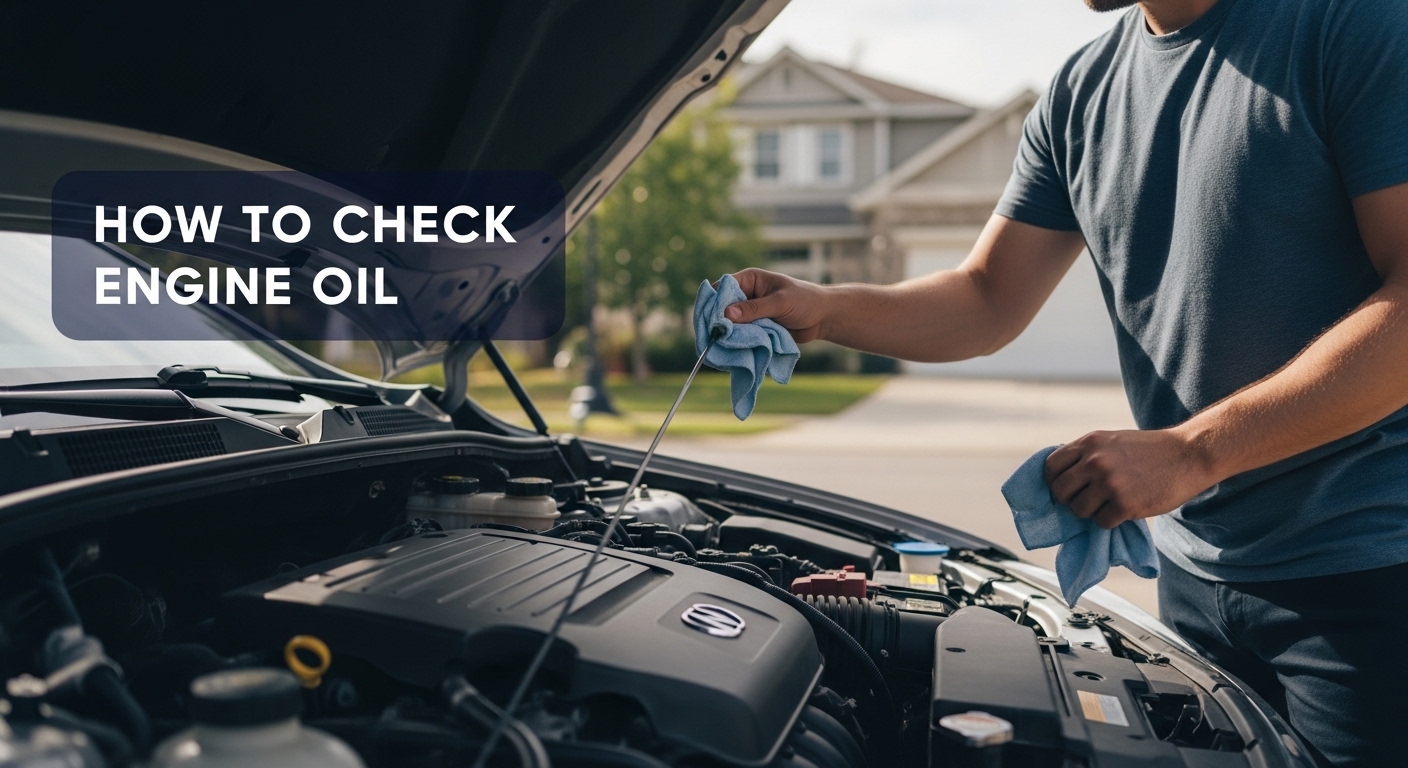
Regular vehicle maintenance is essential for keeping your car running smoothly and preventing expensive repairs. One of the simplest yet most important maintenance tasks is checking your engine oil. Many U.S. drivers overlook this basic step, assuming modern vehicles monitor oil levels automatically. While some newer cars have electronic oil monitoring systems, many vehicles still rely on manual checks using a dipstick. Understanding how to check engine oil correctly can help prevent engine damage, overheating, reduced fuel efficiency, and costly mechanical failures. Engine oil lubricates internal components, reduces friction, removes contaminants, and helps regulate engine temperature. Low or dirty oil can significantly reduce engine life. This comprehensive guide explains when to check engine oil, step-by-step instructions, how to read a dipstick properly, what oil color means, how often to change oil, and common mistakes to avoid. Whether you drive a sedan, SUV, truck, or hybrid, this guide will help you maintain your vehicle confidently.
What Does Engine Oil Do?
Engine oil plays a critical role in protecting your vehicle’s engine. It lubricates moving parts, reduces friction between metal components, prevents overheating, cleans sludge and debris, and protects against corrosion. Without sufficient oil, engine components can wear out quickly and may seize completely. Clean oil also improves fuel efficiency and overall performance.
When Should You Check Engine Oil?
Most mechanics in the United States recommend checking engine oil at least once a month and before long road trips. It is also advisable to check oil if the dashboard oil warning light appears. Always check oil when the engine is cool or after waiting at least 5–10 minutes after turning off the engine to allow oil to settle.
Tools Needed to Check Engine Oil
| Tool | Purpose | Required? |
|---|---|---|
| Clean Rag or Paper Towel | Wipe dipstick clean | Yes |
| Owner’s Manual | Locate dipstick & oil type | Recommended |
| Flashlight | Improve visibility | Optional |
| Funnel | Add oil if needed | Optional |
How to Check Engine Oil – Step-by-Step Guide
Follow these steps carefully to check engine oil correctly.
- Step 1: Park your vehicle on level ground.
- Step 2: Turn off the engine and wait 5–10 minutes.
- Step 3: Open the hood and secure it properly.
- Step 4: Locate the oil dipstick (usually with a yellow or orange handle).
- Step 5: Pull out the dipstick completely.
- Step 6: Wipe the dipstick clean using a rag or paper towel.
- Step 7: Reinsert the dipstick fully into its tube.
- Step 8: Pull it out again and observe the oil level.
- Step 9: Check if the oil level is between the 'MIN' and 'MAX' or crosshatched marks.
- Step 10: Add oil gradually if the level is below the minimum mark.
How to Read the Oil Dipstick Correctly
| Dipstick Mark | Meaning | Action Required |
|---|---|---|
| Above MAX | Too much oil | Do not add more; may require draining |
| Between MIN & MAX | Safe level | No action needed |
| Near MIN | Low oil level | Add recommended oil type |
| Below MIN | Critically low | Add oil immediately |
What Engine Oil Color Means
| Oil Color | Condition | Recommended Action |
|---|---|---|
| Amber/Clear | Fresh oil | Normal |
| Dark Brown | Used but functional | Monitor regularly |
| Black | Old/Dirty oil | Change oil soon |
| Milky/Light Brown | Possible coolant contamination | See mechanic immediately |
How Often Should You Change Engine Oil?
Oil change intervals depend on vehicle type, driving habits, and oil type. Many modern vehicles recommend oil changes every 5,000 to 7,500 miles when using conventional oil and up to 10,000 miles with synthetic oil. Always consult your owner’s manual for manufacturer recommendations. Severe driving conditions such as frequent short trips, towing, extreme temperatures, or heavy traffic may require more frequent oil changes.
Common Mistakes to Avoid
- Checking oil on uneven ground.
- Reading dipstick without wiping first.
- Overfilling engine oil.
- Ignoring dark or contaminated oil.
- Using incorrect oil grade.
Advanced Tips for Engine Longevity
- Use manufacturer-recommended oil viscosity (e.g., 5W-30).
- Replace oil filter during every oil change.
- Check oil before long road trips.
- Monitor for oil leaks under the vehicle.
- Keep maintenance records for resale value.
FAQs
How often should I check engine oil?
At least once a month and before long trips.
Can I check oil when the engine is hot?
It is safer and more accurate to check oil when the engine is cool or after waiting 5–10 minutes.
What happens if engine oil is low?
Low oil can cause increased friction, overheating, and serious engine damage.
What color should engine oil be?
Fresh oil is amber or light brown. Dark or black oil may indicate it is time for a change.
Is it bad to overfill engine oil?
Yes, overfilling can create pressure buildup and damage engine seals.
Do all cars have a dipstick?
Most vehicles do, but some newer models use electronic oil monitoring systems.
How much oil should I add if low?
Add small amounts (about half a quart at a time) and recheck level.
Can dirty oil damage engine?
Yes, dirty oil loses lubrication properties and may cause internal wear.
What oil type should I use?
Refer to your vehicle’s owner manual for recommended viscosity and specifications.
Is checking engine oil difficult?
No, it is a simple DIY task that takes less than 5 minutes.