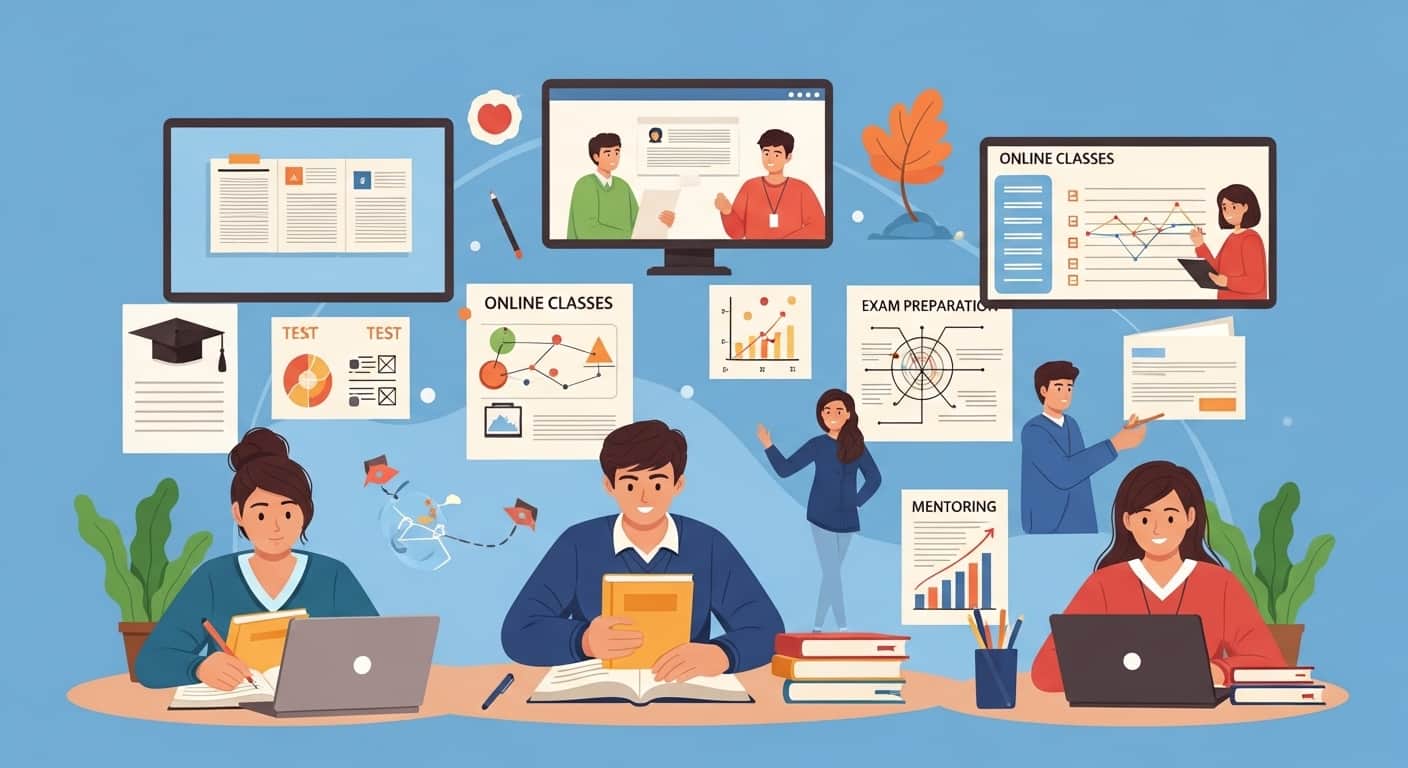
Competitive exams play a major role in determining academic and career opportunities for students. Exams such as civil services, banking, engineering, medical, and management entrance tests require focused preparation and strategic planning. Coaching institutes help students with structured study plans, expert guidance, and regular practice. This guide explains how to choose the best coaching for competitive exams using simple international English, with practical insights for students across India.
What Are Competitive Exams
Competitive exams are tests where a large number of candidates compete for limited seats or positions. These exams evaluate knowledge, aptitude, problem-solving ability, and time management skills.
Why Coaching Helps in Competitive Exams
Coaching provides structured preparation, expert guidance, and regular assessments. It helps students stay disciplined and understand exam patterns effectively.
Learn how digital assessments work in our Computer Based Exams guide
Types of Competitive Exams
| Exam Category | Examples |
|---|---|
| Civil Services | Administrative and government services |
| Engineering Entrances | Undergraduate and postgraduate engineering |
| Medical Entrances | Medical and healthcare education |
| Banking Exams | Public and private banking roles |
| Management Entrances | Business and management programs |
Types of Coaching Available
Students can choose different coaching formats based on learning preferences.
Coaching Types Table
| Coaching Type | Description |
|---|---|
| Offline Classroom | Face-to-face teaching |
| Online Live Classes | Real-time virtual instruction |
| Recorded Courses | Flexible self-paced learning |
| Hybrid Coaching | Combination of online and offline |
Online vs Offline Coaching
Both online and offline coaching have advantages depending on the student’s needs.
Online vs Offline Table
| Aspect | Online Coaching | Offline Coaching |
|---|---|---|
| Flexibility | High | Limited |
| Cost | Generally lower | Usually higher |
| Personal Interaction | Moderate | High |
| Accessibility | Anywhere | Location-dependent |
Best Coaching Criteria
Instead of choosing coaching based on popularity, students should evaluate quality and suitability.
Coaching Selection Criteria Table
| Factor | Why It Matters |
|---|---|
| Faculty Experience | Quality of teaching |
| Study Material | Concept clarity and coverage |
| Test Series | Exam readiness |
| Student Support | Doubt resolution and mentoring |
| Track Record | Consistency of results |
Exam-Wise Coaching Needs
Different competitive exams require different preparation strategies.
Exam Preparation Table
| Exam Type | Coaching Focus |
|---|---|
| Civil Services | Concept depth and answer writing |
| Engineering | Problem-solving speed |
| Medical | Concept accuracy and memory |
| Banking | Speed and quantitative aptitude |
| Management | Aptitude and reasoning |
Self-Study vs Coaching
Some students succeed with self-study, while others benefit from coaching. The right choice depends on discipline, guidance needs, and learning style.
Common Mistakes Students Make
- Joining coaching without research
- Relying only on coaching without self-study
- Ignoring mock tests
- Changing coaching institutes frequently
How to Decide the Best Coaching
Students should attend demo classes, evaluate faculty quality, check study material, and align coaching style with personal learning preferences before enrolling.
Future of Competitive Exam Preparation
The future of exam preparation includes AI-powered learning, adaptive testing, personalized study plans, and blended learning models combining coaching and self-study.
FAQs
Is coaching necessary for competitive exams?
Not mandatory, but coaching helps with structured preparation and guidance.
Which is better, online or offline coaching?
Both are effective depending on learning style and discipline.
How do I choose the best coaching institute?
Evaluate faculty, material, test series, and student support.
Can I clear competitive exams with self-study?
Yes. Many students succeed with disciplined self-study.
What is the future of exam coaching?
AI-driven and personalized learning models will dominate.