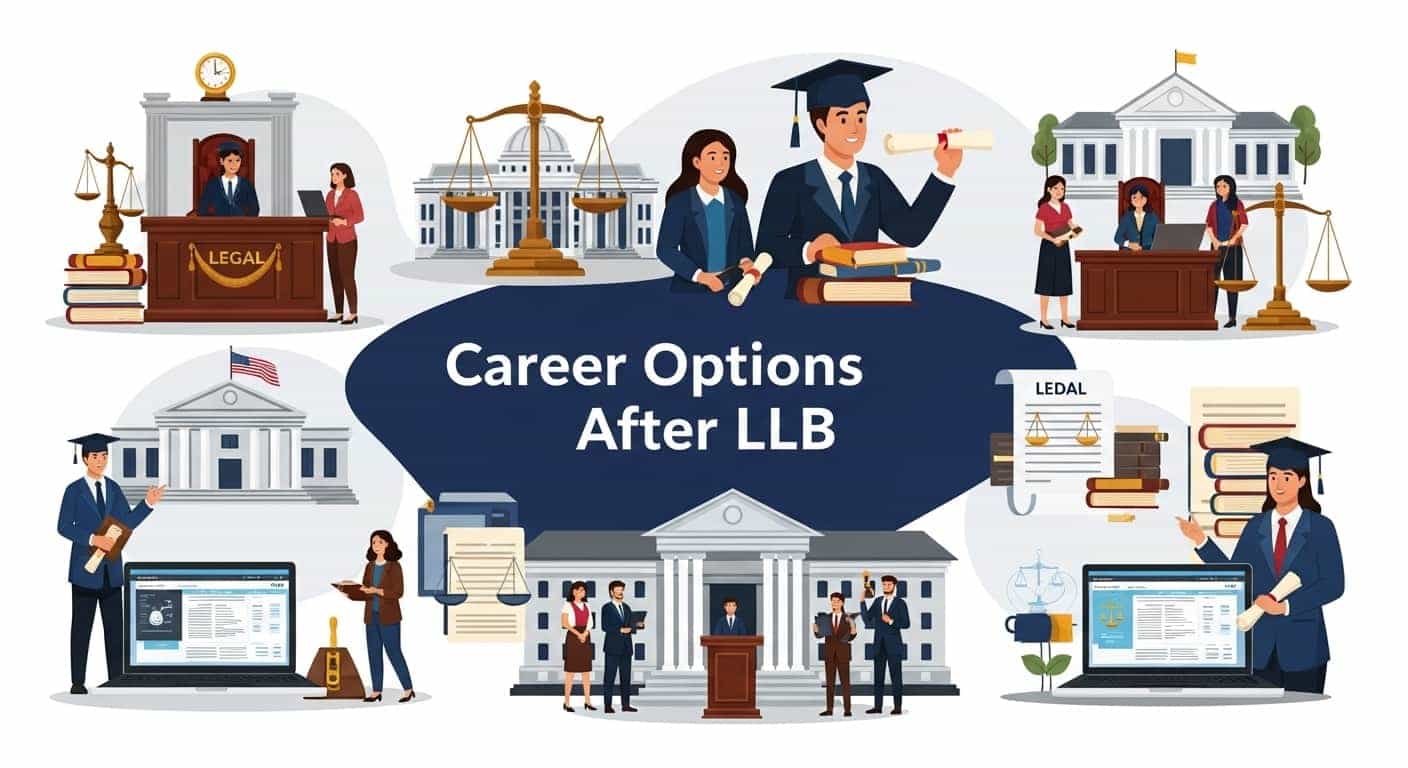
A Bachelor of Laws (LLB) degree opens the door to a wide range of professional opportunities beyond traditional courtroom practice. In 2026, law graduates can work in litigation, corporate organizations, government services, academia, policy, and technology-driven legal roles. This guide explains career options after LLB using simple international English, with practical insights for law graduates in India and the United States.
Why LLB Is a Versatile Degree
An LLB degree develops strong analytical thinking, communication skills, and legal reasoning. These skills are valuable not only in courts but also in corporate, policy, education, and technology-driven roles.
Traditional Career Options After LLB
Many law graduates choose traditional legal careers that involve practicing law or advising clients.
Traditional Legal Careers Table
| Career Option | Description |
|---|---|
| Advocate / Lawyer | Court practice and legal representation |
| Public Prosecutor | Representing the state in criminal cases |
| Legal Advisor | Providing legal advice to organizations |
| Law Firm Associate | Specialized legal practice |
Litigation as a Career
Litigation involves representing clients in courts and tribunals. It requires patience, research skills, and long-term commitment, but offers professional independence and reputation growth.
Corporate Law Careers
Corporate law is a popular choice for LLB graduates who prefer structured work environments and business exposure.
Corporate Law Roles Table
| Role | Industry |
|---|---|
| Corporate Lawyer | Companies and law firms |
| Compliance Officer | Banking and finance |
| Contract Manager | IT and global services |
| In-House Counsel | Multinational corporations |
Government and Judicial Careers
LLB graduates can pursue stable and prestigious government roles through competitive examinations.
Government Career Options Table
| Career Option | Sector |
|---|---|
| Judiciary Exams | Courts and judicial services |
| Civil Services | Government administration |
| Public Sector Undertakings | Legal and compliance roles |
| Legal Officer Exams | Government departments |
Higher Studies After LLB
Higher education allows law graduates to specialize or enter academic and research careers.
Higher Studies Table
| Course | Career Outcome |
|---|---|
| LLM | Specialized legal practice or academia |
| PhD in Law | Research and teaching |
| MBA | Management and leadership roles |
| International Law Programs | Global legal careers |
Emerging Career Options After LLB
Modern legal careers go beyond traditional law practice.
- Legal technology and compliance tools
- Policy research and public affairs
- Intellectual property management
- Cyber law and data protection
- Legal consulting for startups
Skills Required for Law Graduates
| Skill | Why It Matters |
|---|---|
| Legal Research | Strong case preparation |
| Communication | Client and court interaction |
| Critical Thinking | Legal analysis |
| Negotiation | Settlements and contracts |
| Digital Literacy | Modern legal tools |
How to Choose the Right Legal Career
Law graduates should choose careers based on interests, strengths, work-life expectations, and long-term goals. Internships, mentorship, and practical exposure play a key role in decision-making.
Common Mistakes Law Graduates Make
- Choosing litigation without understanding long-term commitment
- Ignoring skill development
- Following peer pressure
- Delaying specialization
Future Career Trends in Law
The future of legal careers includes legal-tech platforms, AI-assisted research, global compliance roles, and interdisciplinary careers combining law, business, and technology.
FAQs
What are the best career options after LLB?
Litigation, corporate law, judiciary, government services, and legal consulting are popular options.
Is corporate law better than litigation?
It depends on personal preference. Corporate law offers structured work, while litigation offers independence.
Can I do MBA after LLB?
Yes. MBA after LLB opens management and leadership roles.
Is LLM necessary after LLB?
Not mandatory, but useful for specialization and academic careers.
What is the future of legal careers?
Legal careers are expanding into technology, compliance, and global advisory roles.