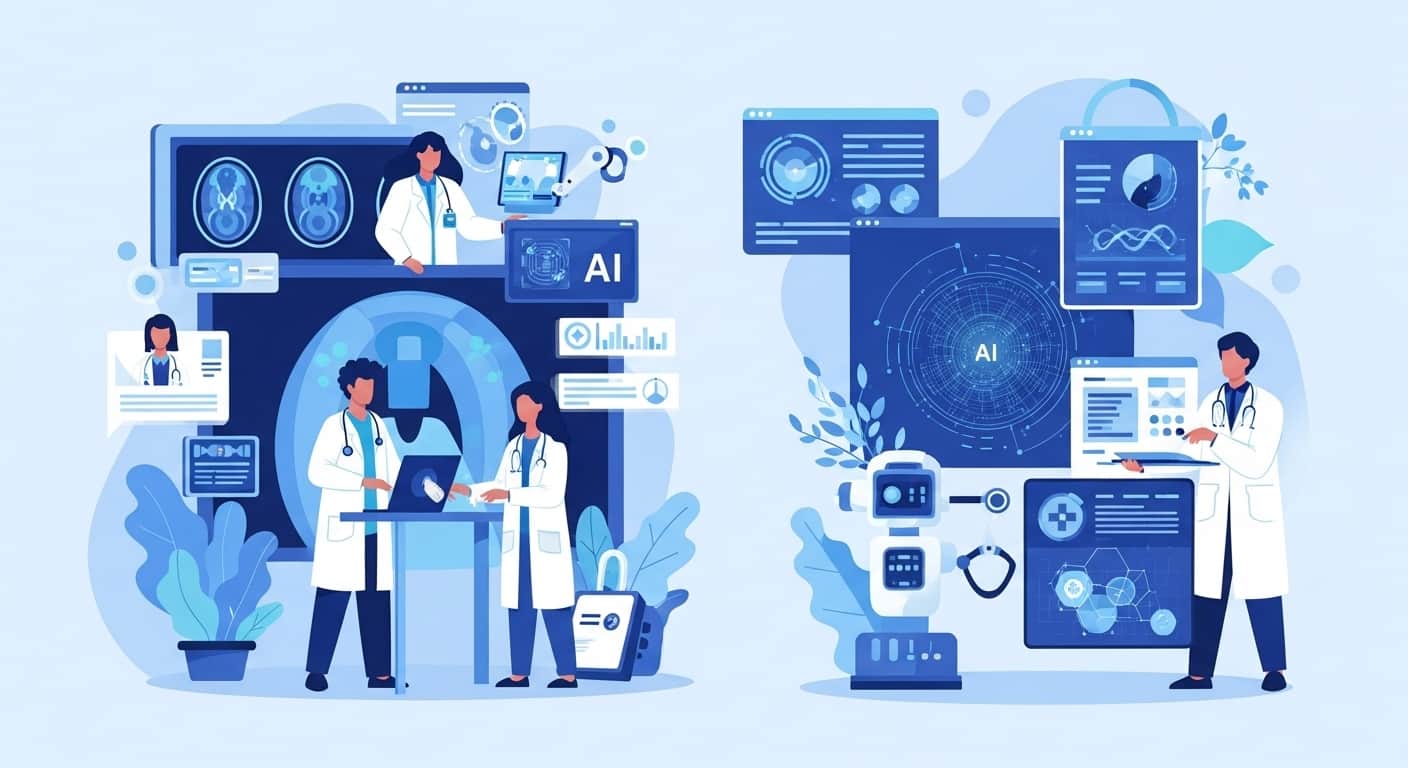
Artificial intelligence is transforming healthcare by helping doctors, hospitals, and researchers make better decisions using data. AI systems can analyze medical images, predict diseases, personalize treatments, and automate administrative tasks. In 2026, AI in healthcare is no longer experimental—it is becoming a core part of modern medical systems. This guide explains AI in healthcare from beginner to advanced level using simple international English, with real-world relevance for healthcare systems in the United States and India.
What Is AI in Healthcare
AI in healthcare refers to the use of artificial intelligence technologies to support medical decisions, patient care, and healthcare operations. These systems analyze data such as medical images, patient records, and sensor data to provide insights and recommendations.
Why Healthcare Needs AI
Healthcare systems face challenges such as staff shortages, rising costs, and increasing patient data. AI helps reduce workload, improve accuracy, and deliver faster and more consistent care.
How AI Is Used in Healthcare
AI supports healthcare across clinical, operational, and research areas.
Core AI Technologies in Healthcare
Multiple AI technologies work together to support healthcare systems.
AI Technologies Table
| Technology | Purpose in Healthcare |
|---|---|
| Machine Learning | Disease prediction and risk analysis |
| Deep Learning | Medical image and signal analysis |
| Natural Language Processing | Clinical notes and health records analysis |
| Computer Vision | Radiology and pathology imaging |
| Robotics and Automation | Surgery and hospital logistics |
AI in Medical Diagnosis
AI systems assist doctors by analyzing images, scans, and patient data to detect diseases earlier and more accurately.
Diagnosis Use Cases Table
| Medical Area | AI Application |
|---|---|
| Radiology | Detecting tumors and fractures |
| Cardiology | Heart disease risk prediction |
| Pathology | Cancer cell detection |
| Ophthalmology | Diabetic retinopathy screening |
AI in Treatment and Personalized Medicine
AI helps design personalized treatment plans by analyzing genetics, medical history, and lifestyle data. This improves treatment effectiveness and reduces side effects.
AI in Hospital Operations
Hospitals use AI to optimize scheduling, resource allocation, and administrative workflows, reducing operational costs and improving patient experience.
Operational Use Cases Table
| Area | AI Benefit |
|---|---|
| Patient Scheduling | Reduced waiting time |
| Supply Chain | Optimized inventory |
| Billing and Coding | Faster claim processing |
| Staff Allocation | Better workload balance |
AI in Remote Healthcare and Telemedicine
AI supports remote patient monitoring through wearable devices and virtual health assistants. This improves access to care, especially in rural areas.
Benefits of AI in Healthcare
AI provides clinical and operational advantages across healthcare systems.
Benefits Table
| Benefit | Impact |
|---|---|
| Early disease detection | Better patient outcomes |
| Improved accuracy | Reduced medical errors |
| Operational efficiency | Lower healthcare costs |
| Personalized care | Higher treatment success |
Challenges and Risks
Despite its potential, AI in healthcare comes with challenges.
- Data privacy and security risks
- Bias in training data
- Regulatory and compliance complexity
- Limited transparency of AI decisions
Ethical and Regulatory Considerations
Healthcare AI must follow strict ethical guidelines. Transparency, fairness, patient consent, and accountability are critical for responsible AI adoption.
Best Practices for AI in Healthcare
Successful AI adoption in healthcare requires careful planning.
- Use high-quality and diverse datasets
- Ensure data privacy and compliance
- Keep humans in the decision loop
- Continuously monitor AI performance
Future of AI in Healthcare
The future of AI in healthcare includes predictive care, AI-assisted doctors, digital twins of patients, and expanded remote care. AI will support healthcare professionals rather than replace them.
FAQs
What is AI in healthcare?
AI in healthcare uses artificial intelligence to support diagnosis, treatment, and healthcare operations.
Is AI replacing doctors?
No. AI assists doctors but does not replace human judgment.
Is AI safe for healthcare?
Yes, when used responsibly with proper regulation and oversight.
Which areas benefit most from AI in healthcare?
Diagnostics, hospital operations, and remote care benefit significantly.
What is the future of AI in healthcare?
The future includes personalized medicine, predictive care, and AI-assisted clinical decisions.