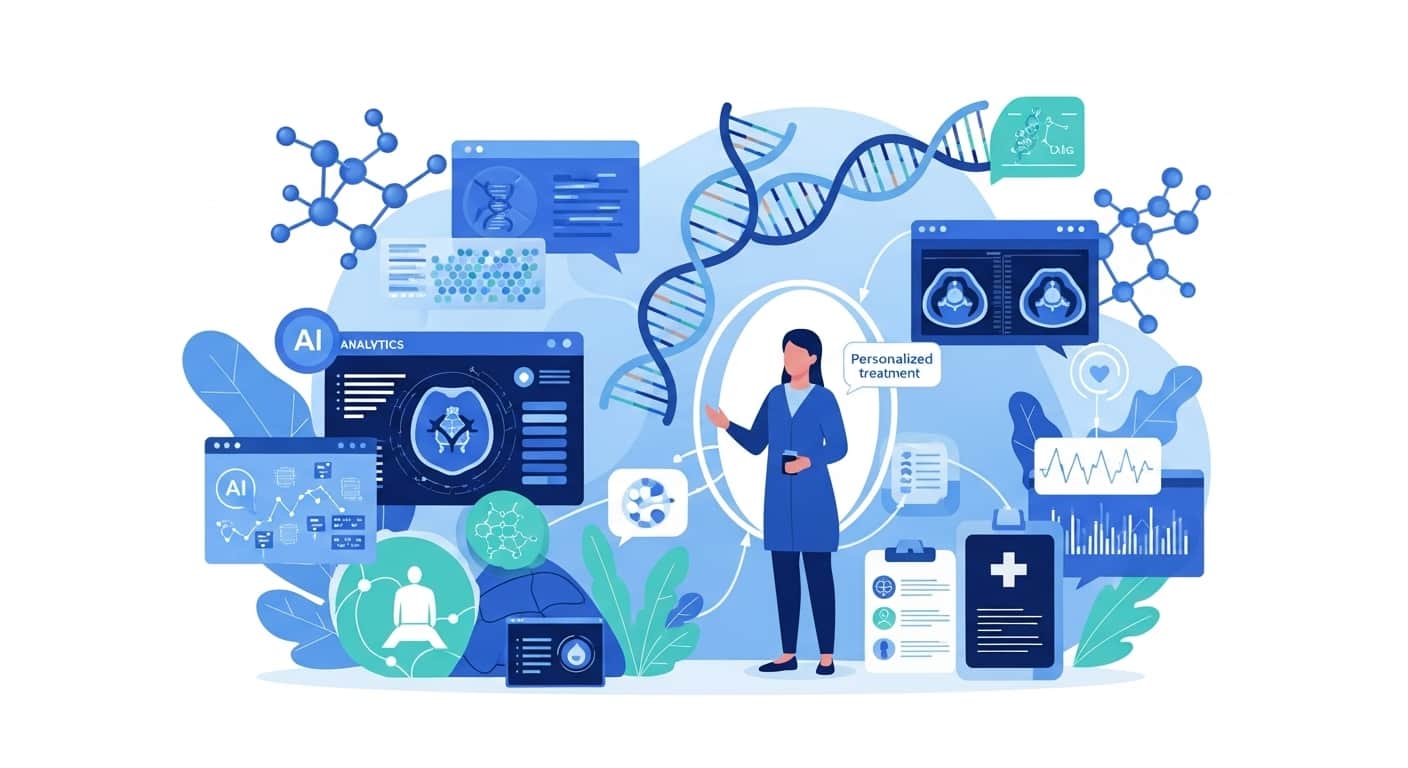
Traditional medicine often follows a one-size-fits-all approach, where patients with the same condition receive similar treatments. Personalized, also known as precision medicine, changes this model by tailoring prevention, diagnosis, and treatment to each individual. By using data such as genetics, lifestyle, and medical history, precision medicine improves treatment effectiveness and reduces side effects. In 2026, personalized medicine is becoming a key pillar of modern healthcare in both the United States and India.
What Is Personalized / Precision Medicine
Personalized or precision medicine is an approach to healthcare that customizes medical decisions, treatments, and therapies to individual patients. It considers genetic makeup, environment, lifestyle, and health history to provide more accurate and effective care.
Personalized Medicine vs Traditional Medicine
Traditional medicine treats patients based on population averages, while personalized medicine focuses on individual differences.
Comparison Table
| Aspect | Traditional Medicine | Personalized Medicine |
|---|---|---|
| Treatment Approach | Same treatment for many patients | Tailored treatment for each patient |
| Data Used | General clinical data | Genetics, lifestyle, medical history |
| Effectiveness | Variable outcomes | Higher success rates |
| Side Effects | More common | Reduced risk |
Why Precision Medicine Is Important
Patients respond differently to the same treatment. Precision medicine helps doctors choose the right treatment for the right patient at the right time, improving outcomes and reducing unnecessary interventions.
How Personalized Medicine Works
Personalized medicine combines patient data, advanced diagnostics, and analytics to guide treatment decisions. Doctors analyze genetic tests, biomarkers, and clinical data before selecting therapies.
Key Technologies Behind Precision Medicine
Several advanced technologies make personalized medicine possible.
Technology Table
| Technology | Purpose |
|---|---|
| Genomic Sequencing | Analyzing patient DNA |
| Biomarker Analysis | Identifying disease indicators |
| Artificial Intelligence | Predicting treatment response |
| Big Data Analytics | Processing large healthcare datasets |
| Cloud Computing | Storing and sharing medical data |
Role of Genomics in Personalized Medicine
Genomics is central to precision medicine. By studying a patient’s genes, doctors can predict disease risk, understand drug response, and select targeted therapies, especially in cancer and rare diseases.
AI and Data Analytics in Precision Medicine
AI analyzes complex healthcare data to identify patterns that humans may miss. This supports early diagnosis, treatment recommendations, and continuous patient monitoring.
Personalized Medicine Use Cases
Precision medicine is already improving care across multiple medical fields.
Use Cases Table
| Medical Area | Personalized Approach |
|---|---|
| Oncology | Targeted cancer therapies |
| Cardiology | Genetic risk-based treatment |
| Pharmacology | Drug selection based on genetics |
| Rare Diseases | Accurate diagnosis and tailored care |
Benefits of Personalized / Precision Medicine
Personalized medicine offers clinical and system-wide benefits.
Benefits Table
| Benefit | Impact |
|---|---|
| Improved treatment outcomes | Higher success rates |
| Reduced side effects | Better patient safety |
| Early disease detection | Preventive care |
| Cost efficiency | Avoid unnecessary treatments |
Challenges and Limitations
Despite its promise, personalized medicine faces challenges.
- High cost of genetic testing
- Data privacy and security concerns
- Limited access in some regions
- Need for specialized expertise
Ethical and Privacy Considerations
Handling genetic and personal health data raises ethical questions. Strong privacy protections, patient consent, and transparent data use policies are essential.
Best Practices for Adoption
Healthcare systems should follow best practices when adopting personalized medicine.
- Ensure data accuracy and quality
- Protect patient privacy
- Combine AI insights with clinical judgment
- Educate healthcare professionals
Future of Personalized Medicine
The future of personalized medicine includes AI-driven predictions, digital twins of patients, and widespread genomic testing. As costs decrease and technology improves, personalized care will become more accessible and routine.
FAQs
What is personalized or precision medicine?
It is an approach that tailors medical treatment to individual patient characteristics.
Is personalized medicine the same as precision medicine?
They are closely related terms and often used interchangeably.
Does personalized medicine replace doctors?
No. It supports doctors by providing better data and insights.
Is personalized medicine expensive?
Initial costs can be high, but long-term benefits often reduce overall healthcare costs.
What is the future of personalized medicine?
It will focus on predictive, preventive, and highly individualized care.