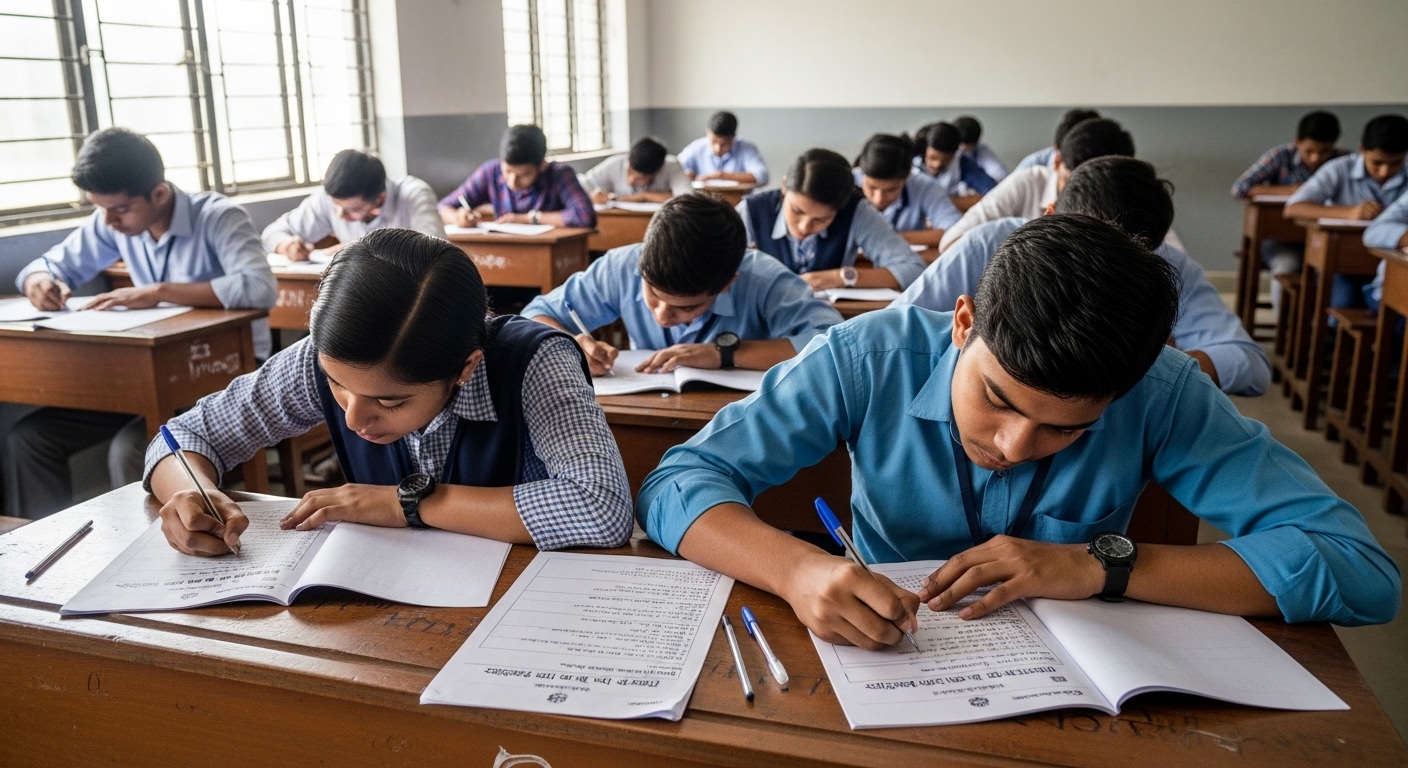
The Bengali question of Madhyamik examination is structured and regulated by the West Bengal Board of Secondary Education (WBBSE). Bengali is a compulsory first language subject for many students appearing in the Madhyamik (Secondary Examination) in West Bengal. Understanding the question paper pattern, marks distribution, syllabus structure, and common question types is essential for effective preparation. Students who analyze previous year question papers and follow a strategic study plan generally perform better. This comprehensive guide provides detailed information about the Bengali question of Madhyamik exam, including exam format, section-wise marks, important topics, question trends, answer-writing techniques, model paper strategy, and common mistakes. The content is written clearly and focuses purely on informational accuracy to help students prepare confidently.
Overview of Madhyamik Bengali Examination
The Madhyamik examination is conducted annually by WBBSE for Class 10 students in West Bengal. Bengali is one of the most important subjects as it carries significant weight in overall percentage calculation. The question paper is designed to evaluate language proficiency, literary understanding, grammar skills, and writing ability. The exam generally includes prose (গদ্য), poetry (পদ্য), supplementary reading, grammar, and composition sections. Students are expected to demonstrate comprehension, interpretation, and structured writing skills.
Exam Structure and Total Marks
| Component | Marks |
|---|---|
| Written Examination | 90 Marks |
| Internal Assessment | 10 Marks |
| Total | 100 Marks |
Section-wise Marks Distribution
| Section | Marks Range | Focus Area |
|---|---|---|
| Reading Comprehension | 15–20 | Understanding passage |
| Prose & Poetry | 30–35 | Text-based questions |
| Grammar | 15–20 | Language accuracy |
| Writing Section | 20–25 | Essay, letter, report |
Types of Questions Asked
The Bengali question of Madhyamik typically includes multiple-choice questions (MCQs), very short answer questions, short answer questions, descriptive long answers, and composition-based questions. Comprehension passages test vocabulary and interpretation skills. Literature questions focus on themes, character analysis, central ideas, and explanation of lines. Grammar questions include sentence correction, transformation, synonyms, antonyms, and fill-in-the-blanks.
Literature Section Details
The literature section is divided into prose and poetry from prescribed textbooks. Students are asked short and long descriptive questions. Important areas include character sketch, theme explanation, context-based meaning, and reference-to-context questions. Memorizing key quotations and understanding deeper meaning helps secure higher marks.
Grammar Section Details
| Topic | Question Type | Preparation Tip |
|---|---|---|
| Sandhi | Transformation | Practice rules daily |
| Samas | Definition & examples | Revise textbook exercises |
| Sentence Correction | Error identification | Solve previous papers |
| Vocabulary | Synonyms/Antonyms | Maintain word list |
Writing Skills Section
The writing section usually includes essay writing (রচনা), letter writing (চিঠি), report writing (প্রতিবেদন), and sometimes paragraph writing. Students must follow proper format strictly. For example, formal letters require correct address placement and subject lines. Essay topics often focus on social issues, environment, technology, festivals, education, and cultural themes. Time management is essential as composition questions carry high marks.
Previous Year Question Trends
Analysis of previous Madhyamik Bengali question papers shows that certain chapters are repeatedly emphasized. Grammar questions often follow a similar structure each year. Long-answer literature questions usually test theme-based understanding rather than memorization alone. Students who solve at least five years of question papers gain clarity about recurring patterns.
Sample Question Pattern Table
| Question Type | Marks per Question | Expected Answer Length |
|---|---|---|
| MCQ | 1 | One word or phrase |
| Very Short Answer | 2 | 2–3 sentences |
| Short Answer | 4 | One paragraph |
| Long Answer | 6–8 | Structured explanation |
| Essay | 10–15 | 300–400 words |
Answer Writing Strategy
Always read the question carefully before answering. Maintain neat handwriting and structured paragraphs. Underline important points. Stick to word limits. Avoid irrelevant information. Use proper grammar and punctuation.
Common Mistakes to Avoid
Not following writing format in letter or report. Ignoring grammar revision. Writing overly lengthy answers beyond word limit. Memorizing without understanding context. Poor time management during exam.
How to Use Model Question Papers
Solve model papers under timed conditions. Evaluate answers using marking scheme. Identify weak areas. Practice writing full-length tests at least three times before final exam.
Revision Plan Before Exam
Start revision at least 30 days before exam. Divide syllabus into weekly targets. Revise grammar daily. Practice essay and letter writing every week. Solve previous year papers during final revision phase.
FAQs
What is the total marks of Bengali in Madhyamik?
The total marks are 100, including written examination and internal assessment.
How many sections are there in Bengali question of Madhyamik?
It generally includes reading, literature, grammar, and writing sections.
Is essay writing compulsory in Madhyamik Bengali?
Yes, composition or essay writing is usually included and carries significant marks.
How to score above 80 in Madhyamik Bengali?
Focus on grammar accuracy, structured answers, previous year papers, and proper writing format.
Are previous year question papers important?
Yes, they help understand question trends and marking patterns.
What types of grammar questions are asked?
Sandhi, Samas, sentence correction, vocabulary, and transformation questions are common.
How long should a long answer be?
Typically 150–200 words depending on marks allotted.
Does handwriting affect marks?
Clear and neat handwriting improves readability and presentation.
Is internal assessment important?
Yes, it contributes to the final total marks.
When should revision start?
At least one month before the exam with consistent practice.