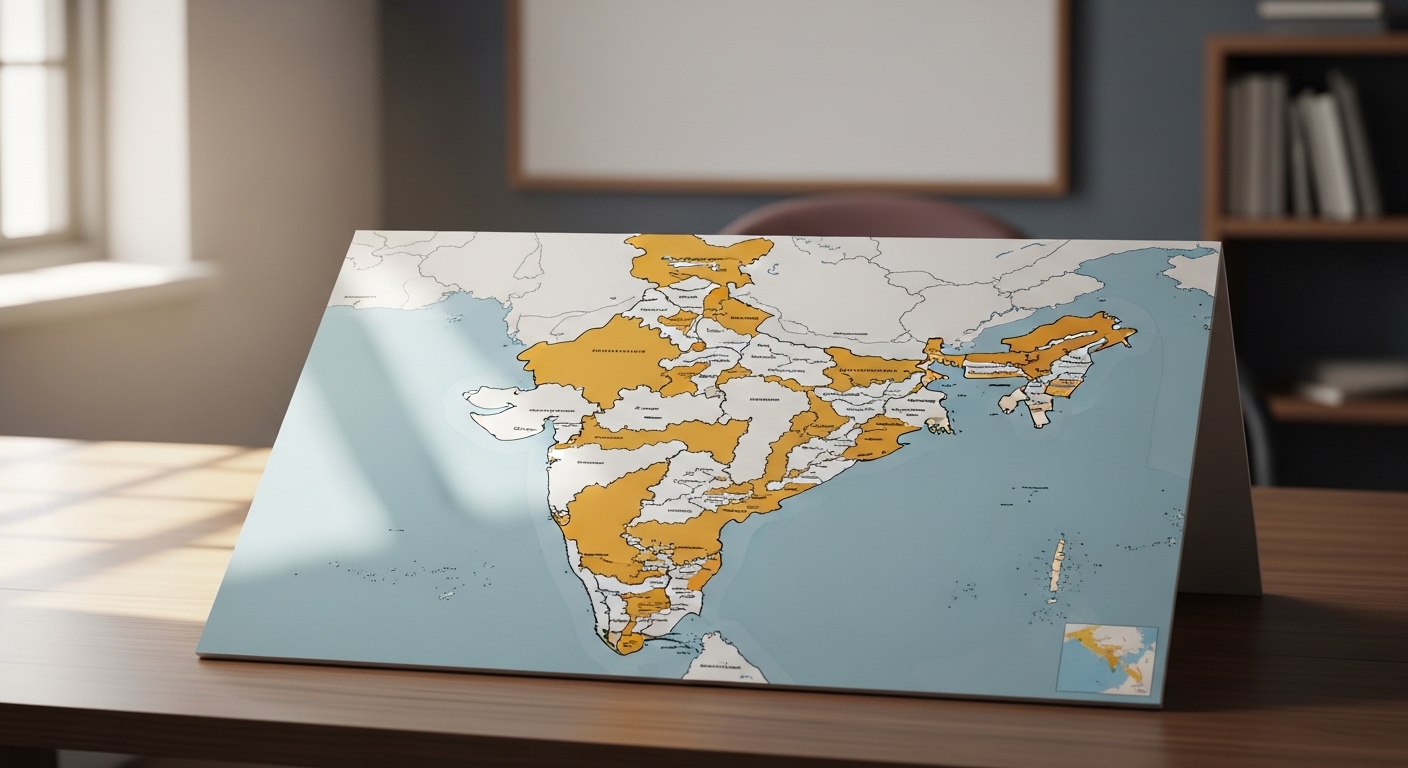
If you are searching for how many states in India exist today, the correct answer is 28 states and 8 Union Territories as of 2026. India follows a federal structure where powers are divided between the central government and state governments. Understanding this structure requires knowledge of constitutional provisions, historical reorganizations, and administrative divisions. The number of states has changed several times since independence in 1947. Linguistic demands, administrative efficiency, regional identity movements, and political reforms have shaped India’s current map. The most recent major change occurred in 2019 when the former state of Jammu and Kashmir was reorganized into two Union Territories. These constitutional changes demonstrate that the number of states in India can evolve over time. This comprehensive guide explains the updated number of states, full lists with capitals, differences between states and Union Territories, historical changes, constitutional procedures under Article 3, governance structure, and possible future developments.
Current Number of States in India (2026 Update)
As of 2026, India has 28 states and 8 Union Territories. These 36 administrative divisions together form the Union of India. Each state has its own elected legislative assembly, Chief Minister, and Governor. Union Territories are administered directly by the central government, although some have legislative assemblies. The current structure was finalized after the reorganization of Jammu and Kashmir in August 2019. It was bifurcated into two Union Territories: Jammu and Kashmir, and Ladakh. This updated structure is important for competitive exams, academic studies, government exams, and general awareness.
Difference Between States and Union Territories
| Feature | States | Union Territories |
|---|---|---|
| Total Number (2026) | 28 | 8 |
| Administrative Control | Elected State Government | Central Government |
| Head of Administration | Governor | Lieutenant Governor / Administrator |
| Legislative Assembly | All States Have One | Only Some UTs |
| Constitutional Authority | Federal Unit | Direct Union Control |
Complete List of 28 States and Capitals
| State | Capital |
|---|---|
| Andhra Pradesh | Amaravati |
| Arunachal Pradesh | Itanagar |
| Assam | Dispur |
| Bihar | Patna |
| Chhattisgarh | Raipur |
| Goa | Panaji |
| Gujarat | Gandhinagar |
| Haryana | Chandigarh |
| Himachal Pradesh | Shimla |
| Jharkhand | Ranchi |
| Karnataka | Bengaluru |
| Kerala | Thiruvananthapuram |
| Madhya Pradesh | Bhopal |
| Maharashtra | Mumbai |
| Manipur | Imphal |
| Meghalaya | Shillong |
| Mizoram | Aizawl |
| Nagaland | Kohima |
| Odisha | Bhubaneswar |
| Punjab | Chandigarh |
| Rajasthan | Jaipur |
| Sikkim | Gangtok |
| Tamil Nadu | Chennai |
| Telangana | Hyderabad |
| Tripura | Agartala |
| Uttar Pradesh | Lucknow |
| Uttarakhand | Dehradun |
| West Bengal | Kolkata |
List of 8 Union Territories
| Union Territory | Capital |
|---|---|
| Andaman and Nicobar Islands | Port Blair |
| Chandigarh | Chandigarh |
| Dadra and Nagar Haveli and Daman and Diu | Daman |
| Delhi (NCT) | New Delhi |
| Jammu and Kashmir | Srinagar (Summer), Jammu (Winter) |
| Ladakh | Leh |
| Lakshadweep | Kavaratti |
| Puducherry | Puducherry |
Historical Changes in Number of States
- 1947–1950: India reorganized former British provinces and princely states into Part A, B, C, and D states.
- 1956: The States Reorganisation Act reorganized states primarily on linguistic basis.
- 1960: Bombay State was divided into Maharashtra and Gujarat.
- 1966: Punjab was reorganized to create Haryana and Himachal Pradesh gained full statehood later.
- 1972: Meghalaya, Manipur, and Tripura became full-fledged states.
- 1987: Goa became the 25th state of India.
- 2000: Chhattisgarh, Jharkhand, and Uttarakhand were created from existing large states.
- 2014: Telangana was carved out of Andhra Pradesh as the 29th state at that time.
- 2019: Jammu and Kashmir was reorganized into two Union Territories, reducing total states from 29 to 28.
How Are New States Created in India?
- Article 3 of the Constitution gives Parliament the power to create new states or alter boundaries.
- A proposal for reorganization is introduced as a bill in Parliament.
- The President refers the bill to the concerned state legislature for its views.
- The state legislature may express opinions, but its consent is not mandatory.
- Parliament passes the bill with a simple majority.
- After presidential assent, the reorganization becomes law.
- The First Schedule of the Constitution is updated to reflect changes.
Governance Structure of Indian States
- Each state has an elected Legislative Assembly.
- The Chief Minister heads the executive branch.
- The Governor represents the President of India.
- States have their own High Courts.
- Powers are divided under Union List, State List, and Concurrent List.
Future Possibilities and Federal Trends
- Demands for new states such as Vidarbha or Gorkhaland.
- Administrative challenges in highly populated states.
- Political debates on federal autonomy.
- Balancing development needs with regional identity.
FAQs
How many states are there in India in 2026?
India has 28 states and 8 Union Territories as of 2026.
How many Union Territories are there in India?
There are 8 Union Territories in India.
Which was the last state formed in India?
Telangana, formed in 2014, was the last full-fledged state created.
Why did the number of states reduce from 29 to 28?
The number reduced in 2019 when Jammu and Kashmir was reorganized into two Union Territories.
Can Parliament create a new state without state approval?
Yes. Parliament can create a new state under Article 3, although it must seek the concerned state's opinion.
Which is the largest state in India by area?
Rajasthan is the largest state by area.
Which is the most populated state in India?
Uttar Pradesh is the most populated state.
Is Delhi a state?
Delhi is a Union Territory with a special legislative assembly.
How many total administrative units does India have?
India has 36 primary administrative units: 28 states and 8 Union Territories.
Can the number of states in India increase in future?
Yes. The Constitution allows reorganization if Parliament passes a law under Article 3.