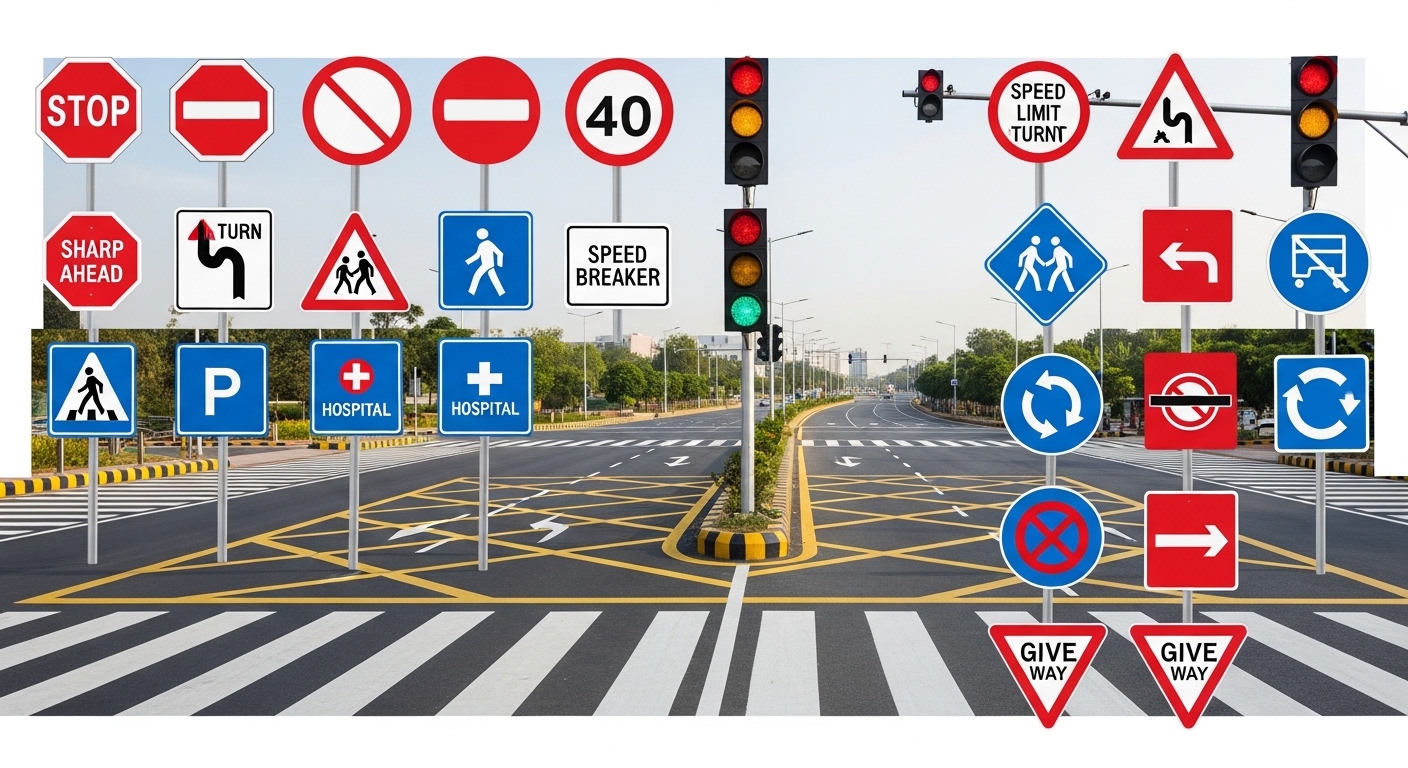
Traffic symbols are visual signs and markings placed on roads to regulate, warn, and guide drivers, pedestrians, and cyclists. They are essential for road safety, accident prevention, and smooth traffic management. Every driver must understand traffic symbols before getting a driving license. These symbols follow standard shapes and colors so they can be recognized instantly. This comprehensive guide explains all types of traffic symbols, their meanings, categories, shapes, colors, legal rules, penalties, and importance in road safety awareness.
What Are Traffic Symbols?
Traffic symbols are standardized visual signs used on roads to communicate rules, warnings, and information to road users. They reduce the need for written instructions and help drivers make quick decisions. These symbols are universally designed so that even people who speak different languages can understand them easily. Traffic symbols play a major role in preventing road accidents and ensuring smooth traffic flow. Traffic symbols include road signs, traffic signals, and road markings. They are installed at intersections, highways, school zones, railway crossings, and residential areas. Understanding these symbols is compulsory for obtaining a driving license and for safe driving practices. Most traffic symbols follow international standards but may vary slightly depending on country regulations. Ignoring traffic symbols can result in penalties, accidents, and legal action.
Types of Traffic Symbols
Traffic symbols are mainly divided into four major categories: Mandatory symbols, Warning symbols, Informatory symbols, and Road marking symbols. Mandatory symbols indicate rules that must be followed such as Stop, No Entry, Speed Limit, No Parking, and No U-Turn. Warning symbols alert drivers about hazards like Sharp Curve, School Ahead, Speed Breaker, Pedestrian Crossing, and Narrow Road. Informatory symbols provide useful information about facilities and directions including Hospital, Petrol Pump, Parking, and Bus Stop. Road marking symbols include zebra crossings, lane dividers, stop lines, and directional arrows painted on roads. Each category has a specific shape and color combination for easy identification.
Complete List of Common Traffic Symbols
| Symbol Name | Category | Shape | Meaning |
|---|---|---|---|
| Stop | Mandatory | Octagonal | Must stop completely |
| No Entry | Mandatory | Circular | Entry prohibited |
| Speed Limit 40 | Mandatory | Circular | Maximum speed allowed |
| No Parking | Mandatory | Circular | Parking not allowed |
| School Ahead | Warning | Triangular | Drive slowly, children crossing |
| Sharp Curve | Warning | Triangular | Road bends ahead |
| Speed Breaker | Warning | Triangular | Reduce speed |
| Pedestrian Crossing | Warning | Triangular | Watch for pedestrians |
| Hospital | Informatory | Rectangular | Silence zone |
| Parking | Informatory | Rectangular | Parking facility available |
| Zebra Crossing | Road Marking | Lines | Pedestrian crossing area |
| Lane Divider | Road Marking | Lines | Separates traffic lanes |
Meaning of Colors and Shapes in Traffic Symbols
Traffic symbols use specific colors and shapes for quick recognition. Red indicates prohibition or stop. Yellow indicates caution or warning. Blue provides information or services. Green indicates directions or guidance. White represents regulatory information. Circular signs are mostly mandatory. Triangular signs are warnings. Rectangular signs provide information. Octagonal shape is used exclusively for Stop sign.
Traffic Symbols Comparison Table
| Category | Purpose | Penalty for Violation | Importance |
|---|---|---|---|
| Mandatory | Regulate traffic rules | Fine or license suspension | Prevent accidents |
| Warning | Alert about hazards | Fine if ignored | Reduce risk |
| Informatory | Provide directions | Usually none | Driver convenience |
| Road Markings | Lane guidance | Fine for violation | Traffic discipline |
Advanced Road Safety Practices
- Memorize common traffic symbols before driving
- Maintain safe speed in warning zones
- Follow lane markings strictly
- Avoid distracted driving near intersections
- Stay updated with latest traffic rule changes
Common Problems and Risks
- Ignoring speed limit signs
- Not stopping at Stop sign
- Overtaking in no-overtaking zones
- Driving without understanding road markings
FAQs
What are traffic symbols and why are they important?
Traffic symbols are standardized visual signs that regulate, warn, and guide road users. They are important because they prevent accidents, maintain traffic discipline, and ensure road safety.
How many types of traffic symbols are there?
There are four main types: Mandatory symbols, Warning symbols, Informatory symbols, and Road marking symbols.
What is the difference between mandatory and warning traffic symbols?
Mandatory symbols indicate rules that must be followed, while warning symbols alert drivers about potential hazards ahead.
What does a circular traffic symbol indicate?
A circular traffic symbol usually indicates a mandatory instruction such as speed limits or prohibitions.
Why is the Stop sign octagonal in shape?
The octagonal shape makes the Stop sign easily recognizable from different angles and distances, even at night.
Are traffic symbols important for driving license exams?
Yes, understanding traffic symbols is mandatory for passing the driving license test and written exam.
What happens if you ignore mandatory traffic symbols?
Ignoring mandatory symbols can result in fines, penalty points, license suspension, or accidents.
What do red colored traffic symbols indicate?
Red colored symbols indicate prohibition, danger, or mandatory stop instructions.
How do road markings function as traffic symbols?
Road markings such as zebra crossings and lane dividers guide traffic movement and indicate pedestrian zones.
Do traffic symbols follow international standards?
Yes, most traffic symbols follow international conventions with slight variations based on national regulations.