Waterfall in Finance: A Simple Guide to Cash Flow Distribution
Introduction
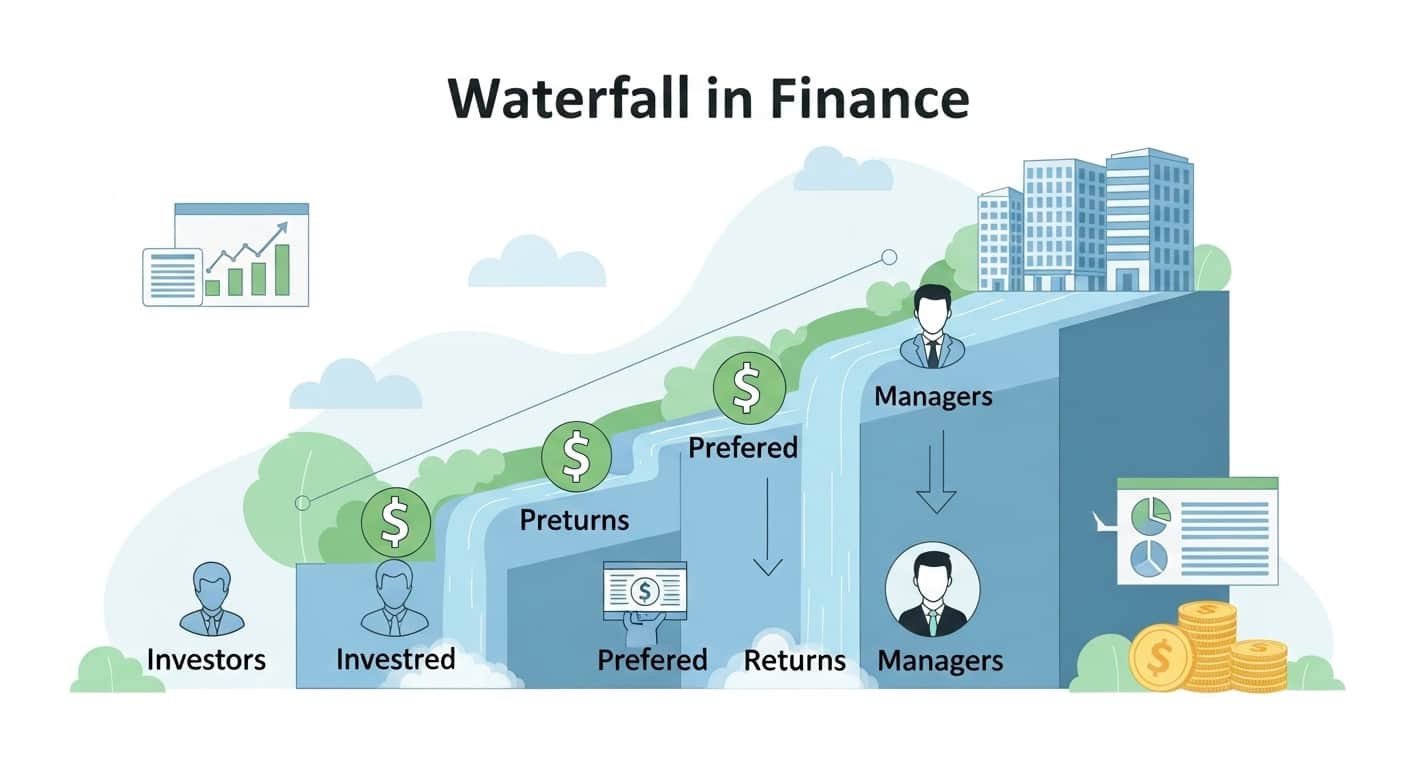
Waterfall in finance is a method used to decide how money is shared among different people involved in an investment. The name comes from the idea of water flowing down steps, where each level must be filled before water moves to the next one. In the same way, money is distributed step by step based on agreed rules. This system is widely used in private equity, real estate, and investment funds.
The main purpose of a financial waterfall is fairness and clarity. Everyone knows who gets paid first and how profits are divided. This helps reduce confusion and conflict. By setting clear rules at the beginning, investors and managers can focus on growing the investment instead of arguing about money later.
What Is Waterfall in Finance?
Waterfall in finance refers to the structured order in which cash flows or profits are distributed. It explains how returns move from one group to another, usually starting with investors and ending with fund managers or sponsors. Each stage has specific conditions that must be met before moving forward.
This structure is written into legal agreements before an investment begins. Because of this, it creates trust and transparency. Investors feel protected, while managers are motivated to perform well and earn additional rewards.
Why It Is Called a Waterfall
The term waterfall is used because money flows in levels, just like water falling from one step to another. If one level is not fully satisfied, the next level receives nothing. This makes the flow of money easy to understand and visualize, even for beginners.
Types of Waterfall Structures
There are different types of waterfall structures in finance. The choice depends on the type of investment and the level of risk involved. Each structure affects how quickly profits are shared and who benefits the most.
The two most common types are deal-by-deal waterfalls and whole-of-fund waterfalls. Both follow the same idea but apply it differently.
| Waterfall Type | When Profits Are Shared | Risk Level |
|---|---|---|
| Deal-by-Deal | After each deal | Higher |
| Whole-of-Fund | After entire fund performs | Lower |
How the Waterfall Model Works Step by Step
The waterfall in finance usually follows a clear sequence. First, investors receive their original invested money back. This step is known as the return of capital and helps protect investors from losses.
Next comes the preferred return. This is a minimum profit investors must earn before managers receive bonuses. After that, managers may enter a catch-up phase, followed by a final profit split known as carried interest.
| Step | Who Gets Paid | Purpose |
|---|---|---|
| Return of Capital | Investors | Recover initial investment |
| Preferred Return | Investors | Minimum guaranteed return |
| Catch-Up | Managers | Performance reward |
| Carried Interest | Both | Profit sharing |
Advantages and Challenges of Waterfall in Finance
One major advantage of the waterfall in finance is transparency. Everyone understands the rules before investing. It also protects investors by giving them priority and motivates managers to work harder to increase profits.
However, waterfalls can be complex. Legal language may be difficult for beginners to understand. If the structure is poorly designed, it may favor one party too much. This is why careful review is very important.
| Advantages | Challenges |
|---|---|
| Clear profit rules | Complex structure |
| Investor protection | Hard for beginners |
| Strong incentives | Needs legal review |
Real-World Examples
In real estate investments, rental income often flows through a waterfall every year. Investors receive steady returns first, while developers earn higher rewards only after meeting performance targets.
In private equity, waterfalls apply when companies are sold. Investors recover their money and preferred returns first. Only then do fund managers earn carried interest. This balance makes the waterfall model very popular.
Conclusion
Waterfall in finance is a powerful system that ensures fair and structured profit distribution. It protects investors, rewards performance, and reduces disputes. By clearly defining how money flows, it creates trust among all parties.
Anyone involved in investing should understand how waterfalls work. Reading agreements carefully and asking questions can make a big difference. With the right structure, a financial waterfall supports long-term success.
FAQ
Frequently Asked Questions
What is a waterfall in finance?
It is a method for distributing profits in a fixed order.
Where is the waterfall model used?
It is commonly used in private equity and real estate.
What is preferred return?
It is the minimum return investors earn before managers get bonuses.
Is waterfall structure fixed?
Yes, it is defined in legal agreements before investing.
Is waterfall in finance good for beginners?
Yes, if explained clearly and reviewed carefully.