Cyclospora Parasite Outbreak 2026: Symptoms, States Affected, Food Sources, and How to Stay Safe
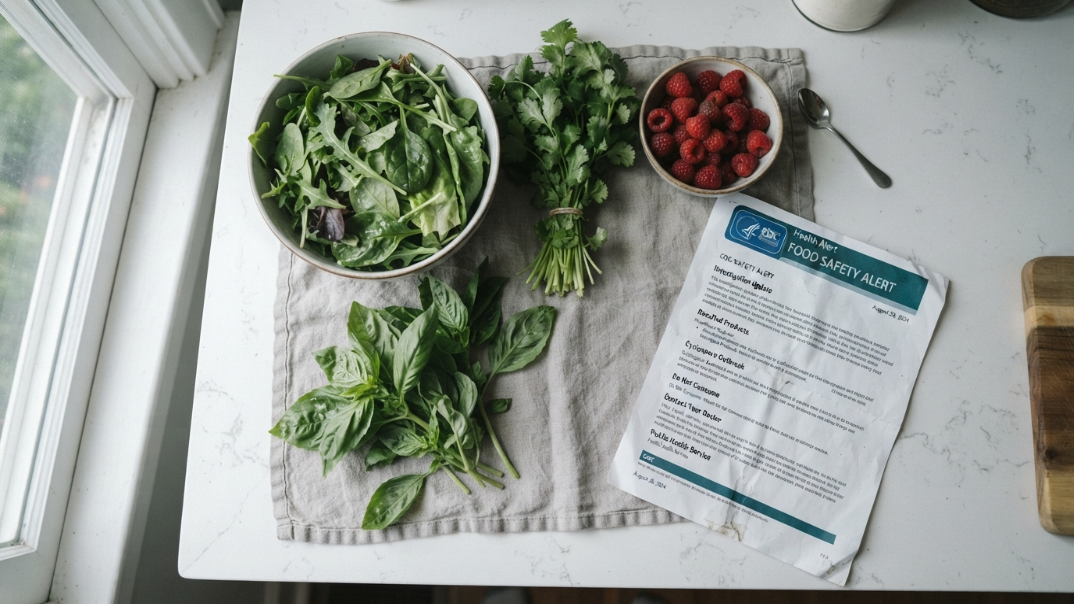
Cyclospora Parasite Outbreak 2026: Symptoms, States Affected, Food Sources, and How to Stay Safe
On July 14, 2026, the CDC confirmed what public health officials in Michigan had already been watching for weeks: a large, multistate cyclospora outbreak affecting at least four Midwestern states. Michigan alone has reported more than 2,600 cases — compared to roughly 50 in a typical year. 'Cases are simply exploding across the country,' NBC medical contributor Dr. John Torres told TODAY. As of July 15, the national confirmed case count stands at 1,645 laboratory-confirmed domestic cases reported to CDC from 34 states, with the CDC aware of more than 6,700 total confirmed or probable cases still requiring analysis.
The parasite responsible is Cyclospora cayetanensis — a microscopic, single-celled organism that infects the small intestine after a person swallows contaminated food or water. Its most notorious symptom is sudden, profuse, watery diarrhea that people describe as more severe and longer-lasting than any stomach flu they've experienced. What makes it particularly dangerous to track: the incubation period can be up to two weeks, symptoms relapse after apparent recovery, standard stool tests frequently miss it, and the CDC made reporting it optional in July 2025 — a decision that has complicated the current response.
No single food source has been publicly identified as of this writing. That means there is no recall to follow and no single item to avoid. The investigation is ongoing across multiple clusters that may or may not be connected. What you can do right now is understand exactly how this parasite spreads, what the symptoms look like so you can seek care early, how to ask for the right diagnostic test, and what produce-handling practices reduce your exposure risk.
What Is Cyclospora? The Parasite Behind the Outbreak
Cyclospora cayetanensis is a microscopic, single-celled parasite — too small to see without a microscope — that belongs to a group of organisms called coccidian parasites, related to Cryptosporidium and Toxoplasma. It was first identified as a human pathogen in the late 1970s, but it wasn't until the 1990s that scientists fully characterized it as its own species. Dr. Omer Awan of the University of Maryland School of Medicine describes it plainly: 'This is not a new bug — we have seen outbreaks of this before — but this one seems particularly large.'
The parasite exists in an infectious form called an oocyst — a hard-shelled egg-like structure that is shed in the feces of infected people. When these oocysts contaminate food or water, they can survive for extended periods and are remarkably resistant to standard disinfection methods. Chlorine at normal water treatment concentrations does not reliably destroy Cyclospora oocysts. This is one reason why washing contaminated produce under tap water may not fully eliminate the risk.
Once swallowed, oocysts pass into the small intestine, where they mature and invade the intestinal lining cells. The parasite disrupts normal intestinal function, causing the characteristic explosive diarrhea and malabsorption that define cyclosporiasis. Critically, the parasite does not spread person-to-person. You cannot catch cyclospora from a sick family member through casual contact. The route of transmission is exclusively food or water contaminated with fecal matter containing oocysts.
2026 Cyclospora Outbreak: Current Case Counts and States Affected
The scale of the 2026 outbreak is striking when compared against recent history. In all of 2025, the US reported approximately 2,700 cyclospora cases nationally. As of July 15, 2026, confirmed and probable cases for this year alone exceed 6,700 — with the season typically running through August. Gwen Biggerstaff, deputy director of the CDC's Division of Foodborne Diseases, told reporters at a July 14 briefing that the number of cases is 'unusually high' for this time of year.
| State / Region | Situation | Notes |
|---|---|---|
| Michigan | Epicenter — 2,600+ cases reported by state | Typically reports ~50 cases per year; hardest-hit state nationally; early results suggest lettuce or salad greens may be involved |
| Ohio | 500+ cases, with 306 in Lucas County alone | Ohio counties bordering southeast Michigan especially affected; Ohio Dept of Health confirmed 177 statewide as of July 2 |
| West Virginia | Part of confirmed 4-state CDC outbreak cluster | CDC confirmed Michigan, Ohio, West Virginia, and Kentucky share a linked outbreak of 400+ cases |
| Kentucky | Part of confirmed 4-state CDC outbreak cluster | Included in the July 14 CDC health alert confirming the multistate cluster |
| Illinois, New York, Texas | High case counts — among top-reporting states nationally | Texas State University microbiology experts confirm these states are next-highest after Michigan |
| Total: 34 states | 1,645 CDC-confirmed domestic cases | 6,700+ total probable/confirmed cases nationwide; CDC anticipates counts will continue rising due to 6-week reporting lag |
It is important to understand why CDC and state case counts differ so significantly. States often include both probable and confirmed cases, while the CDC's national surveillance count currently reflects only laboratory-confirmed cases that have completed the reporting process. The CDC estimates a 6-week lag between illness onset and case reporting at the national level — meaning the full scale of June and July illnesses will not be fully reflected in national data until late August. A WHO official has warned the outbreak could be 2 to 4 times larger than confirmed case counts suggest.
Cyclospora Symptoms: What to Watch For
Recognizing cyclosporiasis symptoms early matters because this illness responds well to treatment but can drag on for weeks without it. The incubation period — the time between swallowing the parasite and developing symptoms — is typically about 7 days, but can range from 2 to 14 days or longer. That extended window is one reason why identifying the contaminated food source is so difficult: by the time someone gets sick, they may not remember what they ate a week or two ago.
| Symptom | Frequency | Distinguishing Feature | Duration if Untreated |
|---|---|---|---|
| Watery diarrhea | Almost universal — the hallmark symptom | Often described as sudden, frequent, and 'explosive' — more severe than typical stomach flu or norovirus | Days to weeks; may recur in cycles after apparent improvement |
| Stomach cramps and bloating | Very common | Abdominal cramping that accompanies the diarrhea; distinct from typical constipation-type cramping | Persists throughout illness |
| Loss of appetite | Very common | Often significant — patients may not want to eat for several days | Gradual improvement with treatment |
| Fatigue | Very common | Pronounced exhaustion disproportionate to fever level; can significantly affect daily function | May persist even after diarrhea improves |
| Nausea | Common | Typically present without prominent vomiting — different from norovirus pattern | Improves with treatment |
| Weight loss | Common in prolonged cases | Due to combination of appetite loss, malabsorption, and fluid losses | Resolves with recovery |
| Low-grade fever | Less common | If present, usually mild — not a prominent feature like in many bacterial infections | Typically brief |
| Vomiting | Less common | Present in some cases; much less prominent than diarrhea compared to norovirus or Salmonella | Usually resolves early in illness |
The relapsing pattern of cyclosporiasis is one of its most important and least-known characteristics. Symptoms may improve — sometimes for days at a time — and then return without warning. The Michigan Department of Health and Human Services specifically warned: 'The time between being exposed and becoming sick is usually about one week but can range from two days to two weeks or more. Untreated, the illness may last from a few days to more than a month. Symptoms may go away and then return.' If you feel better and then get sick again with the same diarrhea a few days later, do not assume it is a separate new illness — it may be the same cyclospora infection relapsing.
Cyclospora vs. Norovirus vs. Food Poisoning: How to Tell Them Apart
Many people who develop diarrhea in summer assume they have a stomach bug or food poisoning that will resolve in a day or two. Cyclospora presents differently enough that recognizing the distinction is important for getting the right test and the right treatment.
| Feature | Cyclospora | Norovirus | Salmonella / Bacterial Food Poisoning |
|---|---|---|---|
| Incubation period | 7–14 days (often 1 week) | 12–48 hours | 6–72 hours typically |
| Main symptom | Explosive, watery diarrhea | Sudden vomiting and diarrhea | Diarrhea (may be bloody), nausea, vomiting |
| Vomiting prominence | Less prominent than diarrhea | Vomiting often the leading symptom | Variable — can be prominent |
| Fever | Mild or absent | Low-grade, brief | Often present, can be significant |
| Duration if untreated | Days to more than a month; relapses common | 1–3 days | 4–7 days typically |
| Relapsing pattern | Yes — hallmark feature | No | Rarely |
| Person-to-person spread | No — food/water only | Yes — highly contagious | Rare for most strains |
| Standard stool test detects it? | No — requires specific request | Rapid stool antigen test | Standard stool culture usually works |
| Treatment | Antibiotics (TMP-SMX) | Supportive care only | Supportive care; antibiotics in severe cases |
The key red flags that suggest cyclospora over a typical stomach bug: the diarrhea started more than 4–5 days after what you suspect might have been the exposure, the illness is lasting longer than a week without improvement, symptoms are getting better and then returning, and you recently ate fresh produce — especially leafy greens, herbs, or berries. If two or more of these apply, specifically ask your doctor to test for Cyclospora.
Which Foods Have Been Linked to Cyclospora Outbreaks?
As of July 15, 2026, no confirmed food source has been publicly identified for the current outbreak. Investigations are ongoing across multiple clusters. The Michigan Department of Health and Human Services stated that early results suggest lettuce or salad greens may be involved in the Michigan outbreak, but that investigators cannot yet rule out other foods. No food recall has been issued.
However, looking at the history of US cyclospora outbreaks provides important context. The same fresh produce categories have been implicated repeatedly across separate outbreaks over the past two decades, which reflects the contamination pathways most likely for this parasite — imported fresh herbs and greens that come into contact with feces-contaminated water or soil during growing, harvesting, or processing.
| Food Item | Outbreak Year(s) Previously Linked | Notes |
|---|---|---|
| Salad greens / lettuce blends | Multiple years including 2020, 2021, current 2026 investigation | Most common category — MDHHS suggests lettuce may be involved in Michigan 2026 cases |
| Cilantro | 2013, 2015, 2016, 2017, 2018 | Repeatedly implicated across multiple years; often imported from Mexico |
| Fresh basil | 2005, 2020 | Two separate multistate outbreaks traced to fresh basil |
| Raspberries | 1996, 1997, 1998, 2000 | Early US outbreaks strongly linked to imported fresh raspberries |
| Snow peas | 2004 | Linked to imported snow peas; a reminder that not all implicated produce is leafy |
| Green onions / scallions | 2013 | Implicated in some 2013 clusters |
| Fresh spinach | Suspected in multiple investigations | Frequently named alongside other leafy greens in traceback investigations |
Dr. Omer Awan explains why traceback investigations are so difficult: 'We don't know what the exact produce is or the brand of the produce. And because we haven't pinned it down, that means people are still eating the contaminated food that's leading to so many cases.' The 1-to-2-week incubation period compounds the problem — by the time someone is sick enough to see a doctor, they cannot reliably reconstruct everything they ate 10 days ago. The modern food distribution system, in which a single batch of produce can reach dozens of states through multiple retail channels, makes traceback even more complex than it was in past decades.
Diagnosis: Why Standard Tests Miss Cyclospora
This is the most critical piece of information in this entire article for anyone who develops symptoms: standard stool tests — routine stool cultures and standard ova-and-parasite exams — frequently do not detect Cyclospora cayetanensis. If your doctor orders a 'standard diarrhea panel' without specifically requesting Cyclospora testing, a negative result does not rule out cyclospora infection.
Detection requires either modified acid-fast staining (also called acid-fast stain for coccidian parasites) or PCR-based stool testing that specifically includes Cyclospora. The CDC's Health Advisory issued July 14 specifically states: 'Clinicians should specifically request diagnostic testing for Cyclospora when it is clinically suspected.' Parasite shedding in stool can also be intermittent — meaning a single stool sample may return negative even in an infected person, and multiple samples collected on different days may be needed.
- If you have persistent watery diarrhea lasting more than 3–4 days, tell your doctor you want to be tested specifically for Cyclospora — not just a general stool culture or standard ova and parasite exam.
- Ask your doctor or the laboratory directly: 'Does your standard stool test include modified acid-fast staining or PCR for Cyclospora cayetanensis?' If not, request it specifically.
- If you've already had a stool test that came back negative but symptoms continue or relapse, ask your provider to repeat the test or refer you to an infectious disease specialist.
- Let your doctor know if you live in or recently visited Michigan, Ohio, West Virginia, Kentucky, Illinois, New York, or Texas — the states with the highest current case counts. This clinical context will help your provider prioritize specific Cyclospora testing.
- Be prepared to describe what fresh produce you've eaten in the past 2 weeks. Even if you don't remember exactly, providing as much detail as possible helps both your doctor and public health investigators.
Treatment: What Works and What Doesn't
The good news: cyclosporiasis is treatable with prescription antibiotics and most people recover fully. The bad news: the treatment options are more limited than for many bacterial infections, and there are real challenges for people with certain drug allergies.
The standard and preferred treatment is trimethoprim-sulfamethoxazole (TMP-SMX) — the antibiotic combination sold under brand names including Bactrim and Septra. The typical course is one double-strength tablet taken orally twice daily for 7 to 10 days. Pharmacy Times confirms TMP-SMX remains the preferred therapy, and most patients see significant improvement within a few days of starting it.
For patients with sulfa allergies — which applies to the sulfamethoxazole component of TMP-SMX — the options become more complicated. Alternative regimens exist but are less validated in clinical evidence, and Pharmacy Times notes that 'alternative regimens for sulfa-allergic patients are less validated.' If you have a documented sulfa allergy and develop symptoms consistent with cyclosporiasis, specifically mention your allergy when seeking care and ask for an infectious disease consultation if your primary care provider is unsure about alternatives.
Beyond antibiotics, supportive care is essential: maintaining adequate hydration (oral rehydration salts or electrolyte solutions are more effective than plain water for severe diarrhea), monitoring for signs of dehydration (dark urine, dizziness, extreme thirst, dry mouth), and resting adequately. Immunocompromised individuals — including people with HIV/AIDS, those on immunosuppressive medications, and transplant recipients — may experience prolonged illness and require closer medical supervision and possibly longer antibiotic courses.
High-Risk Groups: Who Needs to Be Most Careful
For most healthy adults, cyclosporiasis is miserable but not life-threatening. The current outbreak has produced no confirmed deaths out of 1,645 confirmed cases — a reassuring signal. However, certain groups face significantly higher risk of severe illness, prolonged infection, and complications including malabsorption, cholecystitis (gallbladder inflammation), and reactive arthritis.
- Young children (under 5): Children are at higher risk of severe dehydration from prolonged diarrhea and may have more difficulty communicating symptoms clearly. The current outbreak affects patients as young as 2 years old. If your child develops persistent explosive diarrhea lasting more than 2–3 days, seek pediatric care promptly and specifically mention cyclospora in the context of the current outbreak.
- Older adults (65 and above): The current outbreak has affected patients up to age 95. Older adults tolerate dehydration less well, may have complicating chronic conditions, and are more likely to require hospitalization. Of the 1,645 CDC-confirmed cases, 141 people (9%) have been hospitalized — many of them from high-risk age groups.
- Immunocompromised individuals: People living with HIV/AIDS, cancer patients undergoing chemotherapy, organ transplant recipients on anti-rejection medications, and those on long-term corticosteroids can develop much more severe and prolonged cyclosporiasis. In immunocompromised patients, the infection may not resolve without treatment and can lead to biliary disease and other serious complications.
- Pregnant people: Dehydration from severe diarrhea poses particular risks during pregnancy. Pregnant individuals who develop symptoms consistent with cyclospora should seek medical care promptly rather than waiting to see if symptoms improve.
- People with sulfa allergies: As noted above, the primary treatment (TMP-SMX) is a sulfa drug. Having a documented sulfa allergy does not mean you cannot be treated — it means you need specialist guidance for alternative regimens.
Food Safety Practices: How to Reduce Your Risk Right Now
Experts are clear: there is no reason to stop eating fresh produce entirely. 'Almost all servings of fresh fruits and vegetables that you can buy on the market today are not linked to this outbreak, and are not any more likely to cause illness because of the outbreak,' says Dr. William Schaffner of Vanderbilt University Medical Center. Since no single food source or recall has been issued, general produce-handling hygiene is your best available protective measure.
- Wash all fresh produce thoroughly under running water — even pre-washed, bagged salad greens. While washing alone cannot guarantee removal of Cyclospora oocysts (they are resistant to chlorine), it reduces surface contamination from soil and fecal matter. Use your hands or a clean produce brush for firmer items like cucumbers and carrots.
- Do not wash produce with soap, bleach, or commercial disinfectant solutions. The FDA does not recommend this — these substances are not safe for consumption and do not reliably kill oocysts.
- Wash your hands with soap and water for at least 20 seconds before preparing food, after handling raw produce, after using the restroom, and before eating. Hand hygiene is the most consistent preventive measure for all foodborne illnesses.
- Avoid swallowing water when swimming in pools, lakes, or natural bodies of water. Cyclospora can spread through water contaminated with fecal matter, including recreational water sources.
- Refrigerate fresh produce properly and consume it within recommended time frames. Wilted or aging produce that has been stored improperly may have higher microbial loads.
- If you are preparing food for others while you are symptomatic with diarrhea — regardless of suspected cause — be especially diligent about handwashing and consider having someone else handle food preparation if possible. While cyclospora is not person-to-person contagious, thorough hand hygiene prevents any fecal contamination of food surfaces.
- Monitor the CDC and FDA websites for any product recalls or alerts. If a specific food source is identified during the ongoing investigation, a recall may be issued. Bookmark cdc.gov/cyclosporiasis and fda.gov/food/outbreaks-foodborne-illness for updates.
Why This Outbreak Is Harder to Track Than Past Outbreaks
The 2026 cyclospora outbreak presents unusual challenges for investigators that explain why answers are taking longer than the public would like. Understanding these challenges also helps explain why expert guidance focuses on general precautions rather than specific product avoidance.
First, the surveillance gap. In July 2025, the CDC made cyclospora reporting optional within FoodNet — its main foodborne illness surveillance network. Previously, all participating states were required to track and report cases. Now, only states that choose to maintain surveillance are contributing data. This means the national picture is deliberately incomplete. Dr. Omer Awan was direct: 'This is precisely why we don't have a good handle on exactly the number of cases. The states have more accurate representation than actually even the federal government, the CDC.' Michigan, which maintained active surveillance, is reporting 2,600+ cases. The gap between what states know and what CDC is tracking nationally is visible in real time.
Second, the investigative challenge. Cyclospora investigations are particularly complex even under ideal conditions. Gwen Biggerstaff of the CDC's Division of Foodborne Diseases stated at the July 14 briefing: 'Cyclospora investigations are particularly challenging and take a significant amount of time and effort.' The reasons are specific to this parasite: the 1–2 week incubation period makes meal recall unreliable; oocysts are intermittently shed in stool making testing inconsistent; and the modern food supply chain means a single contaminated product passes through multiple distributors and retailers before reaching consumers, complicating traceback.
Third, multiple simultaneous clusters. The CDC is investigating 'several outbreaks' — not one. Some clusters may share a common food source; others may not. The confirmed four-state Midwest cluster involving Michigan, Ohio, West Virginia, and Kentucky has 400+ linked cases, but whether other state clusters are connected to this one, or represent separate events, is still being determined. Dr. Nicholas Bagdasarian of the Michigan Department of Health and Human Services told reporters that even within Michigan, investigators have not yet confirmed a single responsible food item and cannot rule out other foods beyond lettuce and salad greens.
When to See a Doctor: Specific Signs That Need Medical Attention
Not every case of diarrhea requires a doctor visit. But cyclosporiasis has specific features that make waiting it out at home genuinely risky — particularly the relapsing pattern and the length of untreated illness. Seek medical care if any of the following apply:
- Diarrhea has lasted more than 3–4 days without clear improvement — especially if it started about a week after eating fresh produce.
- You felt better for a day or two and then the diarrhea returned — this relapsing-remitting pattern is a specific warning sign for cyclospora.
- You are showing signs of dehydration: dark or decreased urine output, dizziness when standing, dry mouth, or extreme thirst. Dehydration from persistent diarrhea is the primary reason cyclospora patients are hospitalized.
- You are in a high-risk group — very young, over 65, pregnant, or immunocompromised — with diarrhea lasting more than 2 days.
- You have a high fever (above 101.5°F / 38.6°C) alongside diarrhea, which may suggest a bacterial co-infection requiring different treatment.
- You have bloody diarrhea — cyclospora does not typically cause bloody stools; blood is a signal for a different pathogen requiring urgent evaluation.
- You live in or recently visited Michigan, Ohio, West Virginia, Kentucky, Illinois, New York, or Texas and have developed symptoms within 2 weeks of eating fresh produce.
When you see your doctor, the most important words to say are: 'I want to be tested specifically for Cyclospora cayetanensis.' Explain that standard stool tests miss it and that you specifically need modified acid-fast staining or PCR testing. In the context of the current outbreak, most clinicians in affected states will be familiar with this — but being your own advocate on this point can prevent weeks of undiagnosed illness.
Conclusion
The 2026 cyclospora outbreak is real, large, and still growing. More than 6,700 probable and confirmed cases in 34 states represent the largest cyclospora event in recent US history, nearly matching the total reported for all of 2025 in the first two and a half months of summer. Michigan bears the heaviest burden with more than 2,600 cases, and the CDC confirmed on July 14 that Michigan, Ohio, West Virginia, and Kentucky share a linked multistate outbreak of at least 400 cases. More clusters are under investigation.
What makes cyclospora different from most stomach bugs — and what most people don't know until they experience it — is its behavior: the long incubation period that makes the source almost impossible to remember, the relapsing symptoms that confuse patients into thinking they've recovered, and the standard tests that miss it entirely unless you know to ask for the right one. Armed with that knowledge, you are in a meaningfully better position than the typical patient walking into an urgent care clinic.
Wash your produce thoroughly. Monitor the CDC and FDA for any recall announcements. If you develop persistent watery diarrhea with a relapsing pattern — especially after eating fresh produce — see a doctor and specifically ask for Cyclospora testing. Do not stop eating fresh fruits and vegetables out of fear, but do handle them with the same care you would during any active foodborne illness investigation. The source investigation is ongoing, and the situation may change rapidly. Stay informed, stay calm, and know when to seek care.
FAQ
Frequently Asked Questions
How many cyclospora cases are there in the US in 2026?
As of July 15, 2026, the CDC has confirmed 1,645 laboratory-confirmed domestic cases of cyclosporiasis in 34 states. However, the CDC is also aware of more than 6,700 total confirmed or probable cases nationally that still require further analysis. This compares to 249 cases reported during the same period (May 1 to mid-July) in 2025 and approximately 2,700 cases for all of 2025. The true number is believed to be even higher — the CDC estimates a 6-week reporting lag, and a WHO official warned the outbreak could be 2 to 4 times larger than confirmed counts suggest.
What states have the most cyclospora cases right now?
Michigan is by far the hardest-hit state, with more than 2,600 cases reported — compared to roughly 50 in a typical year. The CDC confirmed on July 14 that Michigan, Ohio, West Virginia, and Kentucky are linked in a single multistate outbreak cluster of 400+ cases. Ohio has more than 500 cases including 306 in Lucas County alone. Among other high-reporting states, Illinois, New York, and Texas are named by Texas State University microbiology experts as the next-highest after Michigan. Cases have been reported in 34 states total.
What are the symptoms of cyclospora infection?
The hallmark symptom of cyclosporiasis is sudden, frequent, watery 'explosive' diarrhea — often described as more severe and persistent than any stomach flu. Other common symptoms include severe stomach cramps, bloating, loss of appetite, significant fatigue, nausea, and weight loss. Low-grade fever and vomiting occur in some patients but are less prominent than the diarrhea. Symptoms typically begin about 7 days after exposure (range: 2–14 days). Without treatment, symptoms can last from a few days to more than a month, and they frequently relapse — improving for a few days and then returning.
What food is causing the cyclospora outbreak in 2026?
As of July 15, 2026, no single food source has been publicly confirmed as responsible for the 2026 outbreak. The Michigan Department of Health and Human Services said early results point toward lettuce or salad greens as a potential source in Michigan, but cannot rule out other foods. No food recall has been issued. Past US cyclospora outbreaks have been linked to cilantro, fresh basil, raspberries, snow peas, green onions, salad mix blends, and other fresh produce — but no specific product for this outbreak has been identified. CDC and FDA investigations are ongoing across multiple clusters.
How is cyclospora different from the stomach flu or norovirus?
Several key differences: Cyclospora has a much longer incubation period (7–14 days vs 12–48 hours for norovirus). Diarrhea is more prominent than vomiting in cyclospora (the opposite is often true for norovirus). Cyclospora illness lasts much longer — days to more than a month without treatment, versus 1–3 days for norovirus. Cyclospora symptoms frequently relapse after apparent improvement — norovirus does not. Cyclospora cannot spread person-to-person, unlike norovirus which is highly contagious. Cyclospora requires prescription antibiotic treatment; norovirus resolves on its own with supportive care.
How is cyclospora diagnosed? Will a standard stool test detect it?
No — standard stool cultures and standard ova-and-parasite exams frequently miss Cyclospora cayetanensis. Detection requires specifically ordered modified acid-fast staining or PCR-based stool testing that explicitly includes Cyclospora. The CDC's July 14 Health Advisory specifically instructed clinicians to 'specifically request diagnostic testing for Cyclospora when it is clinically suspected.' If you have persistent watery diarrhea, tell your doctor you want to be tested specifically for Cyclospora — not just a general stool panel. Parasite shedding can also be intermittent, so multiple samples on different days may be needed for accurate results.
What is the treatment for cyclospora infection?
The standard and preferred treatment is trimethoprim-sulfamethoxazole (TMP-SMX), sold under brand names Bactrim and Septra. The typical course is one double-strength tablet taken twice daily for 7 to 10 days. Most patients see significant improvement within days of starting treatment. For patients with sulfa allergies, alternative regimens exist but are less clinically validated — an infectious disease consultation is recommended in these cases. Supportive care includes oral rehydration with electrolyte solutions, adequate rest, and monitoring for signs of dehydration. Immunocompromised patients may require longer treatment courses and closer medical monitoring.
Can I get cyclospora from another person?
No. Cyclospora does not spread person-to-person. You cannot catch it from a sick family member through casual contact, sharing a household, or being near someone who is ill. The only route of transmission is swallowing food or water contaminated with Cyclospora oocysts from feces of an infected person. This means there is no need to isolate from household members if you are sick, though anyone preparing food while symptomatic should be especially careful about handwashing to avoid contaminating food surfaces. The CDC explicitly states: 'Person-to-person spread is highly unlikely.'
Should I stop eating fresh produce because of the cyclospora outbreak?
No — experts explicitly advise against stopping fresh produce consumption. Dr. William Schaffner of Vanderbilt University Medical Center stated: 'Almost all servings of fresh fruits and vegetables that you can buy on the market today are not linked to this outbreak, and are not any more likely to cause illness because of the outbreak.' No specific food product has been identified or recalled. The recommended approach is to continue eating fresh produce while following standard food safety practices: wash all produce thoroughly under running water before eating, wash hands before food preparation, and monitor CDC and FDA websites for any specific recall announcements if a source is identified.
Why is the cyclospora outbreak so hard to investigate?
Several factors make cyclospora investigations particularly challenging. The 1–2 week incubation period means patients typically cannot reliably recall what they ate when they were exposed. Standard stool tests miss the parasite, leading to underdiagnosis and delayed reporting. Oocysts are shed intermittently in stool, making even properly ordered tests sometimes return false negatives. The modern food distribution system means a single contaminated product reaches dozens of states through multiple retail channels, complicating traceback. Additionally, in July 2025, the CDC made cyclospora reporting optional within FoodNet — meaning national surveillance data is now incomplete by design, hampering the federal response.