Nipah Virus Explained: Symptoms, Causes, Risks, and Prevention (2026)
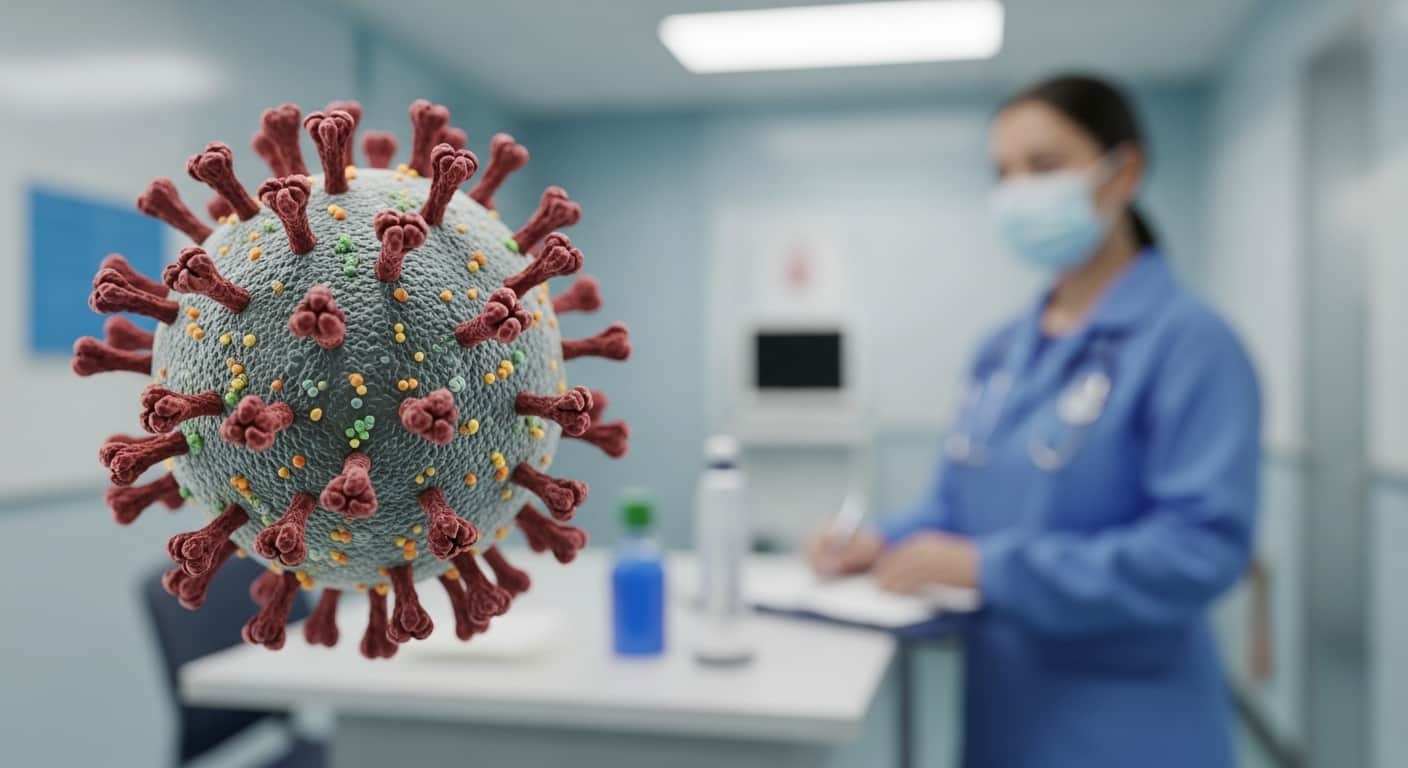
Nipah Virus Explained: Symptoms, Causes, Risks, and Prevention (2026)
The Nipah virus is one of the most dangerous infectious diseases known to science — carrying a case fatality rate of 40% to 100% depending on the outbreak, according to WHO and CDC data. To put that in context, the COVID-19 fatality rate during the pandemic was below 2% globally. Nipah kills between 4 and 10 times more people per confirmed case than COVID-19 did at its peak. On January 26, 2026, India's International Health Regulations National Focal Point notified WHO of two confirmed Nipah virus cases in West Bengal's North 24 Parganas district — both nurses aged 20 to 30 who developed severe symptoms in late December 2025.
This is not an isolated event. In 2025, four confirmed fatal Nipah cases were reported in Bangladesh and four confirmed cases including two deaths were reported across two districts of Kerala. Kerala alone has reported nine Nipah outbreaks since 2018 — the 2018 outbreak killed 21 of 23 confirmed and probable cases, a fatality rate of 91%. WHO added Nipah to its R&D Blueprint priority pathogen list. The CDC and the US National Institute of Allergy and Infectious Diseases classify it as a Category C biological threat — the same category as emerging pathogens considered potential biological weapons due to their ability to be engineered for mass dissemination.
Despite this severity, there are currently no approved vaccines or antiviral treatments for Nipah virus infection anywhere in the world. This guide explains everything you need to know about Nipah virus — its origin, how it spreads, what symptoms look like and in what order they progress, the complete outbreak history with fatality data, current treatment options, the vaccine candidates in clinical trials, and evidence-based prevention measures — with specific attention to the situation in India, where outbreaks have been most frequent since 2018.
What Is the Nipah Virus?
Nipah virus (NiV) is a zoonotic pathogen — meaning it originates in animals and can cross into humans — belonging to the Paramyxoviridae family, genus Henipavirus. It is a single-stranded, negative-sense RNA virus closely related to Hendra virus, another highly lethal pathogen. The virus was first identified in 1998 during an outbreak of encephalitis and respiratory illness among pig farmers in Sungai Nipah village in Malaysia — the location that gave the virus its name. That initial outbreak resulted in 265 human infections, 105 deaths, and the culling of more than 1.1 million pigs to contain spread.
Fruit bats of the Pteropodidae family — commonly called flying foxes, genus Pteropus — are the natural reservoir hosts of Nipah virus. The virus does not appear to cause disease in the bats themselves. It circulates silently in bat populations across a wide geographic range covering South Asia, Southeast Asia, and extending into parts of Africa and Australia where Pteropodidae bats are present. This wide bat geographic range means the potential spillover zone for Nipah is significantly larger than current outbreak history suggests.
| Classification | Detail |
|---|---|
| Virus family | Paramyxoviridae |
| Genus | Henipavirus |
| Genome | Single-stranded, negative-sense RNA |
| Natural reservoir | Fruit bats — Pteropus species (flying foxes), Pteropodidae family |
| First identified | 1998 — pig farmers in Sungai Nipah, Malaysia |
| WHO classification | Priority pathogen — R&D Blueprint for Epidemics |
| CDC classification | Category C biological threat agent |
| Primary outbreak zone | South and Southeast Asia — Bangladesh, India (Kerala, West Bengal), Malaysia, Singapore, Philippines |
| Known strains | NiV-M (Malaysia strain) and NiV-B (Bangladesh strain) — NiV-B shows higher human-to-human transmission efficiency |
| Approved treatment | None — no licensed vaccine or antiviral as of 2026 |
Complete Nipah Virus Outbreak History
Since its identification in 1998, Nipah virus has caused confirmed outbreaks in Malaysia, Singapore, Bangladesh, India, and the Philippines. Bangladesh has reported cases almost every year since 2001, making it the country with the longest continuous Nipah exposure record — with 347 total confirmed cases and a cumulative case fatality rate of 71.7% as of 2025, according to WHO. India, particularly Kerala and West Bengal, has become an increasingly active outbreak zone since 2018.
| Year | Country / Location | Cases | Deaths | CFR | Primary Source |
|---|---|---|---|---|---|
| 1998–1999 | Malaysia and Singapore | 265 | 105 | 40% | Pig farms — bat-to-pig-to-human transmission |
| 2001 | Bangladesh (Meherpur) and India (Siliguri, West Bengal) | 13 + 66 | 9 + 45 | 69% / 68% | Raw date palm sap consumption and hospital transmission |
| 2001–2023 (annual) | Bangladesh — near-annual outbreaks | 347 total cumulative | ~249 total | 71.7% cumulative CFR | Raw date palm sap, bat contact, human-to-human in communities |
| 2007 | India — Nadia, West Bengal | 5 | 5 | 100% | Hospital cluster — human-to-human transmission |
| 2014 | Philippines | 11 (horses + humans) | 2 human deaths | ~18% | Horse contact — NiV-M strain variant |
| 2018 | India — Kerala (Kozhikode and Malappuram) | 23 (confirmed + probable) | 21 | 91% | Fruit bat contact — deadliest Kerala outbreak to date |
| 2019 | India — Kerala | 1 | 0 | 0% | Single case, survived — strong containment response |
| 2021 | India — Kerala (Kozhikode) | 1 | 1 | 100% | Single fatal case |
| 2023 | India — Kerala (Kozhikode) | 6 | 2 | 33% | Improved containment — 723 contacts traced |
| 2024 (early) | Bangladesh — multiple districts | Confirmed cases | CFR 100% for 2024 cases | 100% | Seasonal date palm sap consumption |
| 2025 (Jan–Aug) | Bangladesh — 4 districts | 4 fatal | 4 | 100% | Three linked to date palm sap; fourth source under investigation |
| 2025 (May–Jul) | India — Kerala (Palakkad, Malappuram) | 4 | 2 | 50% | 723 contacts identified across 5 districts |
| 2025–2026 (Dec–Jan) | India — West Bengal (North 24 Parganas) | 2 (both nurses) | Under monitoring at publication | Pending | Healthcare worker transmission — Barasat district |
How Nipah Virus Spreads: Transmission Pathways
Nipah virus transmission occurs through several distinct pathways — and the route of transmission affects both the scale of outbreak and the likely outcome for infected individuals. Understanding exactly how the virus crosses from its bat reservoir to humans is critical to understanding which behaviors and situations carry risk.
- Raw date palm sap consumption — the dominant transmission route in Bangladesh, responsible for approximately half of all confirmed cases. Fruit bats roost near date palm trees and contaminate collected sap with their saliva, urine, and excreta while feeding. Drinking raw or unboiled date palm sap — including the fermented form called tari — introduces the virus directly. Seasonal outbreaks in Bangladesh between December and May coincide exactly with the date palm sap harvesting season.
- Direct contact with infected fruit bats — handling, being bitten or scratched by, or having mucous membrane exposure to infected bats or their excreta. The fourth 2025 Bangladesh case had no date palm sap history, and direct bat contact remains the most likely source under WHO investigation.
- Pig-to-human transmission — the original 1998 Malaysia outbreak pathway. Pigs serve as amplifying hosts; the virus replicates efficiently in pigs, which then expose farm workers through respiratory secretions, blood, urine, and excreta. This pathway drove the largest single outbreak in history.
- Human-to-human transmission — documented in both Bangladesh and India, primarily in healthcare and family caregiver settings. The NiV-B (Bangladesh) strain shows greater human-to-human transmission efficiency than the NiV-M (Malaysia) strain. Transmission occurs through close contact with bodily fluids — respiratory secretions, blood, urine — of an infected person. The 2001 Siliguri hospital outbreak and the January 2026 West Bengal outbreak both involved healthcare worker transmission.
- Contaminated food beyond date palm sap — WHO documentation includes other food items potentially contaminated by bat saliva or excreta, such as raw fruit partially consumed by bats. This pathway is less documented than date palm sap but is considered a risk in geographic areas where fruit bats are present.
- Incubation period to watch for — the standard incubation period for Nipah is 3 to 14 days from exposure to symptom onset. In rare cases, WHO documents incubation periods of up to 45 days have been reported — which complicates contact tracing when the exposure source is not immediately identified.
| Transmission Route | Primary Context | Geographic Relevance | Relative Risk Level |
|---|---|---|---|
| Raw date palm sap (raw or fermented) | Drinking unboiled sap collected near bat roosting trees | Bangladesh — primary route; India (West Bengal) | Highest documented — ~50% of Bangladesh cases |
| Bat direct contact | Handling bats; exposure to bat urine, saliva, excreta | All Pteropus bat range — South Asia, Southeast Asia, parts of Africa and Australia | Moderate — documented but less common than food-borne route |
| Pig-to-human | Farm worker contact with infected pigs' secretions and excreta | Malaysia and Singapore (1998–1999); not dominant since | Historically high in amplifying-host outbreaks; currently lower risk due to surveillance |
| Human-to-human (healthcare) | Close unprotected contact with infected patients in hospitals or home care | Bangladesh, India (Siliguri 2001, West Bengal 2026), Kerala | 29% of Bangladesh cases; dominant route in India outbreaks |
| Human-to-human (community) | Close family contact with infected individuals outside clinical settings | All outbreak countries | Documented but requires prolonged close contact; not as efficient as influenza or COVID-19 |
| Contaminated food (non-sap) | Partially eaten fruit contaminated with bat saliva; other food contamination | All outbreak geographic zones | Lower documentation level; considered a risk but not a confirmed dominant route |
Symptoms of Nipah Virus Infection
Nipah virus infection produces a clinical picture that evolves across distinct phases — beginning with non-specific flu-like symptoms that are difficult to distinguish from other febrile illnesses, and progressing in severe cases to life-threatening neurological disease. This progression from generic early symptoms to severe encephalitis within days is one of the factors that makes Nipah particularly dangerous — by the time the severity of infection is apparent, the disease is already advanced.
| Disease Phase | Timeline | Symptoms | Clinical Significance |
|---|---|---|---|
| Early phase — prodrome | Days 1–5 after symptom onset | Fever, headache, muscle pain (myalgia), fatigue, sore throat, nausea, vomiting | Clinically indistinguishable from influenza, dengue, or other febrile illnesses — delays specific testing and diagnosis |
| Respiratory phase | Days 3–7 (more common with NiV-B strain) | Cough, respiratory distress, atypical pneumonia — NiV-B causes more respiratory symptoms than NiV-M | Respiratory droplets during this phase contribute to human-to-human transmission in healthcare settings |
| Neurological phase | Days 5–14 | Confusion, disorientation, drowsiness, altered consciousness, seizures — signs of acute encephalitis (brain inflammation) | Neurological involvement marks transition to severe disease with significantly higher fatality risk |
| Severe phase | Days 7–14 | Coma, acute respiratory distress syndrome (ARDS), multi-organ failure | Requires intensive care; most deaths occur in this phase; survivors may have persistent neurological sequelae |
| Atypical presentations | Variable | Asymptomatic infection (documented in some exposed individuals), relapsing encephalitis months to years after initial recovery | Relapsing encephalitis in survivors is a documented Nipah characteristic — distinguishes it from most other viral encephalitides |
A clinically important feature of Nipah encephalitis is the possibility of relapse. Unlike most viral encephalitides where neurological disease resolves with recovery, Nipah virus has documented cases of relapsing encephalitis occurring months to years after apparent recovery — thought to result from persistent latent virus reactivating in the nervous system. This makes long-term follow-up of confirmed survivors a clinical necessity.
How Dangerous Is the Nipah Virus? Fatality Data by Outbreak
Nipah virus carries one of the highest mortality rates of any known infectious disease in current circulation. The overall case fatality rate across all documented outbreaks ranges from 40% to 100%, depending on the strain, quality of healthcare access, speed of detection, and containment measures. The CDC reports an 80% overall CFR for NiV specifically cited in Emerging Infectious Diseases (January 2026). Bangladesh's cumulative 347-case surveillance record shows a 71.7% CFR over 24 years of near-annual outbreaks.
| Context | Case Fatality Rate | Source |
|---|---|---|
| Overall NiV range — all outbreaks | 40% to 100% | WHO Fact Sheet / CDC |
| Overall NiV — Emerging Infectious Diseases 2026 | 80% CFR cited | CDC — Emerging Infectious Diseases, January 2026 |
| Bangladesh cumulative (347 cases, 2001–2025) | 71.7% | WHO Disease Outbreak News, August 2025 |
| Kerala 2018 outbreak | 91% (21 of 23 cases) | WHO / India IHR NFP |
| Kerala 2021 outbreak | 100% (1 case, 1 death) | WHO Disease Outbreak News |
| Bangladesh 2024 cases | 100% | WHO Disease Outbreak News, August 2025 |
| Bangladesh 2025 cases (Jan–Aug) | 100% (4 confirmed fatal) | WHO Disease Outbreak News, August 2025 |
| Kerala 2025 cases (May–Jul) | 50% (4 cases, 2 deaths) | WHO Disease Outbreak News, August 2025 |
| Malaysia 1998 outbreak (original) | ~40% (105 deaths / 265 cases) | WHO / ScienceDirect review |
| COVID-19 global average (for comparison) | ~1–2% | WHO |
| Ebola Zaire average (for comparison) | ~50% | WHO |
The wide fatality range — from 33% in Kerala 2023 to 100% in multiple Bangladesh and Indian outbreaks — reflects real differences in containment speed, healthcare quality, and transmission chain characteristics rather than variance in the underlying virus lethality. Kerala's improving CFR from 91% in 2018 to 50% in 2025 reflects the state's developing institutional capacity for Nipah response — including faster recognition, better contact tracing (723 contacts identified in 2025), and improved clinical management protocols.
Nipah Virus in India: Why Kerala and West Bengal Are High-Risk Zones
India has become the country with the most frequent Nipah outbreaks outside Bangladesh, with West Bengal affected in 2001, 2007, and December 2025 to January 2026, and Kerala experiencing nine outbreaks since 2018. The January 2026 West Bengal outbreak — confirmed by WHO on January 26, 2026 — involved two nurses from Barasat in North 24 Parganas district who developed symptoms in late December 2025. Both were confirmed positive through RT-PCR and ELISA testing at the National Institute of Virology in Pune.
Sequence analysis from both Siliguri (West Bengal) and Kerala shows 97–99% genetic similarity with the NiV-B (Bangladesh) strain — confirming that India's outbreaks involve the Bangladesh strain variant, which shows greater human-to-human transmission efficiency than the Malaysia strain. This is epidemiologically significant: it means Indian outbreaks carry higher secondary transmission risk than the original 1998 Malaysia outbreak strain.
| State | Outbreak Years | Cumulative Cases (approx.) | Primary Transmission Context | Current Risk Level |
|---|---|---|---|---|
| Kerala | 2018, 2019, 2021, 2023, 2024, 2025 (9 total outbreaks) | ~35 confirmed/probable across all outbreaks | Fruit bat contact — Pteropus bats present across Kerala; no date palm sap link | High — recurrent spillover; WHO-designated active monitoring zone |
| West Bengal | 2001 (Siliguri), 2007 (Nadia), 2025–2026 (North 24 Parganas) | ~75+ cases across three outbreaks | Healthcare worker transmission; community contact; date palm sap in some cases | High — bat range overlaps; proximity to Bangladesh outbreak belt |
| Other Indian states | No confirmed outbreaks as of 2026 | 0 confirmed cases | Pteropus bat range extends across parts of northeast, east, and south India | Moderate surveillance concern — bat reservoir present but no spillover documented |
Treatment, Vaccines, and Medical Countermeasures
There are currently no licensed vaccines or approved antiviral treatments for Nipah virus infection anywhere in the world. This is the most critical gap in global Nipah preparedness — a highly lethal virus with documented pandemic potential has no specific medical countermeasures available for the communities at risk. Treatment is entirely supportive — intensive care management of respiratory failure, seizures, and neurological complications to give the patient's immune system time to respond.
| Countermeasure | Current Status (2026) | Developer | Stage |
|---|---|---|---|
| ChAdOx1 NipahB vaccine | First-in-human Phase 1 clinical trial underway — 51 participants as of March 2025 | University of Oxford — funded by CEPI (Coalition for Epidemic Preparedness Innovations) | Phase 1 — safety and immunogenicity assessment |
| Monoclonal antibody — m102.4 | Used on compassionate use basis in Australia for Hendra (related virus); proposed for Nipah; not yet approved | Monash University / CSIRO Australia | Pre-clinical to early clinical — not yet licensed |
| Ribavirin (antiviral) | Used empirically in Malaysia 1998 outbreak — showed possible reduction in mortality but not conclusive; not approved for Nipah | Generic antiviral | Compassionate use only — no formal approval |
| Remdesivir | Showed efficacy in animal models (African green monkeys); no human trial data yet | Gilead Sciences — evaluated for Nipah application | Animal studies — not in human trials for Nipah |
| Paramyxovirus Collaborative Open Research Consortium (CORC) | Launched 2024–2025 — co-hosted by WHO and Indian Council of Medical Research (ICMR) to coordinate global NiV research | WHO + ICMR and global partners | Active coordination platform — not a treatment in itself |
| Supportive care — current standard | Intensive care management of encephalitis, respiratory failure, seizures; no specific antiviral component | All treating hospitals | Current global standard of care |
The challenge of developing a Nipah vaccine is compounded by the sporadic nature of outbreaks. A research analysis published in PMC estimated that a conventional cluster-randomized ring vaccination trial in Bangladesh — the country with the most frequent outbreaks — would take approximately 516 years to complete at current incidence levels. This has pushed developers toward alternative regulatory pathways including controlled animal studies, surrogate immune markers, and accelerated approval mechanisms similar to those used for pandemic-threat vaccines.
Prevention and Risk Reduction
In the absence of licensed vaccines or treatments, prevention is the only available protection against Nipah virus. WHO, CDC, and India's National Centre for Disease Control have established clear guidance on risk reduction measures — both for communities in outbreak-prone areas and for healthcare workers who face secondary transmission risk.
- Do not consume raw date palm sap (tari or unboiled sap) — this is the single most impactful prevention measure in Bangladesh and West Bengal, responsible for approximately half of all documented Nipah cases. Boiling or thorough cooking eliminates the virus. In Kerala, date palm sap is not a documented transmission route — bat contact is the primary concern.
- Avoid contact with fruit bats — do not handle bats, disturb bat roosts, or allow exposure to bat urine, saliva, or excreta. Avoid consuming partially eaten fruit that may have been consumed by bats. Do not enter areas with dense bat roosting without appropriate personal protective equipment.
- Do not eat or drink anything that may have been contaminated by bats — particularly fruit found on the ground below bat roosting trees, or food stored in open areas accessible to bats.
- Seek immediate medical attention if Nipah symptoms develop following potential exposure — early intensive supportive care is the only tool that improves survival outcomes. Delayed presentation to hospital reduces the window for effective supportive management.
- Healthcare workers must apply strict infection control — WHO-recommended measures include personal protective equipment (PPE) including N95 or higher respirators, gloves, gowns, and eye protection when treating suspected or confirmed Nipah patients. The January 2026 West Bengal cases and the 2001 Siliguri outbreak both involved healthcare worker transmission from inadequate infection control.
- Family and community caregivers attending to suspected or confirmed Nipah patients should follow the same precautions as healthcare workers — avoid close unprotected contact; wear gloves and masks; wash hands thoroughly after contact; avoid sharing eating utensils, towels, or bedding with the patient.
- Practice thorough handwashing with soap and water after any potential exposure — before eating, after using the toilet, after handling animals, and after caring for sick individuals.
- Follow official health authority guidance during declared outbreaks — state and national health departments in India (NCDC), WHO SEARO, and district health offices issue specific guidance during active outbreaks that supersedes general prevention advice.
| Setting | Who Is at Risk | Key Prevention Measure |
|---|---|---|
| Rural Bangladesh and West Bengal — date palm sap regions | Date palm sap collectors and consumers, particularly during December–May harvesting season | Do not consume raw date palm sap — boil before drinking; use protective netting on collection pots to exclude bat access overnight |
| Kerala — Pteropus bat habitat regions | People living near fruit bat roosting sites; those handling bats or consuming fruit from bat-accessible trees | Avoid bat contact; do not consume partially eaten fruit; report unusual bat die-offs to authorities |
| Pig farm workers — Malaysia/Southeast Asia context | Farm workers in direct contact with pigs in regions where bat-to-pig transmission is possible | PPE during animal handling; report respiratory illness clusters in pig populations to veterinary authorities |
| Hospital and healthcare settings | Doctors, nurses, ward staff, and cleaning staff treating febrile encephalitis patients in outbreak zones | Full PPE for suspect cases; strict contact and droplet precautions; isolate suspect cases immediately |
| Family caregivers | Family members providing home care to individuals with suspected Nipah infection | Contact district health authority immediately; do not provide home care without PPE guidance; support patient transfer to appropriate medical facility |
| Travelers to outbreak zones | Visitors to Bangladesh, Kerala, and West Bengal during active outbreak periods | Follow WHO travel health advisories; avoid markets with live animal trading; avoid bats and raw animal products; seek medical attention for fever and neurological symptoms after travel |
Global and Indian Public Health Monitoring
WHO's current assessment as of 2025–2026 is that the overall public health risk posed by Nipah at the national and regional levels is moderate, and the risk of international spread is low — based on the virus's relatively limited human-to-human transmissibility compared to respiratory viruses like influenza or SARS-CoV-2. However, WHO explicitly maintains Nipah on its R&D Blueprint priority pathogen list precisely because this assessment could change — either through viral mutation increasing transmissibility, or through a large hospital cluster seeding wider spread.
India's response infrastructure has improved significantly since the 2018 Kerala outbreak. The National Institute of Virology in Pune now provides RT-PCR and ELISA confirmation testing. The National Centre for Disease Control (NCDC) coordinates rapid response teams deployable to outbreak districts. Kerala has developed a state-level Nipah protocol refined through nine outbreak responses. The January 2026 West Bengal cases were confirmed within days and 72 contacts were immediately identified — a response timeline that was impossible during the 2001 Siliguri outbreak when the virus was not yet recognized in India.
The Paramyxovirus Collaborative Open Research Consortium (CORC), co-hosted by WHO and the Indian Council of Medical Research (ICMR), was established in 2024–2025 to coordinate global research on Nipah and related henipaviruses. This represents the most organized international scientific response to Nipah preparedness in the virus's 28-year documented history — though funding sustainability and research prioritization remain active challenges.
Why Nipah Is Considered a Pandemic Threat
Nipah's current geographic footprint is small — concentrated in Bangladesh, India, and occasional spillovers in Southeast Asia. But several characteristics make it a priority concern for pandemic preparedness planning beyond its current outbreak zone.
- No approved vaccines or treatments — unlike COVID-19, which had vaccines within a year of identification, Nipah has had no licensed countermeasures in 28 years of known existence. An outbreak in a dense urban population would begin with zero pharmaceutical tools available.
- Wide bat reservoir range — Pteropodidae fruit bats are present across South Asia, Southeast Asia, sub-Saharan Africa, and Australia. The potential spillover zone is vastly larger than current outbreak history reflects — current outbreaks may represent a fraction of actual spillover opportunities.
- NiV-B strain's human-to-human transmission — the Bangladesh strain, which drives India's outbreaks, has demonstrated more efficient human-to-human transmission than the original Malaysia strain. A mutation increasing this efficiency further could dramatically change outbreak dynamics.
- Global travel and trade connectivity — Nipah's current low international spread risk is partly because outbreaks occur in rural settings with limited global travel connectivity. A case in a densely connected urban hub — or an airport exposure during an incubation period — could seed spread before the outbreak is recognized.
- Under-researched relative to its risk level — a 2025 PMC review from Goethe University Frankfurt found that global scientific interest in Nipah has been declining despite the ongoing outbreak record, mirroring the pattern seen with COVID-19 before the pandemic — where inadequate pre-pandemic research left the world underprepared.
- CDC Category C classification — the US CDC classifies Nipah as a Category C biological threat due to characteristics conducive to bioterrorism: high lethality, no approved treatment, and the potential for engineered enhancement of transmissibility.
Conclusion
The Nipah virus is not a theoretical future threat — it is an active, recurring public health emergency in Bangladesh and India in 2025 and 2026. With a documented fatality rate of 40% to 100%, no approved vaccine, no approved treatment, and near-annual outbreaks in Bangladesh and increasingly frequent outbreaks in Kerala and West Bengal, it represents one of the most significant infectious disease risks to South Asian populations. The January 2026 West Bengal outbreak — two healthcare workers confirmed positive by WHO — is the latest reminder that this virus continues to find pathways to human hosts.
The key actions are prevention and early detection. In Bangladesh and West Bengal, not consuming raw date palm sap is the single most impactful personal protection measure. In Kerala, avoiding contact with fruit bats and not consuming food that may have been contaminated by them are the priority behaviors. For healthcare workers across all of South Asia, treating any undiagnosed severe febrile encephalitis case with full infection control precautions — before a diagnosis is confirmed — is the measure that prevents the healthcare worker clusters that have characterized multiple Indian outbreaks. And for everyone in outbreak-affected regions: knowing the symptoms and seeking medical attention early is the only intervention available in the absence of specific antiviral treatment.
FAQ
Frequently Asked Questions
What is the Nipah virus and where does it come from?
Nipah virus (NiV) is a zoonotic pathogen — meaning it originates in animals and can cross into humans — belonging to the Paramyxoviridae family, genus Henipavirus. It was first identified in 1998 during an outbreak of encephalitis among pig farmers in Sungai Nipah village in Malaysia, the location that gave the virus its name. That outbreak killed 105 of 265 infected people and required the culling of more than 1.1 million pigs. The natural reservoir hosts — the animals that carry the virus silently without getting sick — are fruit bats of the Pteropodidae family, commonly called flying foxes (Pteropus species). These bats are found across South Asia, Southeast Asia, parts of sub-Saharan Africa, and Australia. The virus circulates in bat populations and spills over to humans either directly through bat contact or via intermediate hosts like pigs, or through food contaminated by bat secretions — most commonly raw date palm sap in Bangladesh. WHO classifies NiV as a priority pathogen on its R&D Blueprint, and the CDC lists it as a Category C biological threat.
How deadly is the Nipah virus compared to COVID-19 and Ebola?
Nipah is significantly more lethal than COVID-19 and comparable to or more lethal than Ebola depending on the specific outbreak. The overall Nipah case fatality rate ranges from 40% to 100% across documented outbreaks — the CDC cites an 80% CFR in Emerging Infectious Diseases (January 2026). Bangladesh's cumulative 347-case record shows a 71.7% case fatality rate over 24 years of near-annual outbreaks. The 2018 Kerala outbreak killed 21 of 23 confirmed and probable cases — a 91% fatality rate. Multiple Bangladesh outbreaks and the Kerala 2021 and 2024 outbreaks recorded 100% fatality among confirmed cases. For comparison, COVID-19's global average fatality rate was below 2% during the pandemic. Ebola's average fatality rate is approximately 50%. Nipah is among the most lethal infectious diseases documented in current circulation — the primary reason it has not caused a larger-scale catastrophe is that its human-to-human transmissibility remains relatively limited and outbreaks have been geographically contained.
Is Nipah virus active in India right now?
Yes. As of January 2026, WHO confirmed two Nipah virus cases in West Bengal's North 24 Parganas district — both nurses aged 20 to 30 from Barasat who developed severe symptoms in late December 2025. The cases were confirmed through RT-PCR and ELISA testing at India's National Institute of Virology, Pune. In 2025, India also recorded four confirmed Nipah cases in Kerala (two deaths) between May and July, across Palakkad and Malappuram districts, with 723 contacts identified and traced. Kerala has now had nine Nipah outbreaks since 2018 — making it the world's most active Nipah outbreak zone outside Bangladesh. West Bengal has experienced outbreaks in 2001, 2007, and now 2025–2026. India's National Centre for Disease Control (NCDC) declared on January 27, 2026 that no further confirmed cases had been detected in West Bengal from December 2025 to date, but active surveillance and contact monitoring continue.
Is there a cure or vaccine for Nipah virus?
No — as of 2026, there are no licensed vaccines or approved antiviral treatments for Nipah virus anywhere in the world. This is the most significant gap in global Nipah preparedness. Treatment is entirely supportive — intensive care management of encephalitis, respiratory failure, and seizures — with no specific antiviral component. The University of Oxford is conducting the first-in-human Phase 1 clinical trial of ChAdOx1 NipahB, a vaccine candidate with 51 participants, funded by CEPI (Coalition for Epidemic Preparedness Innovations) as of March 2025 — but Phase 1 trials assess safety and immunogenicity only; even optimistic timelines would not produce a licensed vaccine before 2028 to 2030. Monoclonal antibody m102.4 has been used on compassionate-use basis for Hendra virus (a related pathogen) in Australia and is proposed for Nipah, but is not yet approved. Ribavirin was used empirically in the 1998 Malaysia outbreak with possible but inconclusive mortality benefit. Remdesivir showed efficacy in animal models but has no human Nipah trial data.
How does Nipah virus spread from person to person?
Human-to-human Nipah transmission is documented but requires close, direct contact with bodily fluids of an infected person — respiratory secretions, blood, urine, or other secretions. It is not airborne in the way influenza or COVID-19 spread — you cannot contract Nipah from casual contact or breathing the same air as an infected person at a distance. Documented human-to-human transmission occurs primarily in two contexts: healthcare settings where workers treat infected patients without adequate personal protective equipment, and household and family caregiving where close physical contact with a severely ill person occurs without protective precautions. The NiV-B Bangladesh strain — responsible for Indian outbreaks — demonstrates more efficient human-to-human transmission than the original NiV-M Malaysia strain. The 2001 Siliguri hospital cluster, the 2007 Nadia cluster, and the January 2026 West Bengal nursing cases all involved healthcare worker-to-patient or patient-to-healthcare-worker transmission. Approximately 29% of Bangladesh's 347 cumulative cases resulted from direct person-to-person transmission.
Who is at highest risk from Nipah virus in India?
In India's current outbreak pattern, three groups face the highest documented risk. Healthcare workers are the most immediately at risk — the January 2026 West Bengal cases involved two nurses, the 2001 Siliguri outbreak originated in a hospital cluster, and healthcare worker transmission has been a feature of multiple outbreaks. Anyone providing close care to severely ill patients with undiagnosed febrile encephalitis in West Bengal, Kerala, or any other Pteropus bat-range state should follow strict infection control precautions. People living in or near fruit bat roosting areas — particularly in Kerala and West Bengal — face spillover risk from direct bat contact or contact with bat-contaminated food or surfaces. In West Bengal specifically, raw date palm sap consumers during the December to May harvesting season face a documented transmission route — this pathway drives outbreaks in neighboring Bangladesh and has been implicated in some West Bengal cases. Travelers visiting outbreak-affected districts during active outbreak periods face elevated risk compared to baseline.
Is Nipah a threat in the United States or Europe?
The current risk to the United States, Europe, and other high-income countries without Pteropodidae bat populations is low but not zero. WHO's risk assessment as of 2025–2026 classifies international spread risk as low — Nipah outbreaks have remained geographically contained to South and Southeast Asia since 1998. However, several factors require ongoing vigilance: global air travel means an infected traveler during the 3 to 14 day incubation period could arrive in any major city before symptoms appear; there is no rapid screening test that can identify Nipah at a border crossing; and an outbreak in a highly connected urban hub would present detection and containment challenges not seen in current rural outbreak settings. The US CDC maintains Category C classification for Nipah precisely because of this pandemic potential. Public health agencies in the US, UK, and EU monitor Nipah as part of global infectious disease surveillance systems — the US NIH and NIAID fund Nipah vaccine and treatment research, and CEPI (which funds the Oxford vaccine trial) receives US and European government funding for exactly this preparedness purpose.
What should someone in India do if they have symptoms after potential Nipah exposure?
Anyone in a Nipah outbreak-affected area — currently Kerala and West Bengal — who develops fever, headache, and neurological symptoms (confusion, drowsiness, seizures) within 3 to 45 days of potential exposure should seek immediate medical attention rather than waiting to see if symptoms resolve on their own. In active outbreak periods, contact your state health authority hotline immediately — Kerala and West Bengal both maintain Nipah-specific outbreak response lines during active events. Call ahead to the hospital or health center before arriving to allow them to apply appropriate infection control precautions — turning up at an emergency room without warning may expose other patients and healthcare workers. Do not self-medicate or attempt home treatment — Nipah encephalitis progresses rapidly and intensive supportive care in a clinical setting is the only available intervention. If you are a healthcare worker who has been exposed to a suspected Nipah patient without adequate PPE, report immediately to your infection control officer and health authority — post-exposure monitoring and prophylaxis protocols exist even in the absence of approved treatments. The National Centre for Disease Control (NCDC) helpline and state health department contacts are the appropriate first points of contact during confirmed outbreak periods.