Social Media and Mental Illness (2026): Risks, Research, Warning Signs & Healthy Digital Habits
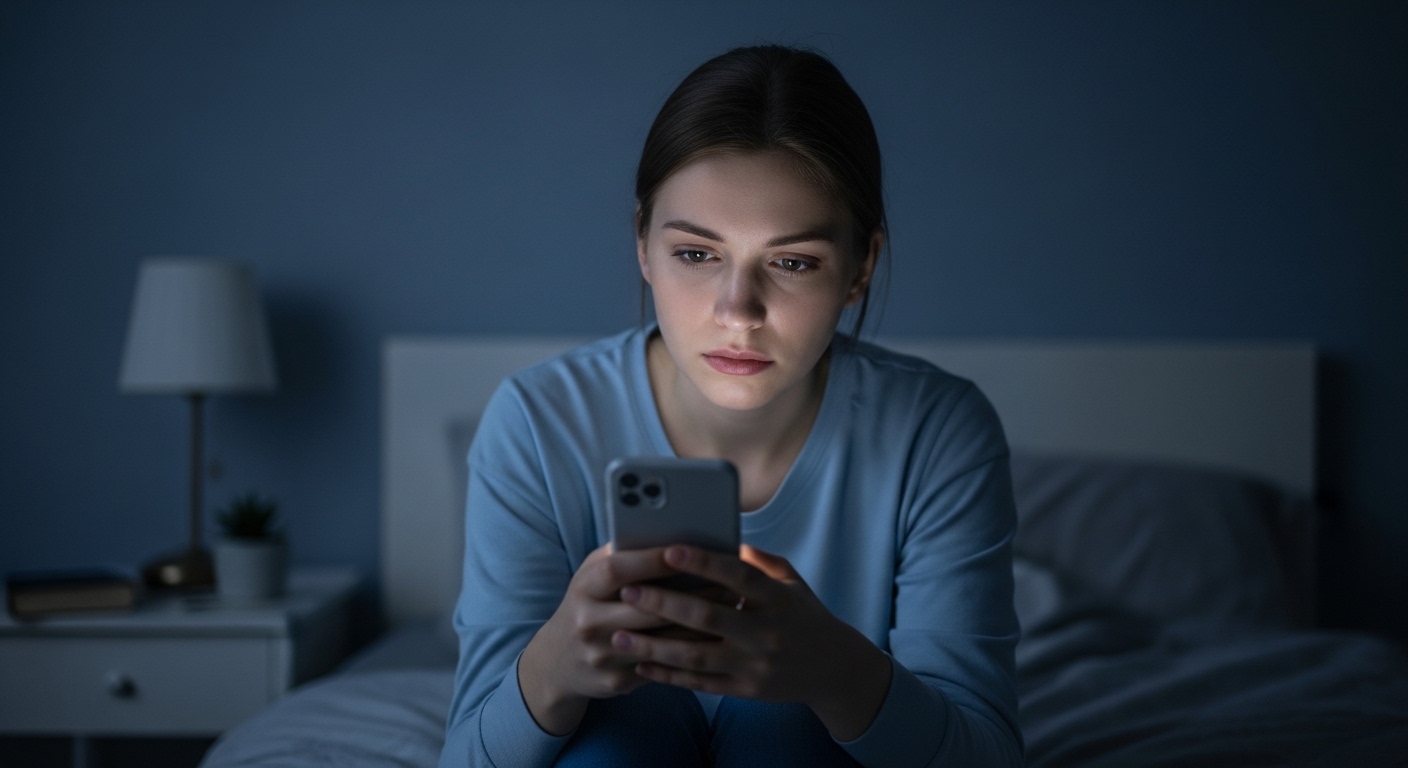
Social Media and Mental Illness (2026): Risks, Research, Warning Signs & Healthy Digital Habits
In 2023, the United States Surgeon General issued an unprecedented formal advisory warning parents about social media's impact on youth mental health — the first time the nation's top doctor had formally addressed this issue. The data behind that advisory is striking: teenagers who spend more than 3 hours daily on social media face double the risk of experiencing anxiety and depression, according to research cited by the US Department of Health and Human Services. The average American teenager now spends 3.5 hours per day on social media — meaning the average teen is already in the high-risk zone.
The numbers have continued to worsen. In 2025, 48% of US teens say social media has a mostly negative effect on people their age — up sharply from 32% in 2022, according to Pew Research Center. 45% of teens say they spend too much time on social media, compared to 36% in 2022. Among heavy teen social media users, 41% rate their own mental health as poor or very poor — compared to 23% among light users. These are not marginal differences. They represent a mental health gap that is growing year over year.
It is equally important to understand what the research does not say. Social media does not directly cause mental illness for every user. The relationship is complex, bidirectional, and moderated by individual vulnerability, content type, purpose of use, offline support systems, and digital literacy. Some users — including socially isolated or marginalized individuals — find genuine community and support through social platforms. This guide presents the complete picture: what the research says, what the neuroscience shows, which specific risks are most strongly documented, what the warning signs look like, and what evidence-based habits actually reduce harm.
Key Statistics at a Glance (2025–2026)
| Statistic | Data Point | Source |
|---|---|---|
| Teens using social media | 95% of teenagers aged 13–17 use at least one platform | Pew Research / HHS 2023 |
| Daily teen usage | 1 in 3 teenagers report using social media almost constantly | Pew Research 2022 |
| Average daily time | 3.5 hours per day for the average US teenager | Surgeon General Advisory 2023 |
| Double risk threshold | 3+ hours daily doubles the risk of anxiety and depression symptoms | Riehm et al., JAMA Psychiatry 2019; HHS 2023 |
| Teen self-assessment — negative effect on peers | 48% of teens say social media has a mostly negative effect on people their age — up from 32% in 2022 | Pew Research 2025 |
| Teens who feel they use it too much | 45% of teens say they spend too much time on social media — up from 36% in 2022 | Pew Research 2025 |
| Heavy vs light users — mental health self-rating | 41% of heavy users rate their mental health poor or very poor vs 23% of light users | 2025 research data |
| Body image — girls | 46% of teen girls aged 13–17 say social media makes them feel worse about their body image | HHS / Bickham et al. |
| Body image — boys | 30% of teen boys say social media makes them feel worse about their body image — and rising | South Denver Therapy review 2025 |
| Cyberbullying and mental health | 65% of those involved in cyberbullying had higher anxiety and depression scores vs 36% of those not involved | Cyberpsychology Journal 2020 |
| Problematic use in clinical settings | 40% of youth treated for depression or suicidal ideation reported problematic social media use | 2025 clinical study |
| Sleep disruption | 45% of teens say social media hurts the amount of sleep they get | Pew Research 2025 |
| Gen Z negative impact | 73% of young adults aged 18–24 believe social media negatively affects their mental health | 2025 data |
| 30-minute limit intervention | Reducing use to 30 minutes daily showed significant decreases in depression and loneliness after 3 weeks | JAMA Pediatrics 2024 |
How Social Media Affects the Brain
Understanding why social media has such a powerful pull on behavior — especially for teenagers — requires understanding the underlying neuroscience. Social media platforms are engineered with behavioral design principles that exploit the brain's reward circuitry in ways that create habitual, often compulsive use patterns.
The core mechanism is dopamine — the neurotransmitter associated with reward, motivation, and pleasure. Every notification, like, comment, or new post in a feed triggers a small dopamine release. This is the same reward pathway activated by food, social connection, and — at a higher level — addictive substances. The unpredictability of when a rewarding notification will appear (will this post get likes? will someone reply?) creates what behavioral scientists call a variable reward schedule — the same mechanism that makes slot machines so difficult to stop playing. This is not accidental. The behavioral design teams at major social media platforms have explicitly studied and optimized for engagement using these mechanisms.
For teenagers, this neurological vulnerability is significantly amplified. The adolescent brain's prefrontal cortex — responsible for impulse control, long-term planning, and weighing consequences — is not fully developed until approximately age 25. Simultaneously, the teenage brain is hypersensitive to social reward and social rejection. This combination makes adolescents uniquely susceptible to the attention-seeking and social comparison dynamics that social media platforms are built around.
| Brain Mechanism | How Social Media Triggers It | Psychological Outcome |
|---|---|---|
| Dopamine reward pathway | Notifications, likes, comments, follower counts — variable reward schedule | Habitual checking behavior; difficulty disengaging; compulsive use patterns |
| Social comparison processing | Constant exposure to curated, filtered highlight reels of other people's lives and bodies | Reduced self-esteem; body dissatisfaction; feeling of inadequacy; depressive symptoms |
| Social rejection sensitivity | Public metrics — likes, comments, follower counts — make social acceptance and rejection measurable and visible | Anxiety around posting; hypervigilance about online feedback; fear of missing out (FOMO) |
| Blue light and circadian rhythm disruption | Screens emit blue wavelength light that suppresses melatonin — the hormone that signals the body to sleep | Delayed sleep onset; reduced sleep quality; sleep deprivation — a documented contributor to depression |
| Prefrontal cortex inhibition (teenagers) | Immature impulse control combines with high social reward sensitivity during adolescence | Difficulty self-regulating use; heightened emotional response to online feedback; impulsive posting |
| Attentional fragmentation | Infinite scroll, autoplay, and notification interruptions train the brain toward short attention spans | Reduced ability to sustain focus for schoolwork; increased restlessness; difficulty with offline activities |
Mental Health Conditions Linked to Social Media Use
Research has documented associations between social media use and several specific mental health conditions. These are correlational relationships — not simple cause-and-effect — but the associations are strong enough that the US Surgeon General, Johns Hopkins Medicine, Mayo Clinic, and the American Academy of Pediatrics have all issued formal guidance treating them as clinically significant.
| Condition | What the Research Shows | Who Is Most at Risk | Key Statistic |
|---|---|---|---|
| Depression | Teens with heavy social media use show more depressive symptoms; in a longitudinal study of 9–10 year olds, increasing daily use from 7 to 74 minutes was associated with a 35% jump in depressive symptoms after 3 years | Teen girls aged 11–13; teen boys aged 14–15; those with pre-existing low self-esteem | Excessive social media use linked to 66% increase in depression among teenagers (2025 data) |
| Anxiety | Social media creates what psychologists call 'ambient anxiety' — a persistent low-level stress from being perpetually connected; performance anxiety from public posting metrics amplifies this | Teenagers with pre-existing anxiety disorders; Gen Z; students in competitive academic environments | 50%+ of teenagers report feeling anxious or depressed after using social media; 41% of Gen Z users say platforms make them feel anxious, sad, or depressed |
| Body dysmorphia and eating disorders | Constant exposure to filtered, edited images creates unrealistic beauty standards; Meta's own internal research (the 'Facebook Files') showed 32% of teen girls said Instagram made them feel worse about their bodies | Teen girls aged 13–17; young women aged 18–24; users of visually-oriented platforms like Instagram and TikTok | 46% of girls aged 13–17 say social media makes them feel worse about their body image |
| Sleep disorders | Blue light from screens suppresses melatonin; social media use before bed activates stress responses; many teens check platforms immediately before sleep and upon waking — compressing sleep quality | All age groups using devices before bed; teenagers especially as sleep needs are highest during adolescence | 78% of people use social media before bed; 45% of teens say social media hurts the amount of sleep they get (Pew 2025) |
| ADHD symptoms | Adolescents with heavy digital media use may have a slightly increased risk of developing attention-deficit hyperactivity disorder symptoms | Children and adolescents with developing attentional systems; heavy multi-platform users | Approximately 10% increased risk of ADHD symptom development with heavy digital media use (Surgeon General 2023) |
| Social isolation and loneliness | Paradoxically, heavy social media use correlates with increased loneliness — time online displaces face-to-face interaction, and social comparison creates feelings of inadequacy rather than connection | Heavy users substituting online interaction for offline relationships; users from socially isolated or rural backgrounds | Nearly 40% of adults admit social media makes them feel lonely or isolated; 63% of social media users report feelings of loneliness |
Impact on Teenagers and Young Adults
Teenagers are the population most significantly affected by social media's mental health risks, for reasons that are both neurological and developmental. Adolescence is the critical period for identity formation — who am I, how do others see me, where do I fit — and social media has moved the primary arena of this process from school hallways and peer groups to algorithmically curated, publicly visible platforms where every interaction is quantified.
The gender difference in outcomes is significant and documented. Girls show greater vulnerability to body image concerns and emotional impact from social comparison — 46% of teen girls say social media makes them feel worse about their body image, compared to 30% of boys. Boys are more affected by gaming addiction, aggressive content exposure, and risk-taking content. Research also documents a racial dimension: Black and Hispanic teens report an average of 6 race-related online experiences daily, including approximately 3.2 instances of online racism — and online racial discrimination correlates with increased next-day anxiety and depressive symptoms.
| Age Group | Primary Risks | Key Data Point |
|---|---|---|
| Pre-teens (10–12) | Early exposure to social comparison, peer pressure, and adult content before emotional regulation develops | Social media use is predictive of decreased life satisfaction in girls aged 11–13 and boys aged 14–15 |
| Teenagers (13–17) | Body image distortion, cyberbullying, FOMO, sleep disruption, identity formation in public quantified environments | 91% use social media daily; 48% say it has a mostly negative effect on peers; 41% of heavy users rate mental health poor or very poor |
| Young adults (18–24) | Academic and career comparison anxiety, relationship comparison, addiction patterns established in adolescence continuing | 73% believe social media negatively affects their mental health; 41% of Gen Z say platforms make them feel anxious, sad, or depressed |
| Adults (25–49) | Work-life boundary erosion, political content stress, comparison around life milestones (marriage, careers, homes) | 21% report negative impacts on mental health from constant online connectivity |
| Older adults (50+) | Political misinformation stress, less overall vulnerability to social comparison mechanisms | Only 15% report social media-related stress — lowest of all age groups |
Cyberbullying: A Documented Mental Health Risk Factor
Cyberbullying is one of the most strongly documented mechanisms through which social media contributes to mental health deterioration. Unlike in-person bullying, cyberbullying is persistent — it follows the victim into every space where they use their device, including their bedroom at night. It is public — harassment can be witnessed or amplified by hundreds or thousands of peers simultaneously. And it is often anonymous, removing social inhibitions that might otherwise limit the behavior.
The mental health data on cyberbullying is severe. Research published in Cyberpsychology Journal found that 65% of those involved in cyberbullying had higher scores of anxiety and depression symptoms compared to 36% of those not involved. A study of Norwegian young adults aged 18–21 found that those involved in cyberbullying reported more anxiety, depression, self-harm, suicide attempts, and antisocial behavior compared to those who were not. About 64% of adolescents are sometimes or often exposed to hate-based content on social media, according to the US Surgeon General's 2023 report.
| Type of Online Harm | Description | Mental Health Impact |
|---|---|---|
| Direct cyberbullying | Targeted harassment, insults, threats, or humiliation sent directly or posted publicly | 65% of cyberbullying-involved youth show elevated anxiety and depression vs 36% of uninvolved peers |
| Exclusion and social rejection | Deliberately excluding someone from group chats, events, or social circles — made visible through social platforms | Amplifies social rejection sensitivity; particularly damaging during identity-forming adolescent years |
| Non-consensual image sharing | Sharing sexual photos or highly personal content without consent; sextortion | Severe psychological trauma; documented links to self-harm and suicide attempts |
| Hate-based content exposure | Racist, sexist, homophobic, or otherwise discriminatory content appearing in feeds | 64% of adolescents regularly exposed; racial discrimination correlates with next-day anxiety and depressive symptoms |
| Online predator contact | Adults exploiting minors through social platforms for grooming, exploitation, or extortion | Severe psychological harm; Mayo Clinic identifies this as a distinct social media risk requiring specific parental attention |
| Trolling and public shaming | Insulting comments on body, abilities, language, or lifestyle — often by strangers or anonymous accounts | Anxiety, depressive symptoms, stress, isolation, and in severe cases suicidal ideation |
Warning Signs of Unhealthy Social Media Use
The line between heavy use and problematic use is not simply measured in hours. The clinical markers of problematic social media use — based on research from Johns Hopkins Medicine, Mayo Clinic, and the 2025 clinical study of depressed and suicidal youth — focus on functional impairment and psychological distress, not just time spent online.
- Distress when unable to access social media — a 2025 clinical study found 40% of youth treated for depression or suicidal ideation reported this as a defining characteristic of their social media relationship.
- Using social media even when actively wanting to stop — the inability to disengage despite the desire to do so is the core indicator of compulsive use.
- Sleep consistently disrupted by social media — checking platforms before bed, during the night, or immediately upon waking; this is reported by 78% of users and affects 45% of teens' self-reported sleep quality.
- Mood that reliably drops after using social media — feeling worse about yourself, your body, your life, or your relationships after scrolling compared to before is a direct signal of negative psychological impact.
- School, work, relationships, or offline activities neglected — use that displaces functional responsibilities or face-to-face relationships has crossed from recreation into impairment.
- Increased anxiety around posting and online feedback — hyper-focus on likes, comments, and follower counts; distress about negative reactions; repeated checking after posting.
- Feeling of needing to document or share experiences online rather than being present in them — prioritizing content creation over direct experience is a behavioral shift associated with platform-driven validation seeking.
- Lying to parents, partners, or teachers about the extent of social media use — concealment of use is a documented warning sign, particularly in adolescents.
If a teenager or young adult is showing multiple warning signs consistently over several weeks, the Mayo Clinic and Johns Hopkins both recommend speaking with a healthcare provider or mental health professional. The 2025 clinical finding that 40% of youth in treatment for depression or suicidal ideation reported problematic social media use suggests that social media use patterns are now a clinically relevant part of mental health assessment.
Benefits of Social Media for Mental Health
A complete and accurate analysis of social media and mental health must include the genuine benefits that platforms provide — particularly for populations who are socially isolated, marginalized, or who lack offline access to community and support. The research does not support a simple narrative that social media is uniformly harmful.
| Benefit | Who Benefits Most | Evidence |
|---|---|---|
| Community and belonging for marginalized groups | LGBTQ+ youth, individuals in rural or isolated communities, people with rare health conditions, minority communities | Research indicates some socially isolated individuals benefit substantially from online community — finding identity affirmation and peer support unavailable locally |
| Mental health information and resource access | Young people who are reluctant to seek in-person help; first-time help-seekers | 34% of US teens say they at least sometimes get mental health information from social media; 52% of Gen Z know where to find mental health resources, partly through online platforms |
| Peer connection and relationship maintenance | Teens with strong offline relationships who use platforms to extend genuine friendships | Social media use that supplements rather than substitutes offline relationships is associated with positive outcomes rather than negative ones |
| Creative expression and identity development | Young people exploring artistic identity, cultural identity, and self-expression | Platforms that support creative sharing without heavy social comparison metrics show lower negative psychological impact |
| Educational and informational access | Students, self-learners, professional development seekers | Educational content on YouTube, LinkedIn learning communities, and subject-specific communities provide genuine learning value |
| Mental health advocacy and destigmatization | People with mental health conditions seeking to reduce isolation and stigma | More than 70% of people with serious mental illness receiving community-based services report using social media — suggesting it serves a genuine connection function for this population |
Healthy vs Unhealthy Social Media Use
| Dimension | Healthy Use Pattern | Unhealthy Use Pattern |
|---|---|---|
| Time and intentionality | Scheduled, time-limited use with a clear purpose — connecting with specific people, consuming specific content | Passive, open-ended scrolling without purpose or time boundary — the 'just a few minutes' that becomes an hour |
| Content relationship | Curated feeds that include positive, educational, and genuinely connective content; active unfollowing of content that consistently produces negative emotions | Passive consumption of comparison-heavy, aspirational, or emotionally provocative content without curation or reflection |
| Purpose of use | Using platforms to maintain real relationships, learn, create, or participate in genuine communities of interest | Using platforms primarily to seek external validation — posting content to measure self-worth through likes and comments |
| Emotional response monitoring | Noticing and responding to emotional patterns — if a platform consistently makes you feel worse, adjusting use accordingly | Continuing or increasing use despite consistent negative emotional outcomes — the compulsive pattern that characterizes problematic use |
| Sleep boundary | Devices off or in another room at least 30–60 minutes before sleep; no first-morning checking before starting the day | Checking social media immediately before bed and immediately upon waking — the pattern associated with the highest levels of anxiety and sleep disruption |
| Offline life integration | Social media as a complement to active offline relationships, hobbies, exercise, and presence | Social media as a primary social environment — replacing rather than supplementing offline life |
Evidence-Based Strategies for Healthier Digital Use
The evidence base for reducing social media's mental health impact is clearer than many people realize. A 2024 JAMA Pediatrics study found that teenagers who reduced their social media use to 30 minutes daily showed significant decreases in depression and loneliness after just three weeks. The control group, which maintained normal usage, showed no improvement. This is not a subtle effect — three weeks of a 30-minute daily limit produced measurable clinical improvement in a controlled study.
- Apply the 30-minute daily limit — the intervention with the strongest clinical evidence. Limiting social media to 30 minutes per day is associated with a 35% reduction in anxiety and depression symptoms. Use built-in screen time tools on iOS or Android to enforce this consistently, not just aspire to it.
- Remove social media apps from the home screen and disable all non-essential notifications — reducing the visibility of the trigger reduces compulsive checking. Research shows disabling notifications decreases social media-induced stress by approximately 25%.
- Establish a no-device bedroom rule — charge your phone outside the bedroom. This single habit addresses the two highest-impact exposure windows: late-night scrolling that disrupts sleep and morning checking that sets the emotional tone for the day.
- Audit your follows and actively curate content — unfollow accounts that consistently produce comparison, inadequacy, or negative emotion regardless of whether they are technically 'interesting.' Replace them with accounts that produce genuine learning, humor, or positive connection.
- Distinguish passive scrolling from active connection — passive scrolling is the use pattern most consistently associated with negative outcomes. Active use — direct messaging friends, posting original content, participating in specific communities — is associated with more neutral or positive outcomes.
- Engage in offline hobbies as an active counter-weight — research shows that engaging in offline hobbies reduces the negative effects of social media by approximately 40%. Physical exercise is particularly effective because it addresses the endorphin deficit that heavy social media use can create.
- For parents: delay smartphone and social media access — the US Surgeon General has formally recommended that Congress require warning labels on social media platforms similar to tobacco and alcohol. Many child development experts recommend delaying social media access until at least age 16. The American Psychological Association recommends against unrestricted social media access for children under 14.
- Seek professional support if warning signs persist — if multiple warning signs are present over several weeks, particularly in teenagers, speaking with a healthcare provider or mental health professional is appropriate. A 2024 study found that restricting social media and adding offline activities improved outcomes — but those with established depression or anxiety typically need professional support alongside behavioral changes.
Platform-Specific Risk Levels
Not all social media platforms carry equal mental health risk. Research consistently shows that platforms with heavy visual content and strong social comparison mechanics — particularly around physical appearance — carry higher psychological risk than platforms focused on text, learning, or specific community interests.
| Platform | Primary Mental Health Risk | Highest Risk Group | Research Finding |
|---|---|---|---|
| Body image distortion, social comparison, validation-seeking — Meta's own internal research showed 32% of teen girls said Instagram made them feel worse about their bodies | Teen girls aged 13–17 | Strongest documented links to body dissatisfaction and depressive symptoms in adolescent girls of any major platform | |
| TikTok | Algorithmic rabbit holes amplifying eating disorders, self-harm content, and extreme comparison; compulsive use from infinite scroll and autoplay | All teenagers; pre-teens with access | Algorithm has been documented to push increasingly extreme content to users showing initial interest in diet or body-related topics |
| Snapchat | Social exclusion visibility, disappearing content creating FOMO urgency, streaks creating compulsive daily use obligation | Teenagers aged 13–17 | Streak mechanics are specifically designed to create daily engagement obligation regardless of actual desire to use the app |
| Twitter / X | Political content stress, harassment, outrage-amplifying algorithm, public pile-ons | Adults engaged with news and politics; journalists; public figures | Outrage content generates 3x more engagement than non-outrage content — the algorithm actively amplifies divisive and stressful material |
| Political misinformation, comparison around life milestones, older adult mental health stress from news content | Adults aged 35+ | Original platform with the longest research record — multiple studies link heavy Facebook use to depression, particularly through passive scrolling | |
| YouTube | Generally lower comparison risk for typical content; specific risks from rabbit-hole algorithms pushing extreme content in sensitive areas | Children drawn toward age-inappropriate content; individuals with existing mental health vulnerabilities | Risk is primarily content-type dependent rather than platform-mechanic dependent — more neutral than Instagram or TikTok for typical use |
| Professional comparison anxiety, impostor syndrome, achievement performance pressure | Young professionals; recent graduates; job seekers | Comparison-based stress about career milestones and professional achievements — lower volume but concentrated impact for vulnerable users |
Future of Digital Mental Health
The regulatory and research environment around social media and mental health is evolving rapidly in 2025–2026. The US Surgeon General formally called for Congress to require warning labels on social media platforms in June 2023 — the equivalent of tobacco-style warnings. Multiple US states have passed or are advancing legislation restricting social media access for minors. The UK's Online Safety Act mandates platforms implement stronger child protection measures. Australia passed legislation in November 2024 banning social media use for children under 16.
| Trend | Current Status (2026) | What It Means for Users |
|---|---|---|
| Surgeon General warning labels | Formally recommended; Congressional action pending as of 2026 | Would place mental health warnings directly on social media apps — increasing user awareness at the point of use |
| Age verification and minor restrictions | Australia: under-16 ban passed November 2024; multiple US states with active legislation; EU advancing under Digital Services Act | Younger teenagers face increasing platform-level restrictions; parents have more legal and technical tools to limit access |
| AI content moderation | Platforms deploying AI to identify and limit eating disorder, self-harm, and cyberbullying content — with inconsistent effectiveness | Reduces some exposure to harmful content categories; algorithm-driven amplification of outrage content remains the more fundamental problem |
| Digital literacy education | Growing number of schools incorporating digital wellbeing curriculum; UK and EU advancing formal education requirements | Students develop critical frameworks for evaluating social media's emotional impact before problematic patterns establish |
| Mental health tracking integration | Wearables and smartphones increasingly tracking mood, sleep, and screen time together — creating visibility into correlations | Users who track both usage and mood can see their personal data on social media's emotional impact rather than relying on general statistics |
| Longitudinal research expansion | The research base is strengthening — longer-term studies of children who grew up entirely in the social media era are now producing findings | Clearer causal evidence will emerge by 2027–2030, moving the field beyond correlational studies to documented mechanisms |
Conclusion
The evidence on social media and mental health is no longer ambiguous at the population level. Teenagers who spend more than 3 hours daily on social media face double the risk of anxiety and depression. 48% of US teens say social media has a mostly negative effect on their peers — up from 32% three years ago. 40% of youth being clinically treated for depression or suicidal ideation show problematic social media use. The US Surgeon General, Johns Hopkins Medicine, Mayo Clinic, and the American Academy of Pediatrics all treat the association as clinically significant.
At the same time, the research does not support complete avoidance as the answer. Social media provides genuine benefit — community, information, creative expression, and peer connection — when used with intention rather than compulsion. The 2024 JAMA Pediatrics study's finding that a 30-minute daily limit produced significant depression improvement in three weeks suggests that the harmful effects are real but also genuinely responsive to behavioral change. The most evidence-supported path forward is not abstinence but intentionality: time limits, content curation, offline activities, no-device bedrooms, and professional support when warning signs are persistent.
FAQ
Frequently Asked Questions
Does social media directly cause mental illness?
Not in a simple cause-and-effect relationship — but the association is strong enough that the US Surgeon General, Johns Hopkins Medicine, and the American Academy of Pediatrics treat it as clinically significant. The relationship is bidirectional and complex: social media use is associated with increased risk of depression and anxiety, but those who are already depressed or anxious also tend to use social media more. Research from Johns Hopkins confirms that 'excessive social media use is associated with behaviors — poor sleep, increased social comparisons, exposure to cyberbullying and negative content — that could contribute to the worsening of depressive symptoms.' The specific mechanism matters: passive scrolling, comparison-heavy platforms like Instagram, cyberbullying exposure, and sleep disruption from device use before bed each contribute to risk through documented pathways. The critical variable is not whether someone uses social media, but how — and the extent to which use is intentional or compulsive, active or passive, time-limited or open-ended.
How much social media use is considered unhealthy?
The research threshold most consistently cited is 3 hours per day — teenagers who exceed this face double the risk of anxiety and depression symptoms, according to research cited in the US Surgeon General's 2023 advisory. The average American teenager currently spends 3.5 hours daily on social media, meaning the average teen already exceeds this threshold. A 2024 JAMA Pediatrics study found that reducing use to 30 minutes per day produced significant, measurable decreases in depression and loneliness after just three weeks. However, time is not the only metric. The Mayo Clinic's clinical markers of problematic use focus on functional impairment — whether social media is disrupting sleep, school performance, offline relationships, or producing consistent emotional distress — rather than hours alone. A person who uses social media for 2 hours daily but shows distress when unable to access it, mood crashes after using it, or conceals their usage may have a more problematic relationship than someone spending 4 hours on purely positive, intentional use.
Are teenagers more vulnerable to social media stress than adults?
Yes — for documented neurological and developmental reasons. The adolescent brain's prefrontal cortex, which governs impulse control, long-term consequence weighing, and self-regulation, is not fully developed until approximately age 25. Simultaneously, the teenage brain is hypersensitive to social reward and social rejection — which is precisely what social media platforms quantify and amplify through likes, comments, follower counts, and public metrics. This combination makes adolescents uniquely susceptible to the validation-seeking and social comparison dynamics built into platform design. The gender difference is also significant: girls aged 11–13 and boys aged 14–15 show the most pronounced life satisfaction decreases with social media use, according to longitudinal research. Girls face higher risk from body image comparison mechanics; boys face higher risk from gaming and aggressive content. 91% of teenagers aged 13–17 use social media daily — making protective habits and parental guidance particularly important during these developmental years.
Can social media have positive mental health effects?
Yes — particularly for populations who are socially isolated, marginalized, or who lack access to offline community and support. Research indicates that some socially isolated individuals benefit substantially from online community, finding identity affirmation and peer support that is genuinely unavailable in their local environment. LGBTQ+ youth in unsupportive families, people with rare health conditions connecting with others who share their experience, and individuals in geographically isolated areas represent populations where social media's connection benefits are documented and real. More than 70% of people with serious mental illness receiving community-based services report using social media, suggesting it serves a genuine connection function for this population. The key distinction in the research is between active and passive use: active use — direct messaging real friends, participating in specific interest communities, creating content — is associated with more neutral or positive outcomes than passive scrolling through algorithmically curated comparison-heavy feeds.
How can I reduce social media anxiety effectively?
The intervention with the strongest clinical evidence is a 30-minute daily limit. A 2024 JAMA Pediatrics controlled study found that teenagers who reduced social media to 30 minutes per day showed significant decreases in depression and loneliness after just three weeks. Limiting use to 30 minutes per day is associated with a 35% reduction in anxiety and depression symptoms. Practical implementation steps beyond time limits: remove social media apps from your phone's home screen to reduce ambient trigger visibility; disable all non-essential notifications — this alone reduces social media-induced stress by approximately 25%; establish a no-device bedroom rule and charge your phone outside the bedroom; actively audit and curate your follows, unfollowing accounts that consistently produce comparison or negative emotion; replace passive scrolling time with offline activities — engaging in offline hobbies reduces social media's negative effects by approximately 40%. For persistent anxiety that does not respond to these behavioral interventions within 4 to 6 weeks, speaking with a mental health professional is appropriate — social media anxiety that meets clinical thresholds responds well to cognitive behavioral therapy.
Which social media platforms are most harmful for mental health?
Research consistently identifies Instagram and TikTok as carrying the highest mental health risk for teenagers — particularly for body image concerns and depressive symptoms. Meta's own internal research (the 'Facebook Files') documented that 32% of teen girls said Instagram made them feel worse about their bodies, and that the company was aware of this finding. TikTok's algorithm has been documented to push increasingly extreme diet and body-related content to users who show any initial interest in these topics. The common factor is visual content with strong social comparison mechanics. Text-based platforms generally carry lower comparison risk. Platform risk is also use-pattern dependent: passive scrolling on any platform that exposes users to comparison-heavy content carries more risk than active, intentional use. For parents, the most evidence-supported approach is delaying social media access until at least age 14 to 16 — Australia passed legislation banning platforms for children under 16 in November 2024, reflecting this evidence base.
What should parents do about social media and their child's mental health?
Several evidence-based actions have strong support. The US Surgeon General recommends Congress require warning labels on social media platforms — reflecting the seriousness with which the federal public health establishment now views this issue. For individual families: delay social media access as long as feasible — the American Psychological Association recommends against unrestricted access for children under 14; establish clear household rules about no-device bedrooms and screen time limits and apply them consistently; have direct conversations with teenagers about the psychological design of social media platforms — understanding that platforms are engineered to maximize engagement time helps adolescents recognize manipulation patterns they are experiencing; monitor for warning signs including mood consistently dropping after social media use, sleep disruption, neglect of offline activities, and distress when unable to access platforms; and seek professional evaluation if multiple warning signs are present over several weeks. The Pew Research 2025 survey found that parents are consistently more worried than teenagers about social media's mental health effects — the data suggests parents' concern is calibrated more accurately to the actual risk than the teenagers' self-assessment.
Is social media addiction real?
Social media addiction is not currently a formally recognized clinical diagnosis in the DSM-5 — the standard classification manual for mental health disorders — but problematic social media use that meets functional impairment criteria is clinically significant and is treated by mental health professionals. The behavioral mechanisms are well-documented: variable reward schedules triggering dopamine release, the same neurological pathway involved in other addictive behaviors. A 2025 clinical study found that 40% of youth treated for depression or suicidal ideation reported problematic social media use defined as distress when unable to access social media. 1 in 4 people report feeling addicted to social media in survey data. The clinical treatment framework for problematic social media use overlaps substantially with behavioral addiction treatment — cognitive behavioral therapy focusing on identifying triggers, developing alternative behaviors, and restructuring the reward patterns associated with use. If social media use causes distress when stopped, continues despite the desire to stop, or impairs sleep, work, school, or relationships, it warrants professional evaluation regardless of whether a specific DSM diagnosis applies.