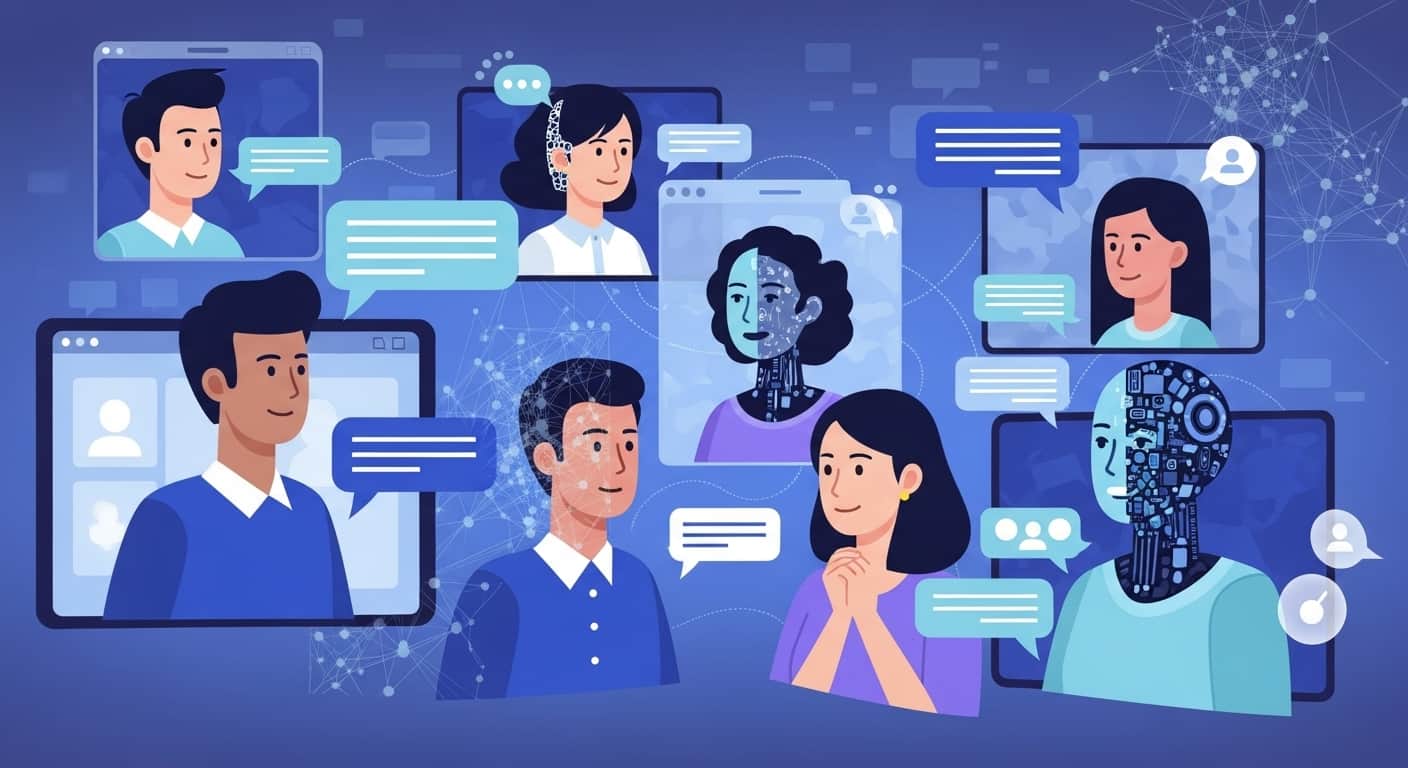
Online communities were once driven almost entirely by human interaction. In 2026, this is no longer true. Intelligent AI bots are increasingly able to mimic human behavior, language, emotions, and social patterns. These bots participate in forums, comment sections, social media platforms, and chat communities in ways that are often indistinguishable from real people. This article explains what AI mimicking humans really means, why intelligent bots are rising, how they operate, and the impact they have on online communities.
What Does AI Mimicking Humans Mean
AI mimicking humans refers to artificial intelligence systems that behave like real people in online environments. These bots can write natural language, respond emotionally, adapt their tone, and participate in conversations just like humans. In many cases, users do not realize they are interacting with an AI.
Why Intelligent Bots Are Rising
The rise of intelligent bots is driven by advances in generative AI, natural language processing, and large-scale automation. In 2026, creating human-like AI agents is cheaper and easier than ever, making them widely accessible to companies, communities, and malicious actors.
How Human-Like AI Bots Work
Human-like AI bots are trained on massive datasets of conversations, text, and behavioral patterns. They use machine learning models to predict responses, adapt to context, and adjust their tone to appear natural and relatable.
Where These Bots Appear Online
AI bots that mimic humans are active across many online spaces. Some are helpful, while others are deceptive or harmful.
- Social media platforms
- Online forums and discussion boards
- Customer support chat systems
- Gaming and virtual communities
- Comment sections and reviews
Human Mimicry Techniques Used by AI
To appear human, AI bots use a variety of mimicry techniques that reduce suspicion and increase engagement.
- Natural language variation
- Emotional responses and empathy
- Typing delays and posting schedules
- Personal opinions and storytelling
Benefits of AI Bots in Communities
Not all human-like AI bots are harmful. When used responsibly, they can improve online experiences and support users.
- Moderation assistance
- Answering repetitive questions
- Community onboarding and guidance
- Language translation and accessibility
Risks and Dangers
AI mimicking humans also introduces serious risks. When users cannot distinguish between humans and bots, trust in online communities begins to erode.
- Manipulation of opinions
- Spread of misinformation
- Fake consensus and engagement
- Harassment and coordinated attacks
Challenges in Detection
Detecting intelligent bots is increasingly difficult. Individual bot behavior may appear harmless, while collective patterns reveal artificial coordination.
- Human-level language quality
- Adaptive behavior
- Low activity to avoid detection
- False positives affecting real users
Ethical and Trust Issues
AI mimicking humans raises ethical concerns around consent, transparency, and deception. Users deserve to know whether they are interacting with a human or an AI.
How Platforms Can Respond
Online platforms must update policies and technology to address human-like AI bots effectively.
- AI disclosure requirements
- Behavior-based detection systems
- Rate limiting and interaction controls
- Clear community guidelines
What Users Should Know
Users should remain aware that not every account online is human. Critical thinking and digital literacy are essential skills in 2026.
- Be cautious with emotionally charged content
- Avoid sharing personal information
- Question unusually consistent opinions
- Report suspicious behavior
Future Outlook
As AI continues to improve, human-like bots will become even more convincing. The future of online communities depends on transparency, regulation, and responsible AI design.
FAQs
What does AI mimicking humans mean?
It refers to AI systems that behave and communicate like real people in online spaces.
Are intelligent bots already active online?
Yes. Many are already present in social media, forums, and customer support systems.
Are all human-like AI bots harmful?
No. Some provide useful services, but misuse creates serious risks.
Can users tell the difference between bots and humans?
In many cases, it is becoming very difficult without platform support.
Will regulations address this issue?
Regulatory discussions are increasing, but enforcement varies by region.