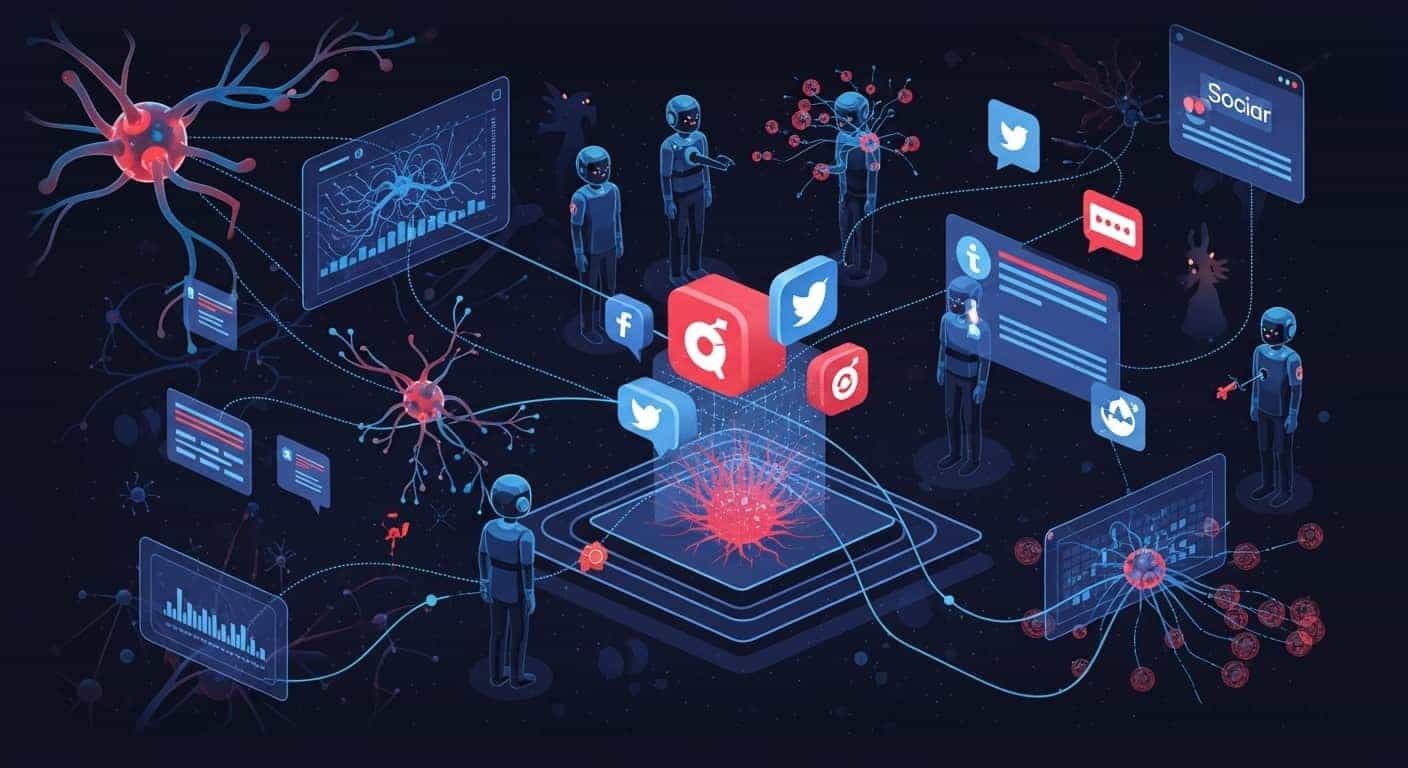
In 2026, social media is no longer shaped only by humans and individual bots. A new and more powerful phenomenon is emerging: AI swarms. These are coordinated groups of artificial intelligence agents that act together to influence conversations, trends, and user behavior at scale. This article explains AI swarms in simple terms, how they operate on social media, why they are dangerous, and what platforms, developers, and users can do to reduce their impact.
What Are AI Swarms
AI swarms are groups of autonomous AI agents that work together toward a shared goal. Instead of acting independently, these agents coordinate actions such as posting, liking, commenting, and reporting content. The idea comes from swarm intelligence, where simple agents collectively create complex behavior.
How AI Swarms Are Different from Bots
Traditional bots usually act alone and follow fixed rules. AI swarms are adaptive, collaborative, and intelligent. They can change strategies, learn from feedback, and coordinate actions across hundreds or thousands of accounts, making them much harder to detect.
Why AI Swarms Are Rising in 2026
Advances in generative AI, automation tools, and cheap cloud computing have made it easier to create large numbers of AI agents. In 2026, these technologies are widely accessible, enabling malicious actors, political groups, and even commercial entities to deploy AI swarms at scale.
Examples of AI Swarm Behavior
AI swarms can simulate large groups of real users. For example, a swarm may promote a hashtag, attack a public figure’s credibility, or suppress opposing viewpoints by coordinated reporting.
Why AI Swarms Are a Serious Threat
AI swarms can manipulate public opinion at a scale never seen before. Because they adapt and learn, traditional moderation systems struggle to stop them quickly.
- Manipulation of public discourse
- Spread of misinformation
- Artificial consensus creation
- Erosion of trust in platforms
Impact on Users and Society
For users, AI swarms blur the line between real and artificial interaction. This can influence opinions, emotions, and decisions without users realizing they are being manipulated.
Detection and Prevention Challenges
Detecting AI swarms is difficult because individual agents may appear harmless. Only collective behavior reveals malicious intent, requiring advanced monitoring and analysis.
- Human-like AI behavior
- Encrypted coordination channels
- Rapid adaptation to detection methods
- False positives affecting real users
Ethical and Legal Concerns
AI swarms raise serious ethical and legal questions. These include accountability, transparency, freedom of speech, and the responsibility of platforms to protect users.
How Platforms Can Respond
Social media platforms must redesign moderation strategies to focus on collective behavior instead of individual accounts.
- Behavioral pattern analysis
- AI-based swarm detection systems
- Rate limiting and friction mechanisms
- Transparent moderation policies
What Developers and Researchers Can Do
Developers and researchers play a key role in building responsible AI systems and detection tools that reduce misuse while respecting user rights.
What Users Can Do
Users should remain cautious when engaging with viral content. Awareness is the first line of defense against AI-driven manipulation.
- Question sudden viral trends
- Avoid emotional reactions to provocative content
- Report suspicious coordinated behavior
- Follow diverse information sources
Future Outlook
AI swarms will continue to evolve in 2026 and beyond. The future of social media depends on how effectively platforms, governments, and users adapt to this new reality.
FAQs
What is an AI swarm?
An AI swarm is a coordinated group of AI agents working together to influence systems or users.
Are AI swarms already used on social media?
Yes. Early forms already exist, and their capabilities are increasing rapidly.
How are AI swarms different from fake accounts?
AI swarms coordinate intelligently and adapt over time, unlike simple fake or bot accounts.
Can social media platforms stop AI swarms?
They can reduce the impact, but it requires advanced detection and policy changes.
Should users be worried?
Users should be aware, not afraid. Awareness helps reduce manipulation.