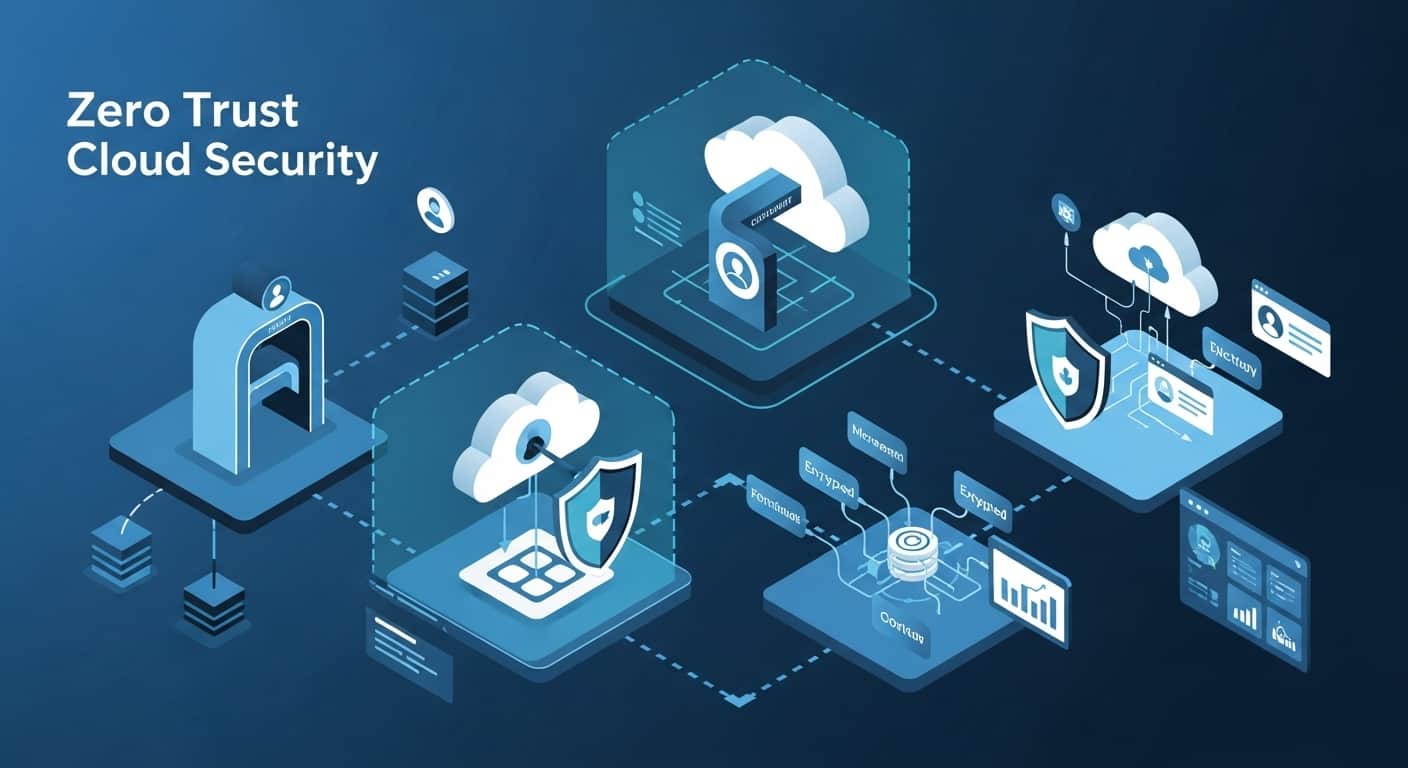
Traditional cloud security models assumed that users or systems inside a network could be trusted. This assumption no longer works in a world of remote work, multi-cloud systems, and AI-driven cyber threats. Zero Trust Cloud Security replaces implicit trust with continuous verification. This guide explains Zero Trust Cloud Security from beginner to advanced level, using simple international English and practical examples relevant to organizations in the United States and India.
What Is Cloud Security
Cloud security refers to the policies, technologies, and controls used to protect cloud-based systems, data, and applications. It includes identity management, data protection, network security, and compliance across cloud environments.
What Is Zero Trust Cloud Security
Zero Trust Cloud Security is a security model based on the idea of never trust, always verify. No user, device, or application is trusted by default, even if it is inside the network. Every access request is continuously verified.
Why Traditional Cloud Security Is Failing
Traditional security relies on network perimeters, such as firewalls. In modern cloud environments with remote users and distributed systems, these perimeters no longer provide sufficient protection.
Core Principles of Zero Trust
Zero Trust Cloud Security is built on a set of fundamental principles.
- Never trust, always verify
- Least privilege access
- Assume breach
- Continuous monitoring and validation
How Zero Trust Cloud Security Works
Zero Trust verifies identity, device posture, location, and behavior before granting access. Access is granted only for the minimum time and permissions required, and is continuously re-evaluated.
Zero Trust Architecture in the Cloud
Zero Trust architecture focuses on identity rather than network location.
- Strong identity and access management
- Microsegmentation of resources
- Secure access gateways
- Policy-based access controls
Key Technologies Used in Zero Trust
Several technologies enable Zero Trust Cloud Security.
- Identity and access management
- Multi-factor authentication
- Endpoint detection and response
- Continuous risk assessment
- Security analytics and logging
Zero Trust in Multi-Cloud Environments
Zero Trust is especially important in multi-cloud environments where workloads are spread across multiple providers. A unified identity and policy layer helps maintain consistent security.
Benefits of Zero Trust Cloud Security
Zero Trust provides strong security and operational advantages.
- Reduced attack surface
- Better protection against insider threats
- Improved visibility and control
- Stronger compliance posture
Challenges and Limitations
Implementing Zero Trust requires planning and organizational change.
- Complex implementation
- Legacy system integration
- User experience challenges
- Skill and tooling gaps
Zero Trust Best Practices
Following best practices helps organizations adopt Zero Trust successfully.
- Start with identity-first security
- Implement least privilege access
- Continuously monitor and audit access
- Educate employees on security awareness
Future of Cloud Security
The future of cloud security is Zero Trust by default. As AI-driven cyber threats grow, continuous verification, automation, and intelligence will become standard across cloud platforms.
FAQs
What is Zero Trust Cloud Security?
It is a security model that continuously verifies every access request in cloud environments.
Is Zero Trust only for large enterprises?
No. Zero Trust principles apply to organizations of all sizes.
How is Zero Trust different from traditional security?
Traditional security trusts internal networks, while Zero Trust verifies everything.
Is Zero Trust important for multi-cloud?
Yes. It provides consistent security across multiple cloud providers.
Will Zero Trust replace firewalls?
No. Firewalls remain useful, but Zero Trust adds stronger identity-based controls.