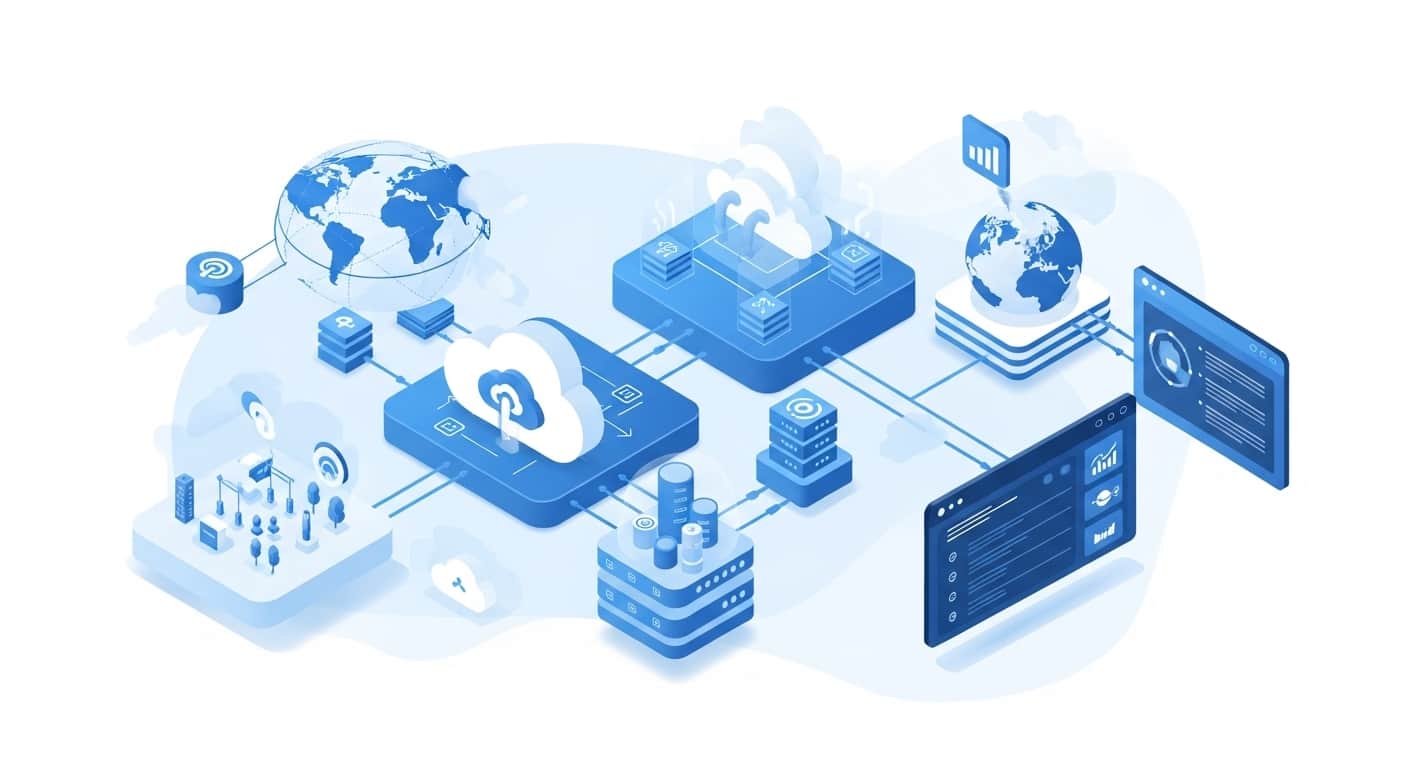
Cloud computing has become the foundation of modern digital systems. As organizations grow, many choose not to rely on a single cloud provider. Instead, they adopt a multi-cloud strategy to improve reliability, flexibility, and control. A multi-cloud strategy involves using services from multiple cloud providers to run applications and workloads. This guide explains multi-cloud strategy from beginner to advanced level, with practical insights relevant to businesses and developers in the United States and India.
What Is a Multi-Cloud Strategy
A multi-cloud strategy means using two or more cloud service providers to host applications, data, or infrastructure. Instead of depending on a single vendor, organizations distribute workloads across multiple clouds to reduce risk and increase flexibility.
Multi-Cloud vs Single Cloud vs Hybrid Cloud
Single cloud uses one provider for all workloads. Hybrid cloud combines on-premises infrastructure with a public cloud. Multi-cloud focuses on using multiple public cloud providers independently, often for different workloads or regions.
Why Organizations Choose Multi-Cloud
Organizations adopt multi-cloud strategies to avoid vendor lock-in, improve availability, and meet regional or regulatory requirements.
- Reducing dependency on one provider
- Improving disaster recovery
- Meeting data residency rules
- Optimizing performance by region
Key Benefits of a Multi-Cloud Strategy
A well-planned multi-cloud strategy provides technical and business advantages.
- Higher availability and resilience
- Flexibility to choose best-in-class services
- Better negotiation power with vendors
- Improved global performance
Common Multi-Cloud Use Cases
Multi-cloud is commonly used in scenarios where reliability, scale, or compliance is critical.
- Disaster recovery across clouds
- Global application deployment
- Data analytics on specialized platforms
- Regulatory compliance across regions
Core Components of a Multi-Cloud Architecture
Successful multi-cloud architecture requires consistency and visibility across environments.
- Centralized identity and access management
- Unified monitoring and logging
- Containerization and orchestration
- Standardized networking and security controls
Security and Compliance in Multi-Cloud
Security becomes more complex in a multi-cloud environment. Each provider has different tools and models, requiring a unified security approach.
- Zero trust security principles
- Centralized policy management
- Encryption of data at rest and in transit
- Continuous compliance monitoring
Cost Management and Optimization
Managing costs across multiple clouds requires careful planning and monitoring.
- Cost visibility across providers
- Avoiding resource over-provisioning
- Using cost alerts and budgets
- Regular usage audits
Operational Challenges of Multi-Cloud
Multi-cloud adds operational complexity that organizations must be prepared to handle.
- Increased management overhead
- Skill gaps across cloud platforms
- Complex troubleshooting
- Inconsistent tooling and APIs
Multi-Cloud Best Practices
Following best practices helps reduce risk and complexity.
- Start with a clear business goal
- Use cloud-agnostic tools where possible
- Standardize deployment pipelines
- Invest in team training
When Multi-Cloud Is Not the Right Choice
Multi-cloud is not always necessary. Small teams or simple applications may benefit more from a single cloud approach due to lower complexity and cost.
Future of Multi-Cloud Strategy
The future of multi-cloud includes greater automation, AI-driven operations, and improved interoperability. As organizations mature, multi-cloud strategies will become more standardized and easier to manage.
FAQs
What is a multi-cloud strategy?
A multi-cloud strategy involves using services from multiple cloud providers.
Is multi-cloud better than single cloud?
It depends on business needs. Multi-cloud offers flexibility but adds complexity.
Is multi-cloud the same as hybrid cloud?
No. Multi-cloud uses multiple public clouds, while hybrid cloud includes on-premises systems.
Is multi-cloud expensive?
It can be if not managed properly, but it also helps optimize costs when planned well.
Will multi-cloud be important in the future?
Yes. Multi-cloud adoption is expected to grow as businesses seek resilience and flexibility.