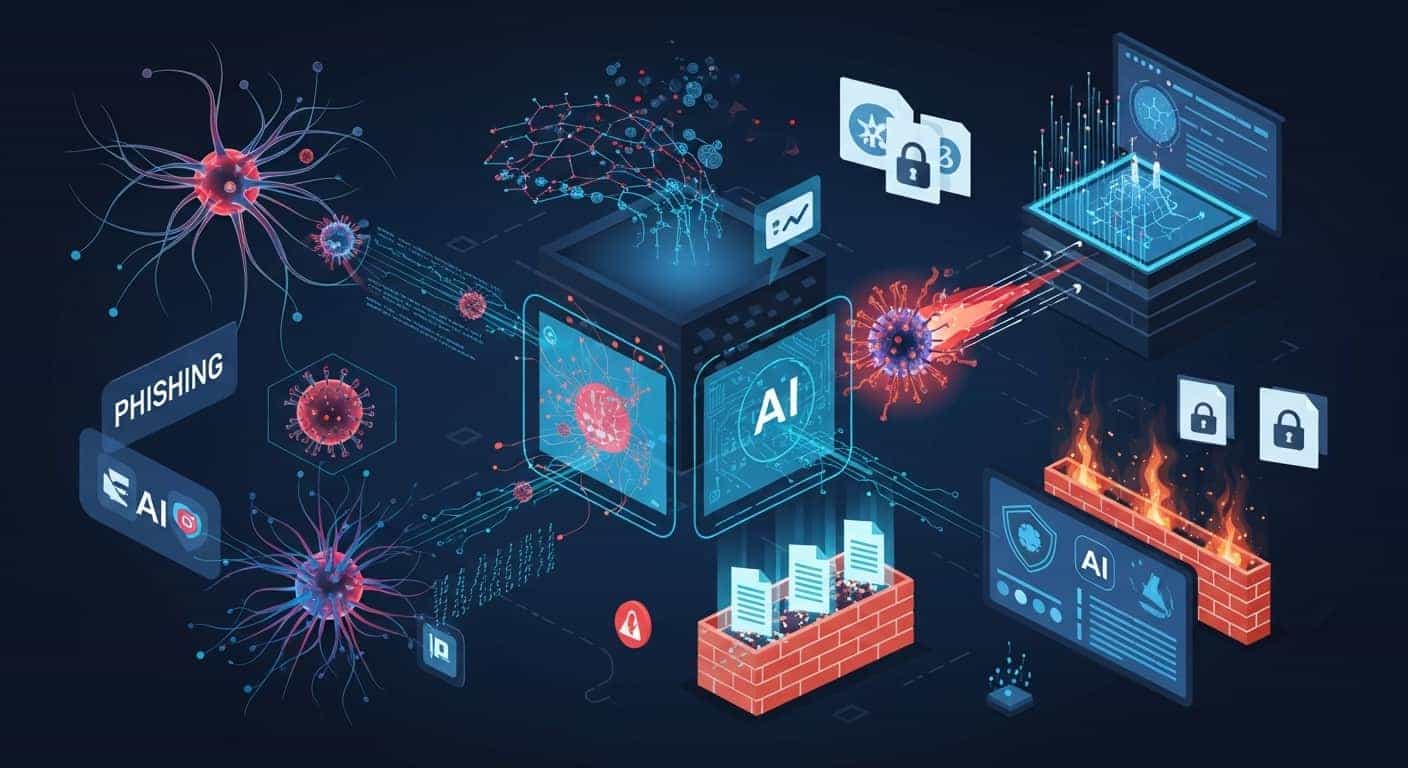
Cyber attacks have evolved rapidly with the rise of artificial intelligence. In 2026, attackers are no longer relying only on manual hacking or simple malware. AI-driven cyber attacks use machine learning, automation, and data analysis to scale attacks, evade detection, and target victims with high precision. This guide explains AI-driven cyber attacks in simple terms, how they work, why they are increasing, and how organizations and individuals in the United States and India can defend against them.
What Are AI-Driven Cyber Attacks
AI-driven cyber attacks are attacks that use artificial intelligence to plan, execute, and adapt malicious activities. These attacks can learn from data, change behavior in real time, and operate at a scale that traditional cyberattacks cannot match.
Why Attackers Use Artificial Intelligence
Attackers use AI because it increases efficiency and success rates. AI can automate repetitive tasks, identify weak targets, and avoid detection systems more effectively than manual methods.
How AI-Driven Cyber Attacks Work
AI-driven attacks typically analyze large datasets, identify patterns, and make decisions without constant human control. Once launched, these attacks can adapt based on the target’s response.
Common Types of AI-Driven Attacks
AI is being applied to many traditional attack techniques, making them more dangerous.
- Automated phishing campaigns
- Adaptive malware
- Credential stuffing attacks
- AI-generated fake content
AI in Malware and Ransomware
Modern malware uses AI to hide from security tools, select high-value targets, and decide when to activate. AI-powered ransomware can adjust tactics based on defenses encountered.
AI-Based Vulnerability Exploitation
AI systems can scan networks and applications to discover vulnerabilities faster than human attackers. This shortens the time between vulnerability discovery and exploitation.
Impact of AI-Driven Cyber Attacks
AI-driven cyber attacks cause financial loss, operational disruption, and long-term damage to trust. Critical sectors such as healthcare, finance, and infrastructure are especially vulnerable.
AI vs AI: Attackers and Defenders
Cybersecurity has become an AI vs AI battle. While attackers use AI to evade defenses, security teams use AI for threat detection, anomaly analysis, and automated response.
Challenges in Detecting AI Attacks
AI-driven attacks often mimic normal user behavior, making detection difficult.
- Low and slow attack patterns
- Human-like communication
- Adaptive malware behavior
- High false-positive risk
How to Protect Against AI-Driven Attacks
Defense against AI-driven cyber attacks requires a layered and proactive approach.
- AI-powered security tools
- Strong identity and access management
- Continuous monitoring
- Employee security awareness training
- Regular system updates and patching
Role of Cybersecurity Teams
Cybersecurity teams must combine human expertise with AI tools. Skilled professionals are needed to interpret alerts, respond to incidents, and improve security strategies.
Future of AI-Driven Cyber Threats
AI-driven cyber attacks will continue to grow in sophistication. The future will require stronger collaboration between technology providers, governments, and organizations to stay ahead of attackers.
FAQs
What are AI-driven cyber attacks?
They are cyber attacks that use artificial intelligence to automate, adapt, and scale malicious activities.
Are AI-driven attacks more dangerous than traditional attacks?
Yes. They are faster, more adaptive, and harder to detect.
Is AI used only by attackers?
No. Defenders also use AI for threat detection and response.
Who is most at risk from AI-driven cyber attacks?
Businesses, governments, and critical infrastructure are common targets.
Can AI-driven cyber attacks be prevented?
They can be mitigated with strong security practices and AI-powered defenses.