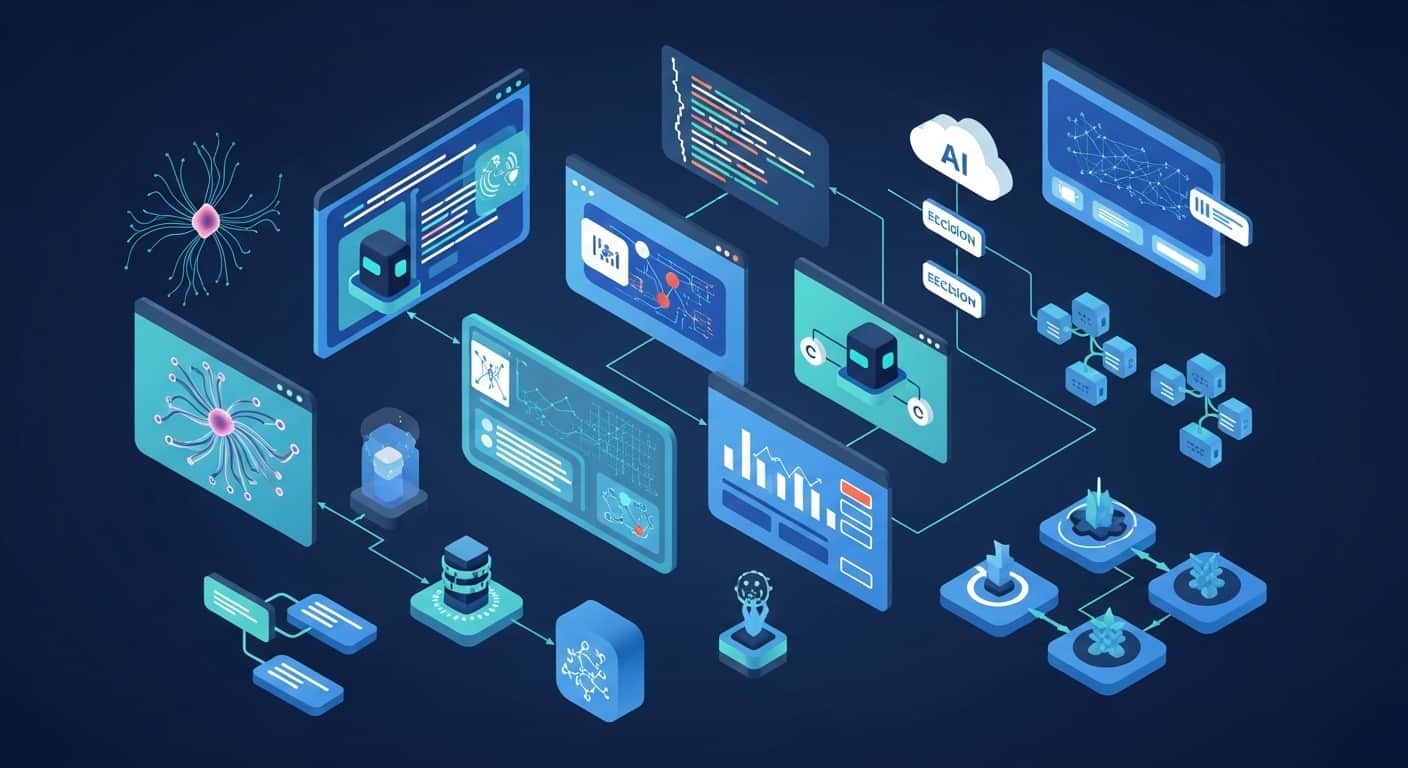
Machine learning has evolved from simple rule-based systems to models that can learn from data and make predictions. In 2026, a new phase is emerging: autonomous AI agents. These systems do not just respond to input but can plan, decide, and act independently to achieve goals. This article explains autonomous AI agents in simple terms, how they differ from traditional machine learning models, where they are used, and why they represent the next major shift in artificial intelligence.
What Are Autonomous AI Agents
Autonomous AI agents are software systems that can operate independently to achieve specific goals. Unlike traditional AI models that wait for user input, autonomous agents can plan actions, make decisions, execute tasks, and adapt based on feedback from their environment.
How Autonomous AI Agents Differ from Traditional AI
Traditional AI systems usually perform a single task, such as classification or prediction. Autonomous AI agents combine multiple capabilities, including reasoning, memory, decision-making, and execution, allowing them to function more like independent problem solvers.
Why Autonomous AI Agents Are Emerging Now
Advances in large language models, reinforcement learning, cloud computing, and automation tools have made autonomous agents practical. In 2026, these technologies are mature enough to support long-running, goal-oriented AI systems.
Core Components of Autonomous AI Agents
Autonomous AI agents are built from several key components that work together.
- Goal definition and planning
- Reasoning and decision-making
- Memory and context management
- Tool and API integration
- Feedback and learning loops
How Autonomous AI Agents Work
An autonomous agent starts with a goal, breaks it into smaller tasks, selects actions, executes them, and evaluates the results. Based on feedback, it adjusts its strategy until the goal is achieved or stopped by constraints.
Examples of Autonomous AI Agents
Autonomous agents already exist in limited forms across various industries.
- AI agents that manage cloud infrastructure
- Autonomous customer support agents
- Trading and financial decision agents
- AI research and data analysis agents
Real World Use Cases
Autonomous AI agents are being adopted by organizations in the United States and India to improve efficiency and reduce manual work.
- Automated business operations
- Personalized digital assistants
- Software testing and deployment
- Supply chain optimization
- Cybersecurity monitoring
Benefits of Autonomous AI Agents
Autonomous agents offer significant advantages over traditional automation systems.
- Continuous operation without human input
- Faster decision-making
- Scalable task execution
- Reduced operational costs
Risks and Challenges
Despite their potential, autonomous AI agents introduce new risks and technical challenges.
- Unintended behavior
- Lack of transparency
- Difficulty in controlling decisions
- Security vulnerabilities
Ethical and Safety Concerns
Autonomous decision-making raises ethical questions around accountability, bias, and safety. Clear boundaries and human oversight are critical to prevent harm.
Impact on Jobs and Businesses
Autonomous AI agents will change how work is done. While some tasks may be automated, new roles will emerge that focus on supervision, design, and governance of AI systems.
How Developers Can Build Autonomous Agents
Developers building autonomous agents must focus on reliability, safety, and transparency.
- Define clear goals and constraints
- Implement human-in-the-loop controls
- Monitor behavior continuously
- Test agents in controlled environments
Future Outlook
Autonomous AI agents represent a major shift in machine learning. In the coming years, they will move from experimental tools to core components of digital systems, reshaping industries and redefining how humans interact with technology.
FAQs
What is an autonomous AI agent?
An autonomous AI agent is a system that can independently plan, decide, and act to achieve goals.
How is this different from machine learning models?
Machine learning models predict outcomes, while autonomous agents make decisions and take actions.
Are autonomous AI agents already in use?
Yes. Early versions are already used in operations, analytics, and automation.
Are autonomous AI agents dangerous?
They can be risky if poorly designed, which is why safety and oversight are essential.
Will autonomous AI agents replace human workers?
They will automate some tasks, but humans will remain essential for oversight and decision-making.