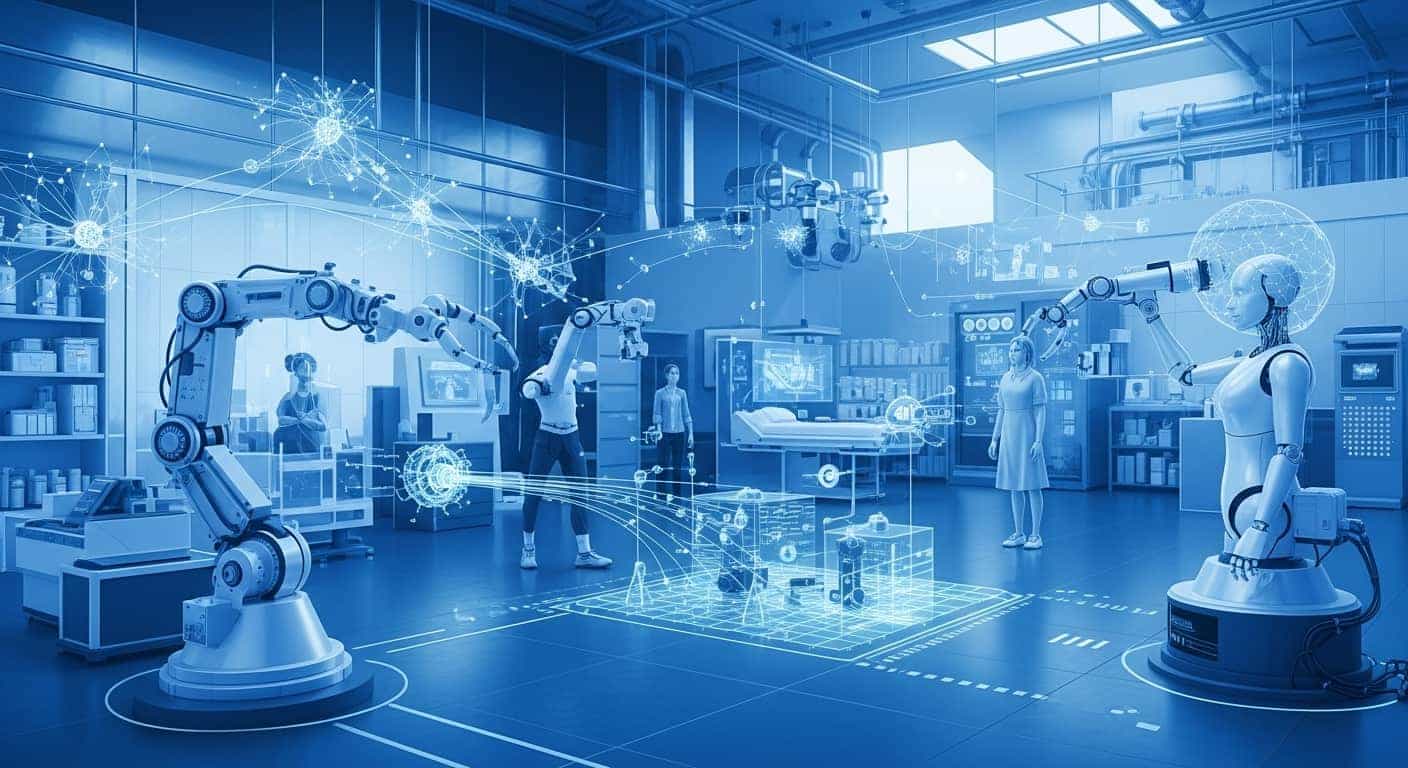
Robotics has evolved from simple machines that follow fixed instructions to intelligent systems capable of learning and decision-making. Artificial intelligence plays a key role in this transformation. AI in robotics allows machines to perceive their environment, adapt to changes, and perform complex tasks with minimal human intervention. This guide explains AI in robotics from beginner to advanced level using simple international English, with real-world relevance for industries in the United States and India.
What is AI in Robotics
AI in robotics refers to the integration of artificial intelligence techniques into robotic systems. This enables robots to sense their environment, process information, learn from experience, and make decisions. Unlike traditional robots that follow pre-programmed rules, AI-powered robots can adapt to new situations.
Why AI is Important for Robotics
Without AI, robots are limited to repetitive and predictable tasks. AI allows robots to handle uncertainty, recognize objects, understand speech, and interact safely with humans. This makes robots more useful in real-world environments.
How AI and Robotics Work Together
Robotics provides the physical body, while AI provides the brain. Sensors collect data, AI models analyze that data, and actuators perform actions. This loop allows robots to perceive, decide, and act continuously.
Core AI Technologies Used in Robotics
Several AI technologies work together to make robots intelligent.
- Machine learning
- Computer vision
- Natural language processing
- Reinforcement learning
- Sensor fusion
Types of AI-Powered Robots
AI-powered robots come in many forms depending on their purpose and environment.
- Industrial robots
- Service robots
- Medical robots
- Autonomous vehicles
- Social and humanoid robots
AI in Industrial Robotics
In manufacturing, AI-powered robots are used for assembly, quality inspection, and predictive maintenance. They improve efficiency, reduce errors, and operate safely alongside human workers.
AI in Healthcare Robotics
Healthcare robots use AI to assist in surgery, rehabilitation, and patient care. AI helps these robots adapt to patient needs, improve precision, and support medical professionals.
AI in Service and Consumer Robots
Service robots use AI to interact with people, understand commands, and provide assistance. Examples include delivery robots, home assistants, and customer service robots.
AI in Autonomous Vehicles and Drones
Autonomous vehicles and drones rely heavily on AI for navigation, obstacle avoidance, and decision-making. These systems process real-time data to operate safely in complex environments.
Benefits of AI in Robotics
Integrating AI into robotics provides significant advantages across industries.
- Improved autonomy and flexibility
- Higher accuracy and efficiency
- Reduced human workload
- Ability to operate in dangerous environments
Challenges and Limitations
Despite rapid progress, AI in robotics still faces challenges.
- High development and deployment costs
- Complex training and data requirements
- Safety and reliability concerns
- Limited understanding of human behavior
Ethical and Safety Considerations
AI-powered robots raise ethical questions about safety, accountability, and job displacement. Clear guidelines and responsible design are essential to ensure robots benefit society.
Future of AI in Robotics
The future of AI in robotics includes more autonomous systems, better human-robot collaboration, and wider adoption across industries. As AI models improve, robots will become more intelligent, adaptive, and trustworthy.
FAQs
What is AI in robotics?
AI in robotics refers to using artificial intelligence to enable robots to learn, adapt, and make decisions.
How does AI improve robots?
AI allows robots to perceive their environment, learn from data, and perform complex tasks autonomously.
Is AI used in industrial robots?
Yes. AI is widely used in manufacturing for automation, quality control, and predictive maintenance.
Are AI robots replacing humans?
AI robots automate certain tasks, but humans remain essential for supervision, creativity, and decision-making.
What is the future of AI in robotics?
The future includes smarter robots, better collaboration with humans, and broader use across industries.