HomeTrending ChatGPT Prism: A Complete Analysis (2026)
Trending

ChatGPT Prism: A Complete Analysis (2026)

By KushMarch 9, 2026 11 min read
ChatGPT Prism: A Complete Analysis (2026)

ChatGPT Prism: A Complete Analysis (2026)

On January 27, 2026, OpenAI officially launched Prism — a free, AI-native workspace for scientists that embeds GPT-5.2 directly into a LaTeX-based document editor for writing and collaborating on research papers. Prism is not a conceptual framework or a user-coined term. It is a real, fully functional OpenAI product available at prism.openai.com to anyone with a free ChatGPT account.

The context for this launch: OpenAI reports receiving 8.4 million messages per week on advanced science and mathematics topics from approximately 1.3 million weekly users through ChatGPT. Scientists were already using the platform extensively — but doing so through a fragmented workflow that required switching between LaTeX editors, PDF readers, reference managers, and chatbot windows. Prism addresses this fragmentation by unifying all of these functions in a single AI-native environment powered by GPT-5.2, OpenAI's most capable model for mathematical and scientific reasoning.

Kevin Weil, Vice President of OpenAI for Science, framed the ambition clearly at the launch press call: 'I think 2026 will be for AI and science what 2025 was for AI in software engineering.' The comparison is deliberate — in 2025, coding assistants like Cursor and Windsurf went from novelty to standard practice in software development in under a year. OpenAI is betting that Prism will trigger the same shift in scientific research in 2026.

What Is ChatGPT Prism?

ChatGPT Prism is an AI-enhanced word processor and research collaboration tool built specifically for scientific paper writing. It was developed after OpenAI acquired Crixet — a cloud-based LaTeX platform — and evolved that infrastructure into an AI-native product by layering GPT-5.2's reasoning capabilities directly into the document editing environment. The result is a workspace where scientists can write, revise, reason, cite, and collaborate without leaving a single application.

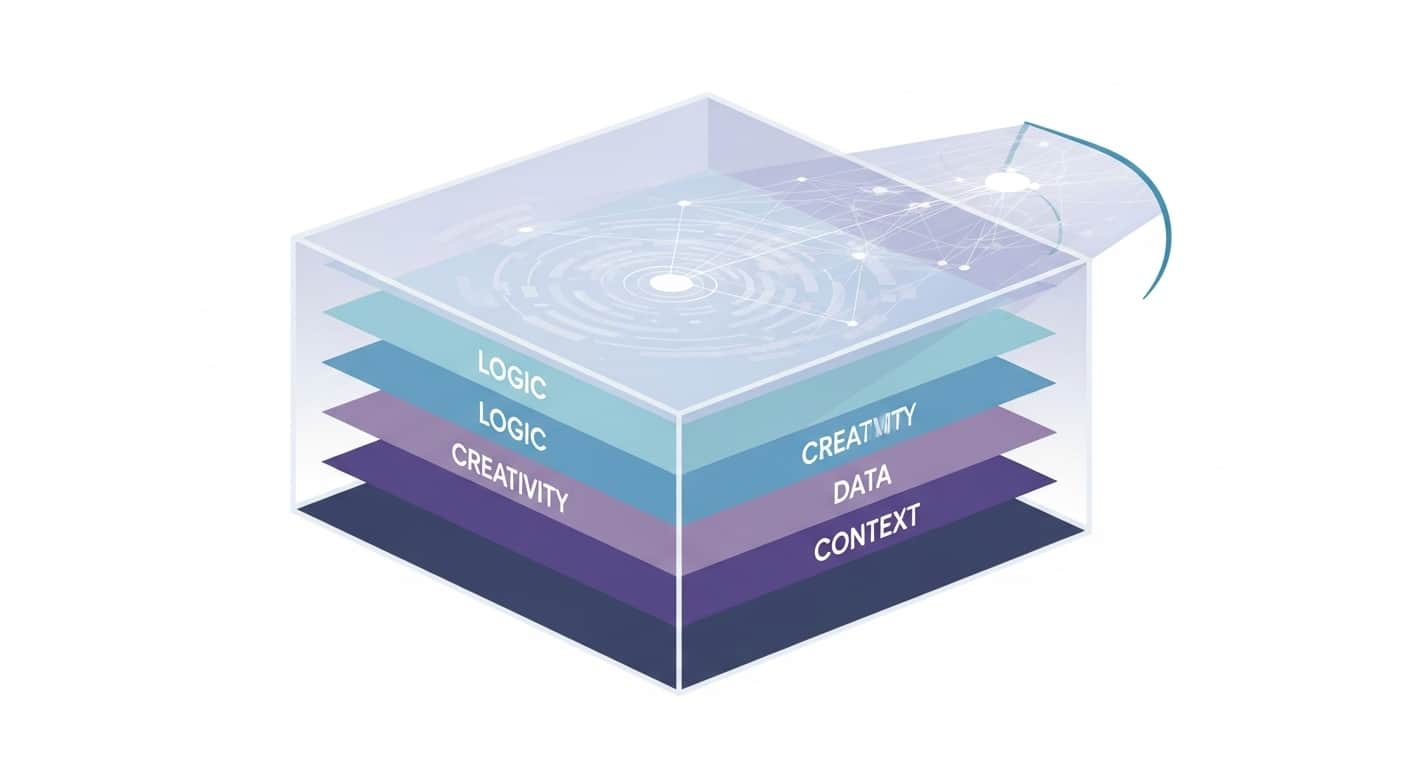
The core distinction from simply using ChatGPT in a browser tab alongside a LaTeX editor is context management. When a researcher opens a ChatGPT window inside Prism, the model has access to the entire research project — every draft paragraph, equation, citation, figure, and document structure. Responses from GPT-5.2 are dramatically more relevant because the model understands what specific paper the researcher is working on, what claims have already been made, and what the surrounding context requires — rather than responding to isolated queries without document context.

FeatureWhat It DoesWhy It Matters
GPT-5.2 in-document chatAsk GPT-5.2 questions, test hypotheses, explore ideas directly within the paper contextAI responses are grounded in your specific document — not generic answers to isolated prompts
Full-document context awarenessGPT-5.2 accesses the entire paper — text, equations, citations, and structure — during every interactionResponses consider what you have already written, avoiding contradictions and improving coherence
LaTeX integrationBuilt on LaTeX, the open-source typesetting standard used in scientific publishing for decadesEliminates the need to switch between a LaTeX editor and a separate AI tool — everything in one environment
Citation and literature searchSearches and incorporates relevant academic literature from sources including arXiv in context of the current manuscriptResearchers can find and cite related papers without leaving the writing environment
Equation and citation reasoningCreates, refactors, and reasons over equations and citations — understands how these elements relate across the full paperReduces hours of manual formatting and cross-referencing — a documented pain point in scientific writing
Whiteboard-to-diagram conversionConverts photos of handwritten whiteboard drawings and formulas directly into LaTeX diagrams and equationsEliminates one of the most tedious conversion tasks in scientific writing — turning rough sketches into publication-ready figures
Real-time collaborationUnlimited collaborators and projects — multiple researchers can work simultaneouslyBrings collaborative editing to the LaTeX environment, which previously lacked real-time multi-user editing
Free access tierAvailable at no cost to anyone with a personal ChatGPT account — unlimited projects and collaboratorsRemoves the budget and procurement barrier that slows adoption in universities and research institutions

How ChatGPT Prism Was Built

Prism's technical foundation traces directly to OpenAI's acquisition of Crixet — a mature, cloud-based LaTeX platform that already provided high-fidelity document rendering and real-time collaboration infrastructure. Rather than building a scientific writing environment from scratch, OpenAI repurposed Crixet's proven LaTeX engine and integrated GPT-5.2's Thinking mode directly into the existing workflow. This approach allowed OpenAI to start with a stable, researcher-familiar base and add AI capabilities in a way that fits naturally into how scientists already work.

The AI layer is powered by GPT-5.2, which OpenAI describes as its most advanced model for mathematical and scientific problem-solving. GPT-5.2's 'Thinking' mode — a chain-of-thought reasoning approach — is particularly important for scientific applications where intermediate reasoning steps matter as much as final answers. This is what enables Prism to reason over complex equations, assess whether claims align with existing research, and maintain logical consistency across a multi-section paper rather than just generating plausible-sounding text.

Who Is Prism For?

Prism is designed primarily for professional researchers — the 1.3 million weekly users already querying ChatGPT on advanced science and mathematics topics. However, the free access model and familiar LaTeX-based interface make it accessible to a much broader audience including graduate students, PhD candidates, postdoctoral researchers, and serious undergraduate researchers working on publications.

User TypeHow Prism HelpsKey Features to Use
PhD students and research scholarsDraft literature review sections, manage citations from arXiv, revise arguments with GPT-5.2 guidance — all within the paper contextLiterature search, citation management, in-document chat for argument testing
Postdoctoral researchers and facultyAccelerate paper writing, convert whiteboard derivations to LaTeX, verify claim consistency across long papersWhiteboard-to-diagram conversion, full-document context reasoning, collaborative editing
Graduate students (MSc, MTech, ME)Improve writing quality, structure arguments, find related papers — especially useful for students writing their first research papersIn-document GPT-5.2 chat, literature search, LaTeX formatting assistance
Science and engineering undergraduatesLearn LaTeX in an AI-assisted environment, structure technical reports, understand how to cite primary literatureLaTeX integration, citation management — requires some existing scientific background to use effectively
Science journalists and technical writersDraft accurate technical explanations, verify claims against literature, structure complex scientific narrativesClaim verification, literature search, prose revision
Indian researchers and students (IIT, IISc, NIT, central universities)Access research-grade AI tools at zero cost — previously available only through expensive institutional subscriptionsFree tier — no institutional procurement needed, just a personal ChatGPT account

ChatGPT Prism for Indian Students and Researchers

For Indian researchers and students, Prism's free access model is particularly significant. Access to research-grade scientific writing tools has historically been constrained by institutional subscriptions that many Indian universities — particularly regional universities, state institutions, and smaller research colleges — cannot afford. Prism removes this barrier entirely. A PhD student at a state university with a free ChatGPT account now has access to the same GPT-5.2-powered scientific writing environment as a researcher at MIT or Cambridge.

India's research output has been growing steadily — India ranked third globally in research publications in several science fields in 2024 — but the quality of scientific writing has been a documented challenge for many Indian researchers writing in English as a second or third language. Prism's prose revision, argument structuring, and claim verification features directly address this gap by providing expert-level writing guidance within the document context, not as generic grammar correction but as scientifically aware revision assistance.

  • Free access for anyone with a ChatGPT account — no institutional subscription, no procurement process, no cost to Indian students and researchers.
  • LaTeX support is particularly valuable for Indian engineering and science students at IITs, NITs, IISc, and central universities where LaTeX is the standard format for thesis and journal submissions.
  • Literature search from arXiv helps Indian researchers access and cite cutting-edge preprints — especially important in fast-moving fields where journal publication timelines are slow.
  • English prose revision with full document context helps researchers whose primary language is not English — Prism understands what you are trying to argue and suggests revisions that maintain scientific accuracy, not just grammatical correctness.
  • Whiteboard-to-diagram conversion is valuable for Indian students who derive equations on physical whiteboards or paper and need to convert them to publication-ready LaTeX figures.
  • Unlimited collaborators supports the multi-author research papers common in Indian academic institutions where teams of 3 to 8 researchers commonly co-author publications.

ChatGPT Prism vs Competitors

Prism enters a market where several AI tools are competing for the scientific research workflow. Understanding how Prism compares to alternatives helps researchers choose the right tool for their specific needs — and many researchers will find that different tools serve different parts of their workflow best.

ToolPrimary FocusAI ModelLaTeX SupportFree TierBest For
ChatGPT Prism (OpenAI)Scientific paper writing — full document lifecycle from draft to submissionGPT-5.2 (best for math and science reasoning)Yes — native LaTeX editor built-inYes — free for personal ChatGPT accountsWriting and revising scientific papers; whiteboard-to-diagram conversion; citation management
Google NotebookLMResearch notebook — synthesizing information from user-provided sourcesGeminiNo — document-based, not LaTeX-nativeYesSummarizing and synthesizing research papers you upload; organizing notes and sources
OverleafCloud-based LaTeX editor with collaboration — no AI reasoning layerNo AI integration (limited Copilot in premium)Yes — industry standard LaTeX editorLimited free tierLaTeX editing and collaboration without AI assistance; institutions with existing Overleaf Enterprise subscriptions
ElicitAI research assistant — finding, summarizing, and extracting data from research papersGPT-basedNoLimited free tierLiterature reviews and systematic review methodology; extracting specific data from large numbers of papers
Semantic ScholarAcademic search engine with AI-powered paper recommendations and citation graphsSpecialized research modelsNoYes — freeDiscovering related literature and understanding citation networks in a field
Claude (Anthropic)General-purpose AI with strong document analysis and coding capabilitiesClaude 4.5No native LaTeX editorYes — Claude.ai free tierHigh-precision coding assistance and document analysis; strong alternative for non-LaTeX scientific writing

The key distinction between Prism and alternatives like Google NotebookLM or Elicit is workflow integration depth. NotebookLM works with sources you bring to it. Elicit helps you find and extract from existing literature. Prism lives inside the writing process itself — the AI is embedded in the document you are actively writing, with context of the entire paper at every interaction. For researchers whose bottleneck is the writing and revision stage rather than the discovery stage, Prism is the most directly relevant tool launched in 2026.

Practical Use Cases for Prism

Understanding how to use Prism effectively requires matching its capabilities to specific research workflow stages. The following use cases reflect real, documented Prism functionality — not theoretical applications.

  • Drafting the introduction and literature review — ask GPT-5.2 to identify gaps in existing research based on the paper context and suggest how your work addresses them; search arXiv for related papers without leaving the document.
  • Equation derivation and verification — type or photograph whiteboard derivations; Prism converts them to LaTeX and GPT-5.2 can check intermediate steps and flag potential errors in mathematical reasoning.
  • Citation management — search for and incorporate relevant literature from arXiv and other sources in context of the specific claim you are making, rather than searching a separate database and manually formatting citations.
  • Claim consistency checking — ask GPT-5.2 to review whether claims made in the discussion section are consistent with the methodology and results sections, with full paper context available to the model.
  • Prose revision for clarity and precision — submit specific paragraphs or sections for revision with the instruction to maintain scientific accuracy while improving clarity; particularly valuable for non-native English writers.
  • Hypothesis exploration before writing — use the in-document chat to test whether a proposed explanation is logically consistent with your data before committing it to the manuscript.
  • Abstract drafting — with the full paper loaded as context, GPT-5.2 can draft an abstract that accurately reflects the methodology, results, and conclusions of the specific paper being written.

Limitations and Considerations

Prism is a powerful tool, but researchers should understand its limitations clearly before integrating it into their workflow. The risks of misuse in scientific research are meaningfully higher than in other domains — flawed research can mislead entire fields, which is why OpenAI has explicitly positioned Prism as an acceleration tool rather than an automation tool.

LimitationWhat It MeansHow to Manage It
GPT-5.2 can generate plausible-sounding but incorrect scientific claimsAI language models are trained to produce coherent text — they can write confident scientific statements that are factually wrongTreat all GPT-5.2 suggestions as drafts requiring expert verification — never submit AI-generated claims without checking them against primary sources
Not designed for autonomous researchPrism does not conduct experiments, collect data, or independently derive new scientific knowledgeUse Prism for writing acceleration and workflow efficiency — not as a substitute for original scientific thinking, data collection, or expert judgment
LaTeX requirement limits accessibilityPrism is built around LaTeX — researchers unfamiliar with LaTeX will face a learning curve before gaining full benefitInvest time in basic LaTeX fundamentals before using Prism; OpenAI's AI assistance reduces but does not eliminate the LaTeX learning requirement
Enterprise features not yet available at launchBusiness, Enterprise, and Education plan features — admin controls, audit logging, retention settings — were not available at the January 27, 2026 launchPersonal and academic researcher accounts can access full Prism functionality; institutional deployment should wait for the Enterprise rollout
English-language primaryPrism's AI reasoning and prose suggestions are strongest in English — non-English scientific writing support is limited at launchIndian researchers writing in English will see full benefit; those publishing in Hindi or regional-language journals will need to evaluate language support
Academic integrity considerationsUsing AI to write substantial portions of a paper without disclosure may violate journal policies and academic integrity standardsFollow your institution's and target journal's AI disclosure policies; use Prism for acceleration and revision, document AI assistance transparently

How to Get Started with ChatGPT Prism

Getting started with Prism requires only a free ChatGPT account. There are no additional subscriptions, institutional approvals, or software downloads required to access the full free tier. The following steps get any researcher or student started immediately.

  • Create or log into a free ChatGPT account at chat.openai.com — a personal account is sufficient for full Prism access at no cost.
  • Navigate to prism.openai.com — Prism is a separate web application from ChatGPT, accessed at its own URL.
  • Create a new project — Prism supports unlimited projects; each project is a distinct research paper or document.
  • Start writing in LaTeX or paste existing LaTeX content — if you are new to LaTeX, Prism's AI assistance helps with basic formatting commands, though familiarity with LaTeX fundamentals is recommended.
  • Open the GPT-5.2 chat panel within the document — the chat window has access to your entire document context; ask questions, request revisions, search literature, or verify claims directly.
  • Use the whiteboard conversion feature by uploading a photo of handwritten equations or diagrams — Prism converts them to publication-ready LaTeX automatically.
  • Invite collaborators — Prism supports unlimited collaborators with no additional cost; share the project link with co-authors for real-time collaborative editing.

Conclusion

ChatGPT Prism is one of the most significant AI tool launches of early 2026 — and it has been widely misunderstood in early coverage. It is not a conceptual framework for prompting ChatGPT differently. It is a fully functional, free, OpenAI-built scientific writing workspace that embeds GPT-5.2 into a LaTeX editor with full document context, literature search, equation conversion, and real-time collaboration. Launched January 27, 2026, it is available today at prism.openai.com to any ChatGPT account holder at no cost.

For Indian researchers and students — particularly at IITs, NITs, IISc, and regional universities where research-grade scientific writing tools have historically been constrained by institutional budget — Prism is a genuinely important development. The combination of free access, LaTeX-native workflow, and GPT-5.2's mathematical reasoning capability removes barriers that have limited the quality and speed of scientific writing for thousands of Indian researchers. Used responsibly — as a writing accelerator rather than an autonomous author, with all AI contributions verified against primary sources — Prism represents the most capable freely available scientific writing tool that has ever existed.

FAQ

Frequently Asked Questions

What exactly is ChatGPT Prism?

ChatGPT Prism is a real OpenAI product — a free, AI-native workspace for scientists that embeds GPT-5.2 directly into a LaTeX-based scientific paper writing environment. It was officially launched by OpenAI on January 27, 2026 and is available at prism.openai.com to anyone with a free ChatGPT personal account. Prism allows researchers to write and revise papers, manage citations, search relevant literature from arXiv, convert whiteboard drawings into LaTeX equations and diagrams, verify claim consistency, and reason through scientific problems — all within a single application where GPT-5.2 has access to the complete paper context. It is not a conceptual prompting framework or a third-party tool — it is an official OpenAI product developed after the company acquired Crixet, a cloud-based LaTeX platform.

Is Prism free to use?

Yes — Prism is completely free for anyone with a personal ChatGPT account. OpenAI launched it with no subscription requirement, no seat limits, and unlimited projects and collaborators for personal account holders. The free tier gives access to the full core functionality including GPT-5.2 in-document chat, LaTeX editing, citation management, literature search, whiteboard-to-diagram conversion, and real-time collaboration. More powerful AI features will be made available through paid ChatGPT Plus, Pro, and Team plans over time. Business, Enterprise, and Education plan versions were announced but not yet available at the January 27, 2026 launch — those will roll out with additional admin controls and institutional features.

How is Prism different from just using ChatGPT?

The critical difference is context management and workflow integration. When you use ChatGPT in a browser tab alongside a separate LaTeX editor, you are copying text back and forth between applications, and ChatGPT has no awareness of your document beyond what you paste into each individual conversation. In Prism, GPT-5.2 has access to your entire research project — every draft paragraph, every equation, every citation, and the full document structure — during every interaction. This means responses are grounded in your specific paper rather than being generic answers to isolated queries. The model understands what you have already written, what claims you have made, and what your paper's argument structure is — making its suggestions dramatically more relevant and contextually accurate than a standard ChatGPT interaction.

Is Prism useful for Indian students and researchers?

Yes — particularly for students and researchers at IITs, NITs, IISc, AIIMS, and other research institutions where LaTeX is the standard submission format for theses, conference papers, and journal articles. The free access model removes the institutional subscription barrier that has historically limited access to research-grade writing tools in Indian universities. Key benefits for Indian users: free access with just a ChatGPT account, LaTeX-native workflow familiar to Indian engineering and science students, English prose revision that understands scientific context rather than just grammar, literature search from arXiv for finding cutting-edge preprints, whiteboard-to-diagram conversion for hand-derived equations, and unlimited collaborators for multi-author papers common in Indian academic research.

Does Prism replace human scientific thinking?

No — and OpenAI has been explicit about this. Kevin Weil, VP of OpenAI for Science, described Prism at the launch as a tool for 'accelerating the mechanical parts of research that slow down breakthroughs' — not replacing scientific thinking, hypothesis generation, or experimental design. Prism does not conduct experiments, independently derive new scientific knowledge, or make research decisions autonomously. What it does is handle the tedious mechanical overhead of scientific writing — formatting citations, searching literature, converting equations, revising prose — so researchers can spend more time on the creative and analytical work that genuinely requires human expertise. The analogy OpenAI uses is AI coding assistants like Cursor — they accelerated software development without replacing software engineers.

What is LaTeX and do I need to know it to use Prism?

LaTeX is an open-source typesetting system that has been the standard format for scientific publications in physics, mathematics, engineering, computer science, and many other fields since the 1980s. It is a markup language — you write text with formatting commands rather than using a visual editor. Prism is built on LaTeX, which means some familiarity with LaTeX is helpful to use it effectively. However, GPT-5.2's assistance within Prism reduces the learning barrier — you can ask it to help with LaTeX formatting commands, and it can generate LaTeX from plain-text descriptions or whiteboard photos. For Indian students at IITs, NITs, and other technical institutions, LaTeX is typically taught or required for thesis submission — those students will find Prism immediately familiar and accessible.

How does Prism compare to Overleaf?

Overleaf is the current industry-standard cloud-based LaTeX editor used by most researchers and many Indian institutions. It is excellent for LaTeX editing and real-time collaboration but has very limited AI integration — the AI Copilot feature in Overleaf's premium plans offers basic suggestions but nothing approaching Prism's GPT-5.2 full-document reasoning. Prism's core advantage over Overleaf is the depth of AI integration — GPT-5.2 can reason over the entire paper, search literature in context, verify claims, and revise arguments with scientific understanding rather than just autocompleting LaTeX syntax. However, Overleaf has a larger institutional user base, more mature enterprise features, and is deeply integrated into many universities' research workflows. Many researchers will likely use both — Overleaf for institutional compatibility and established workflows, Prism for AI-assisted writing acceleration.

What are the academic integrity considerations for using Prism?

Academic integrity requirements for AI-assisted writing are evolving rapidly in 2026, and researchers must follow both their institution's policies and their target journal's guidelines. Most major scientific journals now require disclosure of AI assistance in the writing process — either in the methods section or in a separate author contribution statement. Using Prism to revise prose, check claims, or manage citations is generally considered acceptable with disclosure. Using Prism to generate substantial portions of research content without disclosure, or presenting AI-generated scientific claims as independently verified findings, violates most journal policies and academic integrity standards. OpenAI's own framing of Prism as a writing acceleration tool rather than an autonomous author reflects this boundary. The practical guideline: use Prism to write faster and better, verify all AI suggestions against primary sources, and disclose AI assistance transparently as required by your institution and journal.

State of the Union 2026: Full Highlights, Policy Announcements, Reactions & Political Impact

State of the Union 2026: Full Highlights, Policy Announcements, Reactions & Political Impact

Read More →
Government Shutdown 2026: What It Means, Why It Happens, and How It Affects You

Government Shutdown 2026: What It Means, Why It Happens, and How It Affects You

Read More →

UKTU (Unlock Knowledge & Talent Upliftment) is a knowledge-driven platform delivering reliable insights across technology, education, finance, health, and global trends.

© 2026 UKTU · All Rights Reserved

© 2026 UKTU · All Rights Reserved