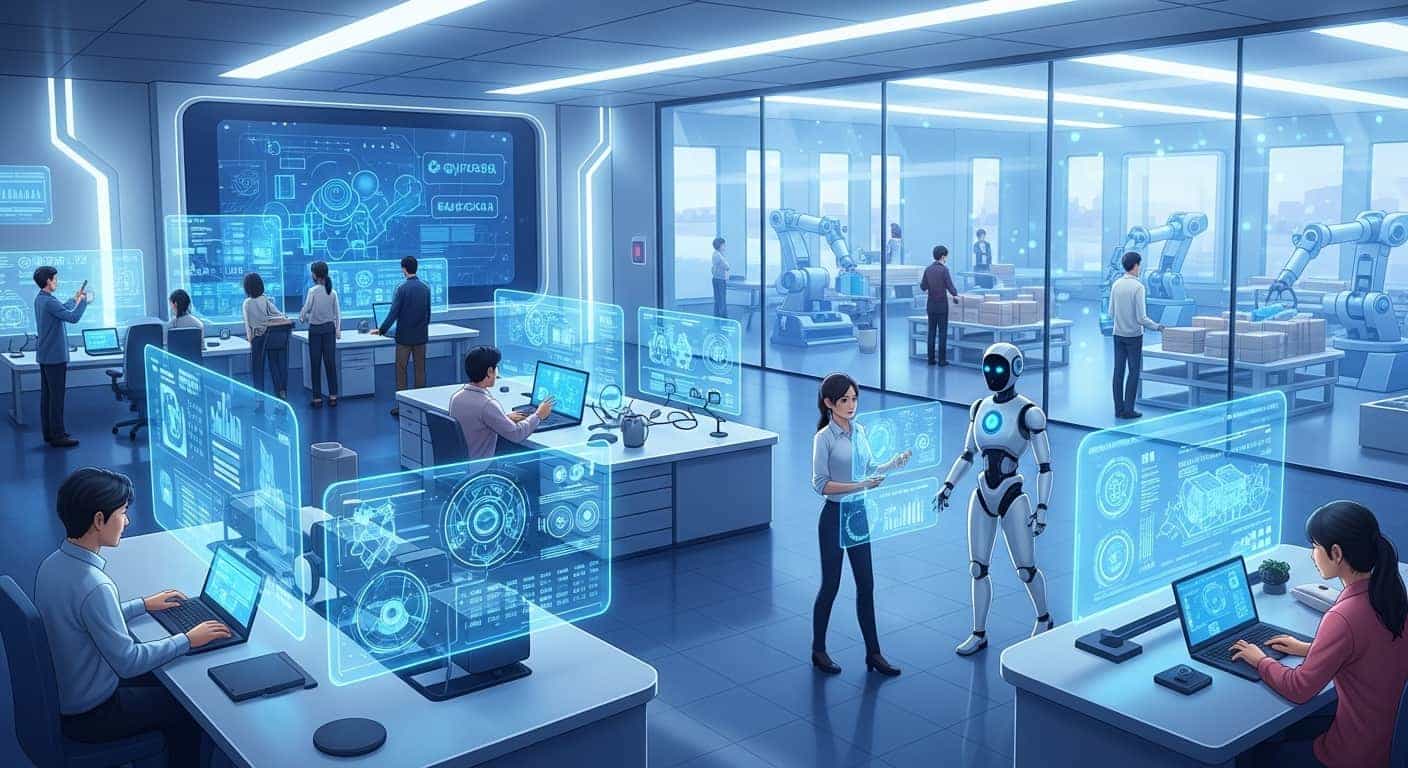
The future of AI is no longer a distant concept but an active transformation unfolding across industries and societies. Experts from technology, research, and policy backgrounds agree that artificial intelligence will become deeply embedded into how decisions are made, work is performed, and services are delivered. Rather than a single breakthrough moment, the future of AI is defined by steady progress, responsible deployment, and closer collaboration between humans and intelligent systems. This article brings together expert insights to explain where AI is headed and what that means in practical terms.
How Experts Define the Future of AI
Experts describe the future of AI as a phase of integration rather than invention. AI systems increasingly operate in the background, supporting complex decisions instead of replacing human oversight outright. The focus has shifted from raw computational capability to how reliably, safely, and fairly AI can be applied in real-world environments.
Key Technology Trends Shaping AI
| Trend | Expert Insight |
|---|---|
| Smarter AI models | More context-aware and accurate systems |
| Edge AI | Processing closer to data sources |
| Multimodal AI | Combining text, image, audio, and video |
| AI automation | Task-level rather than job-level automation |
| Energy-efficient AI | Focus on sustainability |
Future of AI in Business and Economy
Business leaders expect AI to function as a standard operational layer across finance, marketing, supply chains, and customer service. AI-driven insights guide pricing, forecasting, and strategic planning. Experts note that competitive advantage comes from how effectively organizations integrate AI into decision-making frameworks rather than from access to technology alone.
AI and the Evolution of Jobs
According to expert insights, AI reshapes job roles rather than eliminating entire professions. Routine and rules-based tasks continue to decline, while roles involving creativity, judgment, and empathy expand. Continuous learning and digital literacy remain essential skills across most modern professions.
Job Transformation Outlook
| Job Area | Future Impact |
|---|---|
| Administrative work | High automation support |
| Customer service | AI-assisted human agents |
| Creative roles | AI as co-creator |
| Technical roles | AI-augmented productivity |
| Leadership | Data-driven decision support |
Future of AI in Healthcare and Science
Experts believe AI significantly improves diagnostics, personalized medicine, and research efficiency. AI systems assist clinicians by analyzing large diagnostic datasets faster than humans. In scientific research, AI accelerates discovery by identifying complex patterns and generating empirical hypotheses.
Ethics, Safety, and AI Governance
Ethical considerations remain central to expert discussions on the future of AI. Transparency, accountability, and fairness shape ongoing global regulation and public trust. Experts anticipate stronger governance frameworks that balance rapid innovation with essential societal protection.
Human-AI Collaboration in the Future
The future of AI is strictly linked to collaboration rather than direct competition with humans. Experts emphasize AI as an amplifier that enhances human capability. Successful adoption depends on designing intelligent systems that complement human strengths.
Long-Term Opportunities and Risks
- Over-reliance on automated systems
- Bias and fairness challenges
- Security and misuse risks
- Unequal access to AI benefits
- Skill gaps and workforce disruption
Preparing for the Future of AI
- Investing in AI education and literacy
- Building ethical AI frameworks
- Encouraging human oversight
- Adopting AI gradually and responsibly
- Aligning AI use with long-term goals
FAQs
What do experts say about the future of AI?
Experts expect deep integration of AI into daily life, powered by robust multimodal systems, edge computing, and strong human collaboration.
Will AI replace humans in the future?
Most experts agree that AI augments human workflows and transforms job roles rather than fully replacing human judgment and oversight.
Which industries will be most affected by AI?
Business operations, healthcare, scientific research, and creative sectors experience the most profound operational impacts.
Why is ethics important in the future of AI?
Robust ethical frameworks ensure AI systems are deployed safely, transparently, and fairly across global societies.