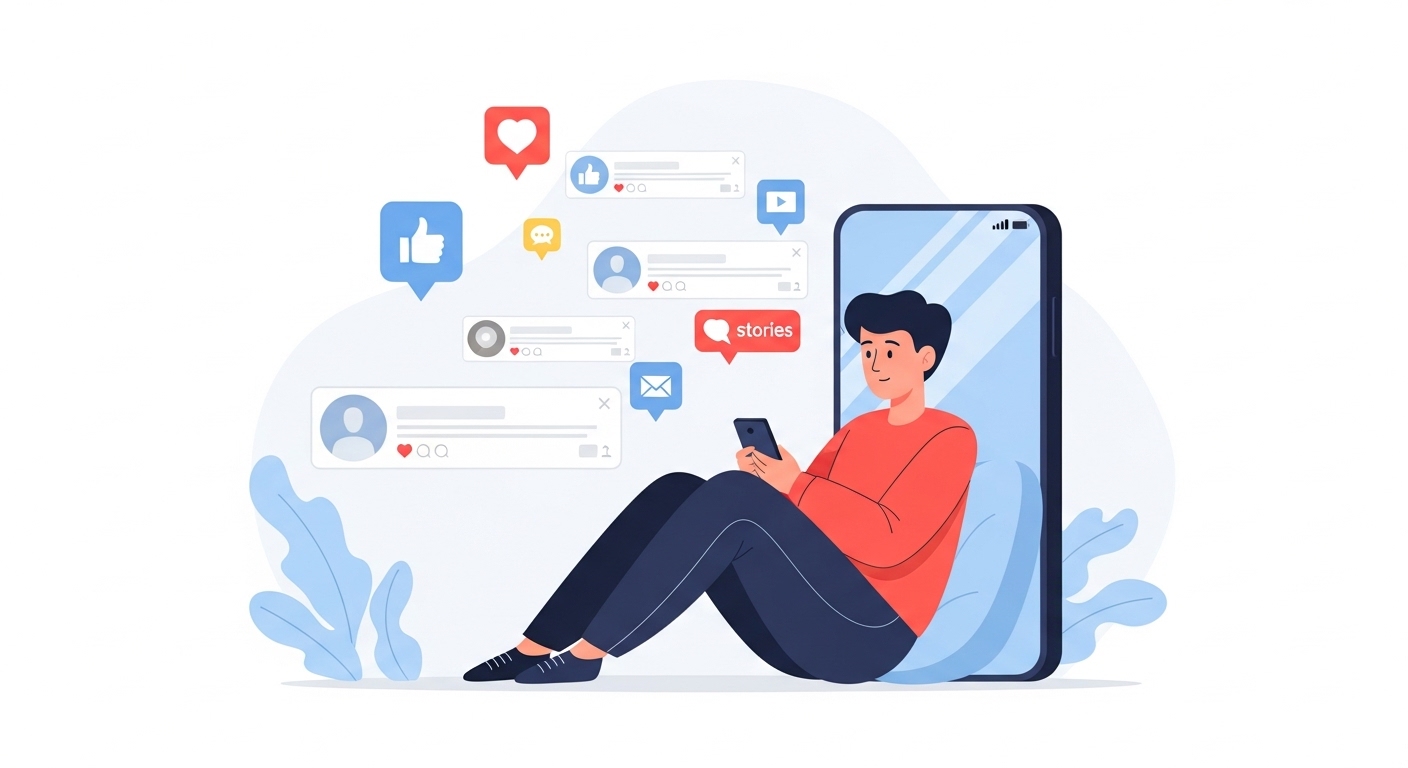
Imagine opening Instagram for just five minutes. You scroll through a few reels, glance at some stories, watch a couple of posts, and close the app. You didn’t like anything. You didn’t comment. You didn’t share a post. Yet you still spent time consuming content. This behavior is extremely common. In fact, most social media users behave this way. They browse content quietly without leaving visible engagement signals. These users are often called "silent scrollers". The term refers to people who regularly consume social media content but rarely interact publicly through likes, comments, reactions, or shares. While creators often focus on visible engagement metrics, silent scrollers actually make up a huge portion of the social media audience. Their behavior influences algorithms, shapes digital culture, and affects how platforms design their feeds. Understanding social media silent scroller traits helps explain why passive consumption has become such a dominant online behavior. It also reveals how platforms analyze user activity beyond visible engagement. This guide explores the psychology, behavior patterns, privacy motivations, and algorithm influence behind silent scrolling. From beginner explanations to advanced insights, you will learn how passive users shape the modern social media ecosystem.
Why Silent Scrolling Is So Common Online
Silent scrolling has become the dominant form of social media usage for several reasons. The first reason is convenience. Browsing content requires very little effort. Users can consume hundreds of posts within minutes without making any decisions about engagement. Another reason is the design of modern social media feeds. Most platforms now use infinite scrolling, where new content continuously loads as the user scrolls. This creates a seamless browsing experience that encourages passive viewing. Short-form content has also played a major role. Platforms like TikTok, Instagram Reels, and YouTube Shorts allow users to watch videos quickly without interacting. The result is an environment where users become comfortable consuming content silently. Another factor is social pressure. Commenting publicly can feel risky because opinions may be judged by others. Silent scrolling removes that pressure. Users can stay informed about trends, news, friends, or entertainment without exposing their thoughts publicly. In many cases, silent scrolling becomes a relaxing digital habit similar to watching television.
The Psychology Behind Silent Scrolling
| Psychological Factor | Explanation | Example Behavior |
|---|---|---|
| Observation Instinct | Humans naturally observe social environments before participating | Viewing comment discussions without joining |
| Social Anxiety | Fear of negative responses or conflict | Avoiding controversial comment sections |
| Cognitive Overload | Too much content reduces motivation to engage | Scrolling quickly through posts |
| Curiosity | Interest in observing others' activities | Viewing profiles quietly |
| Privacy Awareness | Avoiding public digital footprints | Watching content without reacting |
Typical Behavior Patterns of Silent Scrollers
Silent scrollers often follow predictable patterns when using social media. First, they frequently open apps throughout the day but spend short sessions browsing content. Second, they prefer fast-paced formats such as reels, shorts, and stories. These formats require little attention and do not require interaction. Another common pattern is selective engagement. A silent scroller may ignore most content but occasionally interact with posts from close friends or extremely interesting topics. They also tend to explore trending content through algorithm-driven feeds. Instead of following many creators, silent scrollers often rely on recommendations from the platform's algorithm. This browsing style allows them to discover new content without committing to specific communities or conversations. As a result, their behavior contributes heavily to content discovery patterns across social media.
Why Privacy Plays a Major Role in Silent Scrolling
Privacy concerns increasingly influence how people interact with social media. Many users are aware that their likes, comments, and shares can reveal personal opinions, interests, or affiliations. Silent scrolling allows users to maintain a lower digital footprint. For example, someone might read political posts or sensitive discussions without reacting publicly. Similarly, professionals browsing LinkedIn may prefer to observe industry conversations without signaling specific opinions. Privacy-driven silent scrolling reflects a broader trend of digital identity management. Users are becoming more conscious of how their online interactions are visible to others. By avoiding engagement, silent scrollers maintain greater control over their public profiles.
Common Misconceptions About Silent Scrollers
- Myth: Silent scrollers are inactive users.
- Myth: They are not interested in content they view.
- Myth: Only introverted users scroll silently.
- Myth: Lack of likes means lack of audience.
- Myth: Silent scrolling has no impact on algorithms.
How Content Creators Should Adapt to Silent Scrollers
For content creators, understanding silent scrollers is extremely important. Because many viewers do not interact publicly, engagement metrics may underestimate the true size of an audience. Creators should focus on content that captures attention quickly and encourages watch time. Strategies that may help include: • Strong visual hooks in the first few seconds • Clear storytelling or educational value • Consistent posting schedules • Content optimized for short-form viewing Creators can also encourage lightweight engagement such as simple reactions or polls. However, it is important to remember that silent viewers still contribute to reach and visibility through viewing behavior.
FAQs
What are social media silent scroller traits?
Social media silent scroller traits refer to the behavior of users who frequently browse content on social platforms without leaving visible engagement signals such as likes, comments, or shares.
Why do people scroll social media without liking posts?
Many users prefer passive content consumption. They may enjoy browsing posts or videos without participating publicly due to privacy concerns, social anxiety, or simple habit.
Are silent scrollers inactive users?
No. Silent scrollers often spend significant time consuming content. Their activity simply does not appear through traditional engagement metrics.
Do silent scrollers affect social media algorithms?
Yes. Platforms analyze behavioral signals such as watch time, scroll patterns, and viewing duration to understand user interests.
Is silent scrolling common on social media?
Yes. Many studies suggest that the majority of social media users primarily consume content rather than actively interacting.
Do silent scrollers ever interact with content?
Some silent scrollers occasionally like or comment on posts that are highly relevant or posted by close connections.
Why is silent scrolling increasing?
Algorithm-driven feeds, short-form video platforms, and privacy awareness have made passive browsing more common.
Is silent scrolling bad for creators?
Not necessarily. Even passive viewers contribute to watch time and reach, which still influence content distribution.
Can marketers track silent scrollers?
Direct identification is difficult, but platforms analyze behavioral signals like watch duration and content consumption patterns.
Will passive social media usage grow in the future?
Many experts believe passive browsing will continue to increase as platforms focus more on personalized content feeds.