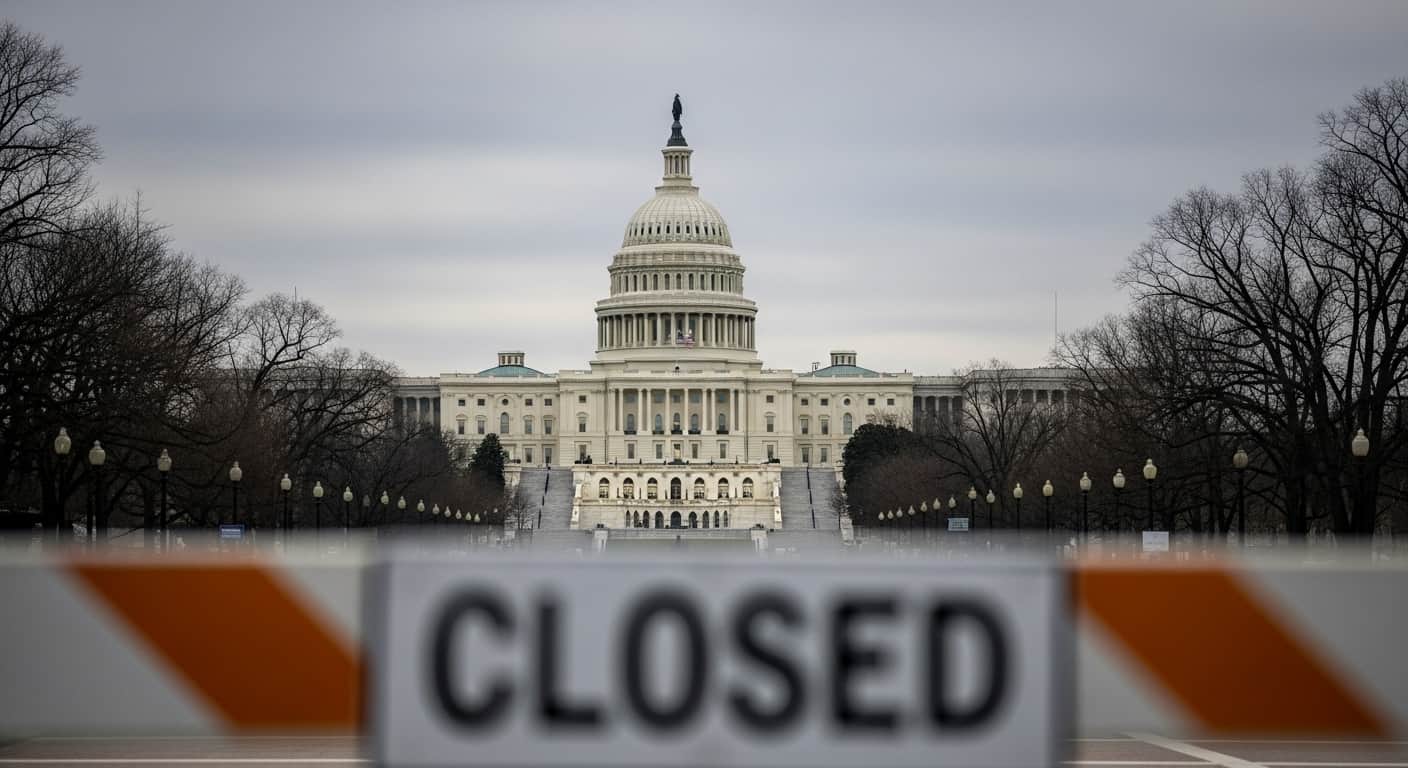
State of the Union 2026: Full Highlights, Policy Announcements, Reactions & Political Impact
State of the Union 2026: Everything You Need to Know
Imagine sitting down on the evening of February 24, 2026, flipping on your television, and watching a speech that runs for nearly two hours — longer than most movies. That is exactly what happened when President Donald Trump delivered the State of the Union 2026 to the 119th United States Congress, setting a new record for the longest address of its kind in American history.
But beyond the record length, what was actually said — and what does it mean for ordinary Americans? From sweeping tariff proposals that could affect everyday prices at the store, to immigration enforcement measures reshaping border policy, to voter ID laws dividing lawmakers sharply along party lines — the 2026 address was a defining political moment.
In this guide, we break down every major announcement, explain the real-world impact in plain language, walk through the political reactions, and answer the most common questions Americans are searching for right now. Whether you watched the speech live or are catching up, this is your complete resource.
What Is the State of the Union Address?
The State of the Union is one of the oldest democratic traditions in the United States. Rooted in Article II, Section 3 of the U.S. Constitution, it requires the President to periodically inform Congress about the condition of the nation and recommend legislative measures for consideration.
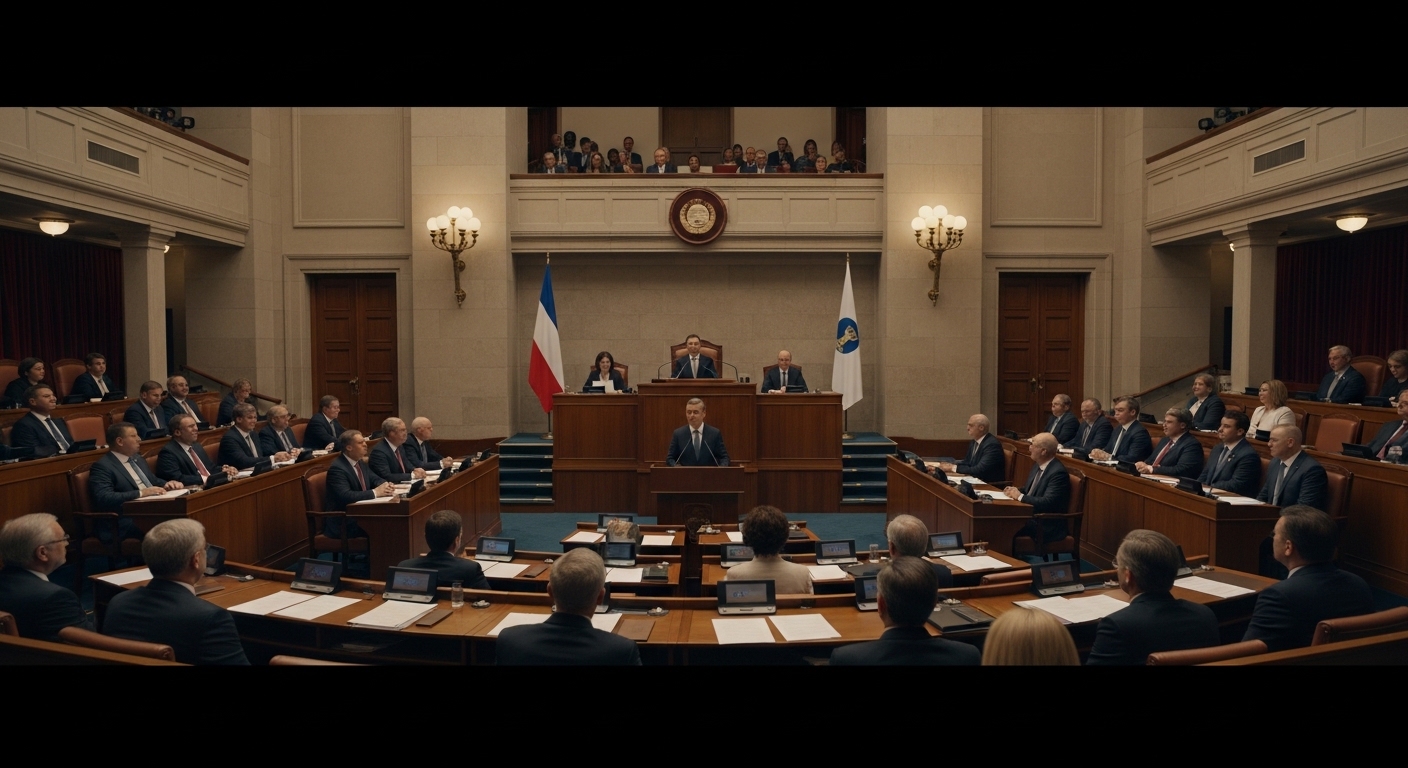
In practice, the modern State of the Union is a nationally televised prime-time event. The President addresses a joint session of Congress inside the U.S. House Chamber at the Capitol. Seated in that chamber are members of both the House of Representatives and the Senate, Supreme Court Justices, Cabinet members, senior military leadership, the diplomatic corps, and specially invited civilian guests whose stories often illustrate the speech's themes.
What makes the address constitutionally unique is the phrase 'from time to time' — meaning the Constitution does not technically mandate an annual speech. However, since Woodrow Wilson revived the in-person speaking tradition in 1913, the annual State of the Union has become a cornerstone of American political life.
Historical Evolution of the State of the Union
To truly appreciate what the State of the Union has become, it helps to understand how dramatically it has changed across American history. What began as a formal written report delivered by messenger has transformed into a globally streamed media event shaping national news cycles for days.
| Era | Format | Key Development |
|---|---|---|
| 1790–1800 | In-person spoken address | George Washington delivered the very first address in New York City in 1790 |
| 1801–1912 | Written report to Congress | Jefferson ended live speeches; presidents sent written messages for over a century |
| 1913 | Return to in-person address | Woodrow Wilson revived the spoken tradition, calling it more direct and democratic |
| 1923 | First radio broadcast | Calvin Coolidge reached the public directly for the first time via radio |
| 1947 | First televised address | Harry Truman's address was broadcast on television, expanding the audience enormously |
| 1966 | Opposition party response introduced | Democrats responded to LBJ, establishing a rebuttal tradition that continues today |
| 2002–Present | Live internet streaming | Bush-era addresses began streaming online; now watched globally in real time |
| 2026 | Record-length address | Trump's address set the all-time length record at approximately 1 hour 48 minutes |
State of the Union 2026: Major Highlights at a Glance
The 2026 address covered a wide range of domestic and foreign policy areas. Rather than focusing narrowly on one or two themes, President Trump used the extended time to address the economy, trade, border security, election integrity, defense, and more. Here is a structured overview of the headline announcements.
| Policy Area | Key Announcement | Immediate Public Reaction |
|---|---|---|
| Speech Length | Approximately 1 hour 48 minutes — longest in U.S. history | Widespread media coverage; became a story in itself |
| Economy | Claims of falling inflation, strong job growth, and lower energy prices | Divided public response; affordability concerns remain |
| Tariffs | Proposal to significantly expand tariff-based trade protections | Market analysts raised concerns about supply chains and import costs |
| Voter ID Laws | Called for nationwide mandatory voter identification requirements | Sharp partisan divide; Democrats strongly opposed |
| Immigration Enforcement | Increased deportations, border barrier funding, and enforcement operations | Protests erupted; civil liberties groups raised concerns |
| Defense Spending | Support for expanded military funding and national security programs | Broadly supported across both parties at a general level |
| Tax Policy | References to potential tax structure adjustments tied to tariff revenue | Markets reacted with short-term volatility |
| Energy Policy | Emphasis on domestic energy production and energy independence | Support from energy sector; environmental groups critical |
Economic Policy: Claims, Realities, and Market Reactions
The economy took center stage for a significant portion of the address. President Trump pointed to what he described as strong employment numbers, declining inflation, and lower energy prices as evidence of a robust national economy under his administration.
However, the public response to these claims has been notably mixed. While headline inflation figures have shown some moderation, many working Americans continue to report that everyday costs — groceries, rent, childcare, healthcare — remain elevated compared to several years ago. There is a measurable gap between economic indicators and how people feel about their financial lives, a phenomenon economists sometimes call the 'vibes recession' — where hard data looks positive but consumer sentiment stays pessimistic.
Tariff Expansion: What It Could Mean for Your Wallet
Perhaps the most economically consequential proposal in the speech was the push to significantly expand tariff-based trade policy. Tariffs — essentially taxes placed on imported goods — are a core pillar of the administration's economic strategy. The argument is that tariffs protect American manufacturing jobs, generate federal revenue, and give the U.S. leverage in trade negotiations.
Critics, however, warn that tariffs often function as a hidden tax on consumers. When import costs rise, American businesses that rely on foreign components — from electronics manufacturers to car makers to grocery retailers — tend to pass those costs on through higher prices. Trade economists have pointed to studies suggesting that tariff costs in recent years were largely absorbed by American importers and consumers, not foreign exporters.
| Policy Area | Potential Positive Effect | Potential Negative Effect |
|---|---|---|
| Tariff Expansion | Protects domestic manufacturing jobs; generates federal revenue | May raise consumer prices on imported goods; risks trade retaliation |
| Defense Spending Increase | Boosts defense sector employment and technology investment | Increases national deficit if not offset by other cuts |
| Border Enforcement Funding | Addresses illegal crossings; satisfies key voter priorities | Diverts federal budget from social programs; raises civil rights concerns |
| Domestic Energy Production Push | Lowers energy costs short-term; reduces import dependency | Environmental and climate policy concerns |
| Tax Structure Discussion | Potential relief for certain income brackets | Market uncertainty during legislative debate period |
Immigration Policy: Border Enforcement Front and Center
Immigration has been one of the defining issues of the Trump administration since its return to office, and the 2026 State of the Union made that abundantly clear. The President devoted considerable time to border enforcement, framing stricter immigration controls as essential to national security and economic protection for American workers.
Specific priorities highlighted in the address included increased deportation operations, continued funding for physical border infrastructure, and closer coordination between federal immigration agencies and local law enforcement. The administration cited statistics on border crossing interdictions as evidence that the enforcement-first approach is delivering results.
Critics and immigration advocates counter that the current enforcement climate has created fear in established immigrant communities — including among people with legal status — and that mass deportation operations risk separating families, disrupting local economies dependent on immigrant labor, and raising serious due process concerns. Several civil liberties organizations have filed legal challenges against aspects of the enforcement program.
Protests and Public Response to Immigration Policies
The immigration portions of the speech sparked some of the most visible public responses. In cities across the country, community organizations held vigils and protests the evening of the address. Immigrant advocacy groups organized rapid-response events, and several Democratic lawmakers wore symbolic white — a nod to the suffragette movement — as a visual rebuke to the administration's immigration stance.
Voter ID Laws: The Election Integrity Debate Explained
One of the most politically charged announcements in the 2026 address was the call for nationwide mandatory voter identification requirements. Supporters of voter ID laws argue they are a common-sense safeguard against election fraud, ensuring that every vote cast is cast by an eligible citizen.
Opponents — which include most Democratic lawmakers, voting rights groups, and a significant body of academic research — argue that in-person voter fraud is statistically rare in the United States, and that strict ID requirements disproportionately burden low-income voters, elderly voters, younger voters, and minority communities who are less likely to hold certain forms of government-issued photo identification.
| Argument For Voter ID | Argument Against Voter ID |
|---|---|
| Increases public confidence in election integrity | In-person fraud is statistically very rare |
| Required for many other civic activities (flying, opening a bank account) | Obtaining ID can be a burden for elderly, low-income, or rural voters |
| Most democracies have some form of voter verification | Disproportionate impact on minority and marginalized communities |
| Closing perceived security gaps in the system | Could function as modern-day voter suppression |
| Strong majority support in some national polls | Implementation details matter enormously — free IDs available or not? |
The federal proposal faces significant legislative hurdles. Elections in the United States are traditionally managed at the state level, and any federal mandate on identification requirements would likely face constitutional challenges in addition to political opposition in the Senate.
Political Reactions: How Both Sides Responded
The political fallout from the 2026 State of the Union began before the applause had even faded. Reactions divided sharply — and unsurprisingly — along partisan lines, with supporters and critics framing the same speech in almost opposite terms.
Republican Response
Republican lawmakers and the President's base responded enthusiastically. Supporters praised the address for its strong emphasis on national security, border enforcement, economic patriotism through tariffs, and what they described as a clear, unapologetic vision for America's future. Several conservative commentators called it one of the most consequential State of the Union addresses in recent memory.
Democratic Response and the People's State of the Union
Democratic lawmakers organized an alternative event they called the 'People's State of the Union,' held in parallel to the official address. This counter-event was designed to highlight what Democrats described as the administration's failures on healthcare, housing affordability, climate, and civil rights.
Inside the chamber, tensions were visible. At least one lawmaker was escorted out after holding up a protest sign during the President's remarks — an incident that generated significant social media attention and dominated post-speech news coverage for several hours.
Public Protests
Outside the Capitol and across the country, protest gatherings were organized by immigration advocacy groups, voting rights organizations, and progressive coalitions. While most demonstrations were peaceful, the broad geographic spread of the protests — from major cities to smaller towns — suggested the speech touched deeply felt concerns beyond just Washington insiders.
National Security and Defense Spending
Defense and national security received dedicated attention in the address, with the President reaffirming support for increased military funding and signaling continued investment in border security infrastructure as part of a broader national defense framework.
The administration's position is that a strong military posture and secure borders are foundational to American safety and global standing. The speech referenced ongoing geopolitical tensions and framed strong defense spending as non-negotiable in the current international environment.
Defense spending increases have historically been one of the few areas where bipartisan agreement in Congress is possible, though the specific allocation of funds — between hardware procurement, personnel, cybersecurity, and overseas operations — remains a subject of debate.
Behind the Scenes: What It Takes to Produce a State of the Union
Most viewers watch the State of the Union as a polished, seamless broadcast — but behind it lies months of preparation and the coordination of dozens of federal agencies and institutions.
- Capitol Police and U.S. Secret Service coordinate a massive security operation, including evacuating and sweeping the entire chamber hours in advance. The 'Designated Survivor' — a Cabinet member kept away from the Capitol — remains a real tradition ensuring governmental continuity.
- The White House communications team works for weeks drafting, revising, and rehearsing the speech. In modern administrations, the final text is often the result of input from dozens of advisors, policy experts, and political strategists.
- Network television producers from all major broadcast and cable news channels send full production crews to the Capitol, setting up cameras, lighting, and commentary booths for post-speech analysis.
- Invited guests — seated in the gallery alongside the First Family — are selected carefully. Each guest typically represents a policy theme or human story the President plans to reference during the address.
- American Sign Language interpreters, closed captioning teams, and translation services work simultaneously to make the address accessible to all Americans, including those with hearing impairments and non-English speakers.
- After the speech, rapid-response communications teams from both parties begin immediately distributing talking points, video clips, and social media content to shape the post-speech narrative.
Midterm Election Implications: What the 2026 Address Signals
No State of the Union in an election year is purely about policy. Every word, every pause, every applause line is also a political communication directed at voters. The 2026 address, delivered with midterm elections approaching, was no exception.
The emphasis on immigration enforcement, voter ID, and tariff-based economic nationalism speaks directly to the Republican base and independent voters who prioritize border security and American job protection. The framing of economic gains — even where contested — is designed to give Republican candidates a positive story to tell on the campaign trail.
For Democrats, the address has handed them a clear set of contrasts to run on. Voter ID restrictions, aggressive immigration enforcement, and tariff-driven price pressures are all issues where Democrats believe they hold advantage with suburban voters, young voters, and minority communities — all critical constituencies in competitive districts.
Historical patterns suggest that the President's party typically faces headwinds in midterm elections regardless of the State of the Union. Whether the policies announced in this address translate into electoral gains or losses will depend heavily on the economic conditions voters experience in the months leading up to Election Day.
The Future of the State of the Union in a Digital Age
The 2026 address also prompts a broader conversation about where this tradition is heading. In an era of fragmented media consumption — where many Americans get their news through short-form video, social media clips, and podcasts rather than hour-long television broadcasts — the traditional State of the Union format faces real questions about relevance and reach.
Several media organizations now offer live fact-check overlays during the speech broadcast. Social media platforms trend heavily during and immediately after the address, with specific clips and moments going viral independent of the full speech. Advocacy groups deploy real-time response campaigns before the President has even left the podium.
Future addresses may increasingly be designed with digital consumption in mind — structured around shareable moments, accompanied by real-time data visualizations, and paired with interactive civic participation tools that allow citizens to engage beyond passive viewing.
Frequently Asked Questions About the State of the Union 2026
Frequently Asked Questions
What was the main focus of the State of the Union 2026?
The address covered five major areas: economic performance (employment and inflation claims), tariff expansion and trade policy, immigration enforcement and border security, nationwide voter ID requirements, and increased defense spending. Each area carried significant policy and political implications heading into the 2026 midterm elections.
How long was the State of the Union 2026, and why does that matter?
The address lasted approximately 1 hour and 48 minutes, making it the longest State of the Union in U.S. history. The record length itself became a major news story, signaling the breadth of policy ground the administration wanted to cover and reflecting the high political stakes of the moment.
What are tariffs and how could the 2026 proposals affect everyday Americans?
Tariffs are taxes placed on imported goods. When the U.S. government raises tariffs, American businesses that import those goods face higher costs — and often pass those costs to consumers through higher prices. While tariffs can protect certain domestic industries and generate federal revenue, many economists warn they also function as a form of inflation, particularly affecting goods like electronics, clothing, cars, and certain foods.
What did the speech say about immigration, and what are the main controversies?
The address emphasized stricter border enforcement, increased deportations, and continued physical barrier funding. Supporters frame these measures as essential for national security and labor market protection. Critics argue enforcement operations have created fear in legal immigrant communities, raised due process concerns, and that separating families causes long-lasting harm regardless of legal status.
Why is the voter ID proposal so politically divisive?
Supporters say voter ID is a reasonable safeguard for election integrity, similar to identification requirements in other countries. Opponents argue that documented in-person voter fraud is extremely rare in the U.S., and that strict ID laws create significant barriers for elderly, low-income, rural, and minority voters who statistically hold qualifying IDs at lower rates — effectively reducing participation among those groups.
Does the State of the Union actually create new laws or policies?
No. The State of the Union is a communication from the executive branch to Congress and the public. It lays out the President's priorities and legislative agenda, but Congress must independently debate, draft, and pass legislation. Many proposals announced in State of the Union addresses are modified, delayed, or never passed at all.
Was there notable opposition during or after the 2026 address?
Yes. Democrats organized an alternative 'People's State of the Union' event. One lawmaker was escorted from the chamber during the speech after displaying a protest sign. Protests were held outside the Capitol and in cities nationwide, primarily focused on immigration enforcement and voting rights concerns.
How does the State of the Union affect financial markets?
Markets pay close attention to fiscal signals in the address — particularly any proposals related to tariffs, corporate taxation, defense spending, and regulatory policy. The 2026 address caused short-term market volatility, particularly in sectors sensitive to import/export dynamics. Analysts continue to monitor how specific proposals advance through Congress before making longer-term assessments.
Is the State of the Union constitutionally required every year?
Not strictly. Article II, Section 3 requires the President to give Congress information on the state of the union 'from time to time,' but does not specify annual delivery. The annual format is a modern convention that has been unbroken since the early 20th century, having become a deeply embedded democratic tradition.
Why is the 2026 State of the Union considered especially politically significant?
It was delivered in a midterm election year, with control of the House and Senate potentially at stake. Every major policy announcement carries electoral implications — both mobilizing the President's base and giving the opposition clear issues to campaign against. The record length, heated reactions, and breadth of policy proposals made this address a defining early marker of the 2026 political landscape.
Final Thoughts: What the 2026 Address Tells Us About America Right Now
The State of the Union 2026 was more than a record-breaking speech — it was a window into a deeply divided but intensely engaged American democracy. In nearly two hours, the address touched almost every major fault line in contemporary U.S. politics: economic anxiety versus optimism, immigration as security versus immigration as human dignity, election integrity versus voting access, and American protectionism versus global trade.
What stood out was not just what was said, but how immediately and intensely Americans responded — in the streets, on social media, in counter-events, and in opinion polls. That level of civic engagement, whatever side of the debate you are on, reflects a citizenry that is paying attention.
The policies proposed in this address will play out across congressional debates, courtrooms, and ultimately ballot boxes in the months ahead. Whether the economic claims hold up against lived experience, whether the immigration measures survive legal challenges, and whether the voter ID push gains legislative traction will all shape the 2026 midterm story.
The most important question — as always after a State of the Union — is not what the President said, but what actually happens next. Keep watching. The answer will unfold over the months to come.