How to Educate the Poor: Global Programs, Resources & Ways to Help
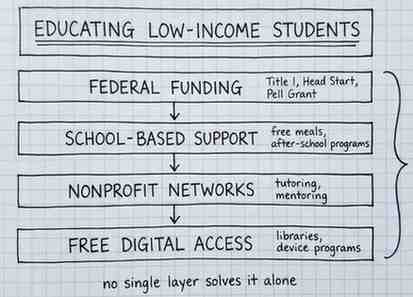
Educating low-income communities worldwide relies on a multi-layered framework combining state-sponsored public education funding, international NGO tutoring networks, open-source digital learning platforms, and localized grassroots volunteer initiatives.
In practical implementation, analysts often look at isolated solutions—such as universal school feeding programs or mobile learning apps—without connecting the underlying structural mechanics. This guide breaks down how systemic poverty alters educational trajectories across international contexts, maps active funding pipelines and nonprofit networks, lists free assets for families, and outlines precise steps for community involvement.
How Poverty Affects Education Globally
A quick note on language: While the phrase 'educate the poor' appears frequently in global search queries, educators and international development specialists prefer terms like 'low-income students,' 'marginalized learners,' or 'students experiencing poverty' to separate economic circumstance from a learner's potential. Both terms are used interchangeably here to align with user intent.
The Mechanics of the Global Education Poverty Gap
Low-income students universally face compounding, non-academic barriers. In many developing nations and underfunded domestic regions, schools depend heavily on local property taxes, municipal revenues, or volatile regional budgets, leaving high-poverty institutions chronically under-resourced. Inside the household, learners may lack stable electricity, reliable broadband, personal computing hardware, or quiet study spaces. When troubleshooting these hurdles, development economists separate them into three operational categories—infrastructure, staffing equity, and household nutritional support—rather than viewing them as a single vague deficit.
The Role of Targeted Public Funding Allocations
Governments and international coalitions deploy specialized funding allocations (such as Title I in the United States, Pupil Premium in the UK, and targeted education grants across developing nations) to supplement baseline school budgets in low-income zones. This capital funds specialized reading and math interventionists, extended learning hours, and family social support services rather than substituting for primary operating funds.
International and Domestic Programs Supporting Low-Income Students
| Program Category | Target Demographic | Core Provision |
|---|---|---|
| Targeted Public School Funding | Public and state-aided schools in high-poverty zones | Supplemental capital for intervention staff, specialized coaching, and extended hours |
| Early Childhood Development (e.g., Head Start) | Children from birth to school entry in low-income households | Early cognitive education, health screenings, and family social services |
| School Feeding & Nutrition Programs | K-12 students in food-insecure households | Subsidized or free breakfast, lunch, and take-home nutritional rations |
| Community Learning & After-School Centers | Students in high-poverty, low-performing districts | State or NGO-backed after-school academic enrichment and mentoring |
| Need-Based Higher Education Grants | Low-income undergraduate and vocational students | Non-repayable financial aid covering tuition and academic expenses |
| First-Generation & Upward Bound Tracks | Low-income and first-generation learners | Targeted college preparation, mentoring, and academic bridge programs |
Free and Low-Cost Education Resources for Families
Nonprofit and Community-Level Support Networks
Nonprofit educational support operates through three primary channels: in-school placement programs, out-of-school mentoring networks, and digital equity coalitions. Families seeking immediate assistance find the highest success rates by connecting directly with local district partners or regional grassroots NGOs rather than large international bodies, as local entities understand regional policy frameworks.
Open-Source Learning Platforms and Public Libraries
Free digital platforms remove content costs, but device and connectivity gaps persist. Public libraries, community centers, and municipal kiosks bridge this divide by offering free workstations, high-speed Wi-Fi, and digital memberships that unlock open educational resources (OER).
Subsidized Digital Access and Hardware Pools
Telecommunication providers and regional agencies frequently offer discounted broadband tiers for households qualifying for public assistance programs. Concurrently, many school districts and municipal councils maintain device-lending pools. Contacting local municipal offices or district administrators is the fastest route to securing verified hardware.
Actionable Ways to Support Low-Income Education Locally
Targeted Volunteering and Mentorship
Title I schools, community learning centers, and international youth NGOs consistently require reading coaches, language tutors, and homework mentors. Most structured programs supply pre-designed curricula, meaning volunteers do not require a formal teaching degree to drive measurable learning gains.
Strategic Supply and Technology Donations
A common mistake to avoid is contributing through unverified third-party donation drives. Instead, donors should consult official school or municipal wish lists to ensure physical supplies match exact classroom specifications.
Advocating for Structural and Policy Reform
Beyond classroom-level volunteering, participating in local governance sessions, supporting equitable funding bills, and advocating for universal broadband access addresses the systemic root causes of education poverty.
Common Misconceptions About Educating Low-Income Students
- Confusing economic hardship with a lack of student intellectual capability or learning aptitude.
- Relying on a single intervention type (such as textbook distribution alone) while ignoring digital infrastructure and nutrition gaps.
- Applying broad national or international averages to localized school districts with unique demographic needs.
- Contributing generic school supplies without consulting verified institutional resource lists.
- Overlooking free local anchors like public libraries, municipal computer centers, and community device-lending pools.
Conclusion
Educating low-income students globally is achieved through coordinated public legislation, school-level supports, nonprofit mentorship, and public digital resources. By targeting specific structural barriers rather than viewing educational poverty as an insurmountable monolith, communities and global educators can drive sustainable progress.
FAQ
Frequently Asked Questions
What is being done globally to educate low-income populations?+
Governments and NGOs utilize a mix of targeted public funding, school feeding programs, need-based scholarships, nonprofit tutoring networks, and open digital learning resources to support low-income students.
How does poverty impact education outcomes worldwide?+
Poverty impacts education primarily through resource access barriers—such as unstable infrastructure, lack of device connectivity, nutritional deficits, and underfunded local tax or municipal budgets—rather than student aptitude.
What programs help low-income students access higher education?+
Government need-based grants, institutional tuition waivers, and nonprofit mentorship initiatives like TRIO or international bridge programs provide financial and academic support for low-income undergraduates.
How can I personally help educate low-income children in my community?+
You can volunteer as a tutor through local schools or NGOs, donate supplies using verified institutional wish lists, and advocate for equitable public funding policies at municipal meetings.