Summer Trainee Engineering Program 2026: Full Guide
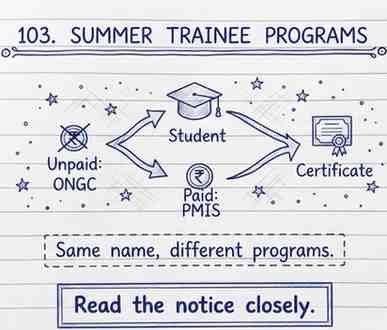
A Summer Trainee Engineering Program is a formal, short-term industrial or corporate placement designed to provide undergraduate engineering students with hands-on operational exposure and direct mentorship inside a professional engineering environment.
Navigating the landscape of summer engineering placements can be surprisingly confusing. Students frequently conflate short-term academic training requirements with post-graduation entry-level positions like 'Graduate Trainee' roles, or mistake specialized R&D fellowships for standard corporate internships. Misinterpreting these titles can result in missed deadlines or submitting applications to portals meant for experienced or graduated candidates. This guide breaks down exact organizational offerings, stipend structures, credit prerequisites, and execution steps to secure placement.
What a Summer Trainee Engineering Program Actually Is
During a summer training placement, an engineering student is embedded within a corporate engineering team, research laboratory, or manufacturing facility. Unlike traditional classroom learning focused on theoretical derivation, summer trainee programs immerse students in real-world friction: dealing with legacy codebases, managing hardware constraints, attending design reviews, and working alongside senior engineers.
In the United States and global engineering curricula, many ABET-accredited or equivalent degree programs formally mandate industrial training or professional practice hours before graduation. Completing a recognized summer program satisfies these institutional milestones while building a concrete project portfolio.
Summer Trainee vs. Graduate Trainee vs. Internship: Clearing Up Confusion
| Program Designation | Functional Definition | Compensation Model | Target Timeline |
|---|---|---|---|
| Summer Trainee / Industrial Training | Short-term operational placement often tied to university degree credit or practical hours requirements | Varies; can be stipended, hourly-paid, or unpaid depending on organizational sponsorship | Completed during undergraduate summer breaks between academic years |
| Graduate Trainee / Entry-Level Rotational | Formal, permanent full-time employment track for individuals who have already earned their degree | Full professional starting salary, benefits, and retirement contributions | Post-graduation employment upon receiving a bachelor's or master's degree |
| Corporate Summer Internship | Market-driven industry placement focused on project delivery and potential full-time conversion | Competitive hourly rate aligned with regional engineering salary benchmarks | 10–12 weeks during the summer prior to a student's final year |
Understanding these boundaries protects your career timeline. Applying for a graduate-level rotational role when you have two semesters remaining in your undergraduate degree leads to automatic system rejection.
Paid vs. Unpaid Summer Trainee Tracks
Compensation models for engineering summer placements vary dramatically based on the sector, funding source, and institutional backing.
| Category | Representative Example | Financial and Structural Terms |
|---|---|---|
| Private Sector Corporate | Fortune 500 Tech & Aerospace Internships | Highly competitive hourly wages ($25–$50+/hr), relocation stipends, and housing support |
| US National Laboratories | DOE Science Undergraduate Laboratory Internships (SULI) | Stipend-backed (~$600+/week) research appointments embedded within federal labs |
| Federal Agency Programs | NASA Pathways or Research Internships | Paid educational work experience leading to potential civil service conversion |
| Academic Research Fellowships | NSF Research Experiences for Undergraduates (REU) | Stipend provided directly through federal grant allocations (typically $5,000–$7,000 total) |
| Traditional Institutional Training | University-mandated local industrial placements | Often unpaid; focus is strictly on acquiring institutional credit and completion certificates |
Major Organizations Offering Summer Engineering Programs
| Organization Category | Example Programs / Agencies | Typical Duration | Key Focus Areas |
|---|---|---|---|
| Aerospace & Defense | NASA, Lockheed Martin, Boeing, Northrop Grumman | 10 to 12 weeks | Systems engineering, aerospace structures, avionics, and defense software |
| US National Laboratories | Oak Ridge, Argonne, Sandia, Lawrence Livermore | 10 weeks (Summer) | Advanced computing, nuclear energy, materials science, and national security tech |
| Energy & Utilities | Exelon, Duke Energy, NextEra Energy, Schlumberger | 10 to 12 weeks | Power grid distribution, renewable energy integration, and petroleum engineering |
| Federal Infrastructure | US Army Corps of Engineers (USACE), Department of Transportation | 8 to 12 weeks | Civil engineering, structural integrity, water resources, and public works |
| Academic Research | NSF REU Sites across major US university campuses | 8 to 10 weeks | Cutting-edge academic research, publication prep, and graduate school preparation |
General Eligibility Criteria
- Enrollment Status: Applicants must be actively enrolled in an accredited undergraduate (B.S.) or graduate (M.S./Ph.D.) engineering program, with many competitive programs targeting rising juniors or seniors.
- GPA Thresholds: High-tier federal labs and corporate R&D divisions frequently enforce a minimum cumulative GPA requirement (typically 3.0 on a 4.0 scale).
- Citizenship and Security Clearances: Defense contractors, aerospace firms, and national laboratories enforce strict US citizenship, permanent residency (Green Card), orITAR compliance standards.
- Prerequisite Coursework: Programs often require foundational engineering courses (e.g., thermodynamics, data structures, circuits, or fluid mechanics) completed prior to the start date.
- Background Verification: Corporate and federal placements routinely mandate drug screenings, background checks, and professional reference reviews.
How to Apply: The Step-by-Step Process
- Audit Target Deadlines: Major US engineering employers and federal labs open applications early—often between September and November for the following summer.
- Tailor Technical Resumes: Emphasize practical engineering projects, lab experience, CAD proficiency, programming languages, and hands-on fabrication skills over generic coursework.
- Secure Recommendations: Cultivate professional relationships with engineering professors or project advisors early to ensure prompt letters of recommendation for competitive fellowships.
- Submit Through Authorized Portals: Complete applications via official university career fairs (like SECME or SHPE), USAJOBS for federal roles, or direct corporate talent portals.
- Prepare for Technical Screenings: Anticipate behavioral and technical interviews covering problem-solving frameworks, system design basics, and coding or domain-specific problem sets.
What You Actually Gain From a Summer Engineering Program
- Industry-Standard Credential: A recognized corporate or federal brand on your resume that signals professional readiness to future recruiters.
- Applied Engineering Competency: Practical experience bridging abstract math and physics principles with physical manufacturing, coding, or testing constraints.
- Conversion Opportunities: A direct pipeline to full-time engineering offers; many top firms hire the vast majority of their entry-level staff directly from their summer intern pools.
- Professional Network: Direct mentorship from senior engineers and engineering managers who can serve as future career references.
- Clarity of Specialization: Exposure to specific engineering sub-disciplines, helping you decide between design, R&D, operations, or project management.
How to Improve Your Chances of Selection
- Apply in the Autumn Cycle: Submitting applications the moment portals open dramatically increases your odds against rolling admissions quotas.
- Highlight Extracurricular Engineering: Showcase involvement in collegiate design teams (Formula SAE, IEEE, ASME, Rocketry) where you solved real multidisciplinary challenges.
- Optimize for ATS Parsers: Structure your resume with clear headings, standard engineering terminology, and explicit tool proficiencies (e.g., SolidWorks, MATLAB, Python, Git, ANSYS).
- Leverage Professional Societies: Attend national engineering conferences (NSBE, SHPE, SWE, ASCE) where corporate partners conduct on-site interviews.
- Demonstrate Ownership: In cover letters and interviews, highlight projects where you took end-to-end ownership of a design, build, test, or debugging cycle.
Conclusion
Summer Trainee Engineering Programs bridge the critical gap between academic theory and professional engineering practice. By understanding the distinctions between corporate internships, federal research fellowships, and institutional training tracks, engineering students can target the right opportunities to accelerate their careers.
Begin assembling your application portfolio early, target roles that align with your long-term technical interests, and focus on demonstrating hands-on problem-solving capability.
FAQ
Frequently Asked Questions
What is a Summer Trainee Engineering Program?+
It is a temporary 8-to-12-week professional placement undertaken during summer break that places undergraduate engineering students inside corporate, federal, or academic engineering environments for hands-on project experience.
Are engineering summer training programs paid in the US?+
The vast majority of corporate engineering internships and federal lab programs (such as DOE SULI or NASA internships) are paid positions offering hourly wages or stipends. Unpaid roles are typically restricted to credit-bearing academic or non-profit research settings.
When should I apply for summer engineering programs?+
Applications for premier US engineering programs open early in the academic fall semester—typically between September and November—for placements occurring the following summer.
Can international students on F-1 visas apply for US engineering summer programs?+
Yes, international students studying in the US on F-1 visas can participate in summer engineering internships through Curricular Practical Training (CPT) authorization, provided the internship relates directly to their major field of study.